




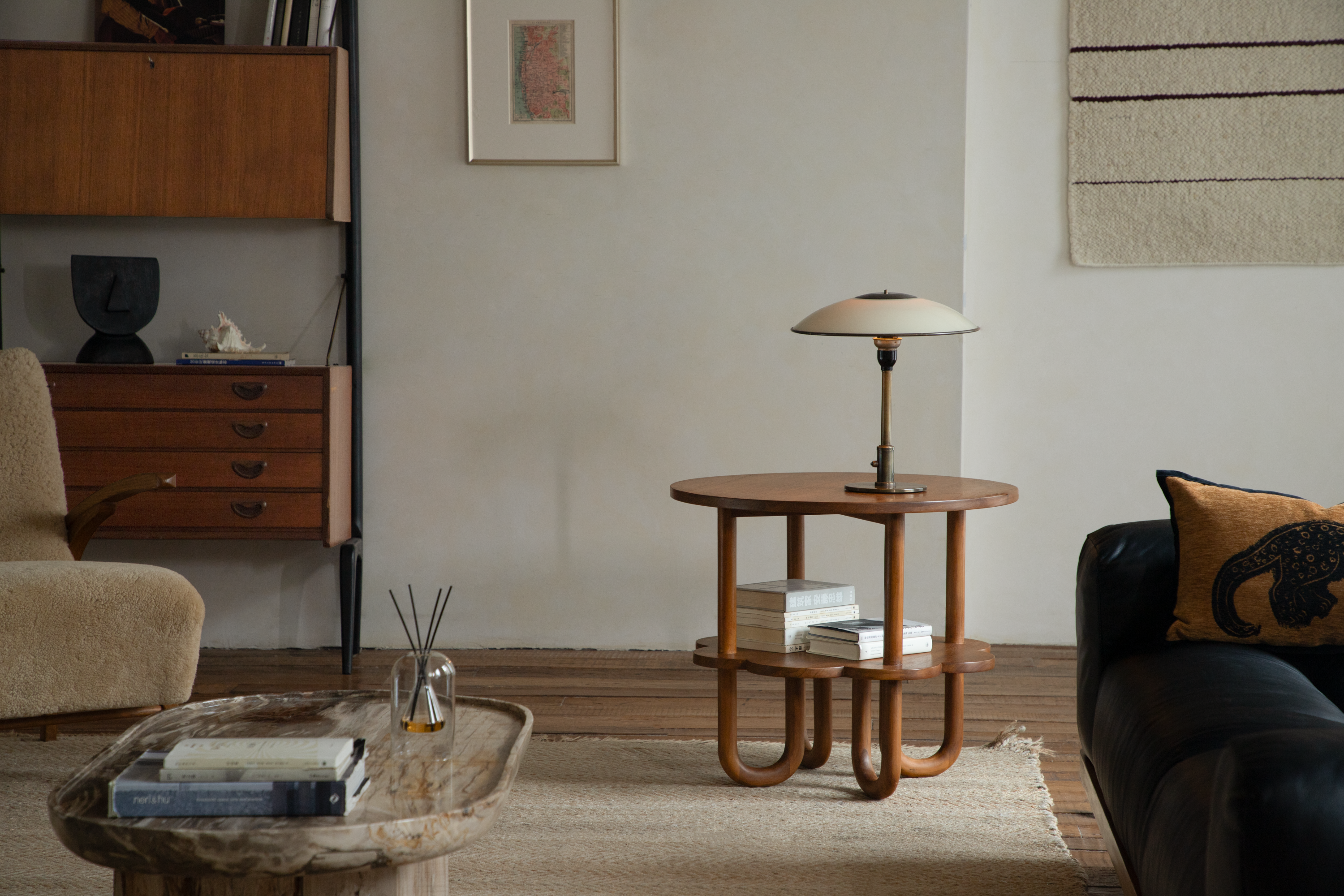
Picking a side table seems like a simple task until you realize there are thousands of sizes available. If the table is too tall, it looms over your seating; if it is too short, you have to lean over just to set down a glass of water. Getting the proportions right is the secret to a living room that feels professional and comfortable.
Quick Answer
Finding the right side table height for sofa setups is not that difficult. For the best results, aim for a table that is within two inches of your sofa's arm height. If your sofa arm is 25 inches tall, look for a table between 23 and 27 inches. If you are using a C-table designed to slide over the seat for laptop use, prioritize the height of the seat and your own lap clearance instead. If you only remember one thing, keep the tabletop close to the arm height so you never have to reach up or down to find your drink.
Step 1: Measure Your Sofa Dimensions Correctly
Guessing by eye often leads to returns and frustration because photos online can be deceiving regarding scale and height. Before you start browsing for living room tables, you need hard numbers.
Measure the Arm Height
This is your most important number. Place the end of your measuring tape flat on the floor and pull it straight up to the highest point of the sofa arm. If your sofa has sloped arms that drop toward the front, measure the point where you would naturally place a table. For sofas with large, overstuffed pillow-top arms, measure to the "usable" flat area where your hand would rest, rather than the very peak of the fluff.
Measure the Seat Height
Seat height is the distance from the floor to the top of the seat cushion. This measurement matters most if you have an armless sofa or a very low-profile modern piece. Keep in mind that soft cushions sink when you sit on them. A seat that measures 18 inches high might actually sit at 16 inches once you are settled in, so account for that "sink factor" when visualizing your reach.
Measure Where You Actually Sit
If you have a large sectional or a chaise lounge, the height can vary across the piece. Corner seats sometimes have higher backs or different cushion depths. For recliners, take your measurements while the footrest is closed. You should also check how much room is available on the sides when the chair is fully tilted back so the table doesn't get hit by moving parts.

Step 2: Calculate Your Ideal Table Height
After the measurements, you can narrow down your search. Applying these specific ranges ensures that your side table looks like it was custom-made for your specific seating arrangement.
The Golden Rule (For Most Living Rooms)
The gold standard is to match the table height to the arm of the sofa as closely as possible. Ideally, the table should be 1 to 2 inches shorter than the arm. This creates a clean horizontal line that is easy on the eyes. A table that is slightly lower is almost always better than one that is significantly higher, as a tall table can feel like a barrier and creates a safety risk for knocking things over.
When a Taller Table Makes Sense
There are times when function overrides the standard rules. A C-table or a laptop stand needs to be taller than the sofa seat, and often taller than the arm, to slide over your lap comfortably. If you plan to eat or work on this surface, prioritize your knee clearance. These tables are meant to be task-oriented, so it is fine if they sit 5 to 10 inches above the seat height.
If You're Adding a Table Lamp
If you plan to put a lamp on your table, the table height determines where the light hits. A table that is too tall might put the lampshade at eye level, causing an annoying glare while you try to watch TV. Sit on the sofa and make sure the bottom of the lampshade is roughly at eye level. Also, check that you can easily reach the light switch without standing up.
Step 3: Adapt Your Choice to Specific Sofa Styles
Different furniture styles require different approaches. A chunky sofa made of rustic reclaimed wood furniture elements will need a different table than a sleek, metal-framed Italian modern sofa.
Low-Profile Modern Sofas
Modern sofas often sit very low to the ground, sometimes with seats only 15 inches high. A standard 24-inch end table will look massive next to these. For these pieces, look for "low-slung" tables. Keep the profile slim and the height close to the seat level to maintain that breezy, open feeling common in modern design.
Note: If you plan to use a C-table, always check that your sofa has enough clearance underneath (at least 1-2 inches) for the table's base to slide under.
High-Arm Traditional Sofas
Classic styles like Chesterfields have arms that are the same height as the back. These can be 30 inches or taller. Using a standard table here makes the table look like a toy. You need a taller, more substantial table to hold its own. However, opt for a table with "visual lightness" (like glass or thin metal legs) so the room doesn't feel crowded with heavy furniture.
Sectionals + Chaise
Sectionals create "dead zones" in the corners. You have to decide if you want one large square table in the corner or two smaller tables at the ends. People using the chaise part of a sectional usually prefer a table that is a bit closer to the seat since there is no armrest to guide the reach.
Recliners / Power Sofas
Mechanical chairs move in ways static sofas don't. A table with a heavy, wide base might block the footrest from opening. Choose a table with a stable but narrow base, or a tripod design. Place it slightly forward of the recliner's midpoint so the chair can tilt back without striking the table's edge.
Armless Sofas / Benches
Without an arm to act as a guide, aim for a table that mimics a "virtual armrest." This is usually about 8 inches above the seat height (roughly 24-26 inches total). This feels natural for resting a drink. Nesting tables are the best choice here because they offer multiple height options that can be adjusted as you shift sitting positions.

Step 4: Evaluate Practical Factors Beyond Height
While height is the main focus, these smaller details can make or break how much you enjoy using your furniture daily. Ignoring these can lead to a table that looks right but feels wrong.
- Primary use: Decide if the table is for heavy items like books and lamps or just a spot for a remote.
- Reach distance: A table at the perfect height is useless if it sits three feet away from your arm.
- Tabletop size: Ensure there is enough room for a coaster, a phone, and a snack without everything being cramped.
- Stability & safety: If you have kids or pets, avoid top-heavy tables that might tip over on carpet.
- Traffic flow: Ensure there is at least 18 inches of walking space between the table and other furniture.
- Flooring/rugs: If half the table is on a thick rug and half is on the floor, it will wobble. Choose adjustable feet if possible.
- Storage needs: Tables with drawers often have thicker tops, which can make them look taller than they actually are.
Step 5: Consolidate Your Specs Into a Buyer Checklist
Use this checklist to stay organized while shopping. Having these numbers ready will help you filter through options quickly and find the best side table height for your sofa.
- Sofa arm height: ___
- Seat height: ___
- Target table height (Arm height minus 1-2 inches): ___
- Main use (Décor, Laptop, Drinks): ___
- Clearance needs (Is there a recliner or rug?): ___
- Minimum tabletop size: ___
- Stability requirement (High for kids/pets, Low for adult-only): ___
- Placement distance test: Can I reach this without leaning my torso? (Yes/No)
Common Mistakes
Even with the right measurements, it is easy to get distracted by a beautiful design and forget the practical side. Avoiding these four common pitfalls will save you a lot of trouble.
- Buying Too Tall for "Style": Many people pick a tall table because it looks substantial in a showroom. In reality, a table that towers over the sofa arm blocks your line of sight and makes your living room feel cramped.
- Crowding the Floor Plan: Forgetting the clearance between your side table and a sofa with coffee table can make the room feel like a warehouse. Always ensure there is enough walking space to move comfortably.
- Choosing Form Over Function: Avoid tables with tiny, decorative tops. If the surface can't hold a lamp, a remote, and a drink simultaneously, you will likely face constant frustration.
- Ignoring the "Wobble Factor": A beautiful table on an uneven floor or a thick plush rug will shake every time you set down a glass. Always check if the table has adjustable feet or a heavy enough base to stay stable on your specific flooring.
Finish Your Living Room With the Perfect Side Table
Picking the right side table height for sofa layouts turns a messy room into a polished space. Once you match your table to your sofa arm and check your seat measurements, your home becomes much more functional. Use your new measurements to shop with confidence and create a comfortable spot you truly enjoy using every day.

5 FAQs about Side Tables
Q1: What if my sofa arms are much higher than average?
If you have very high arms, look for a "pedestal" table. These are designed to be taller and thinner, which prevents the furniture from looking too bulky while still reaching a comfortable height for your hand.
Q2: Should my side table be the same height as my coffee table?
No. Coffee tables are almost always lower than side tables. A coffee table usually sits at the same height as the sofa seat, while a side table should be near the arm height. Having them at different levels adds visual interest to the room.
Q3: Is it okay if my side table is lower than the sofa arm?
Yes, as long as it isn't more than 3 or 4 inches lower. If it gets too low, it becomes a "reach" to put things down, which increases the chance of spills. A slightly lower table often looks more relaxed and modern.
Q4: What's the best side table height for a sectional?
For the ends of a sectional, follow the arm height rule. For the middle sections where there are no arms, stay within 2 to 4 inches of the seat height so the table doesn't look like it's floating in space.
Q5: What's the best side table style for small spaces (C-table vs nesting tables)?
C-tables are the ultimate space-savers because the base tucks under the sofa. Nesting tables are better if you occasionally need extra surfaces for guests but want to keep the room tidy most of the time.


