
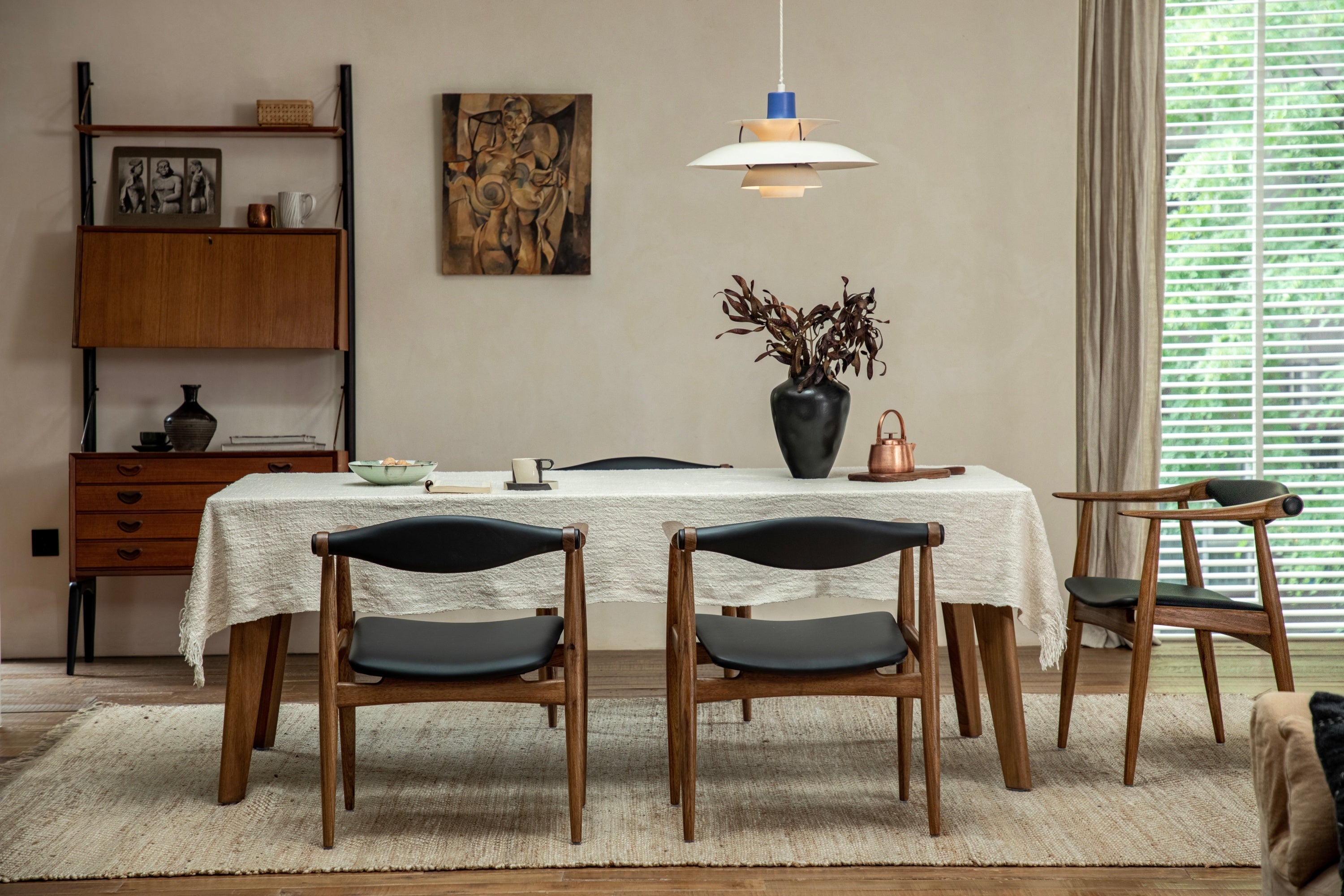
Dining Table Size Guide: What Works Best for Your Room
| Seating | Table Shape | Recommended Table Size (L × W / Diameter) | Minimum Room Size (L × W) | Notes |
| 2 | Round | 30–36 in diameter | 6 ft × 6 ft | Best for very small kitchens or breakfast nooks. |
| 2–4 | Square | 36–40 in | 7 ft × 7 ft | Can be pushed against a wall to save space. |
| 4 | Rectangular | 48–60 in × 30–36 in | 8 ft × 10 ft | Good everyday family size for small rooms. |
| 4 | Round | 42–48 in diameter | 8 ft × 8 ft | Great for conversation and compact dining areas. |
| 4–6 | Rectangular | 60–72 in × 36–40 in | 9 ft × 11 ft | Most common size for medium dining rooms. |
| 4–6 | Oval | 60–72 in × 36–40 in | 9 ft × 11 ft | Softer corners, safer with kids and better traffic flow. |
| 6 | Round | 54–60 in diameter | 9 ft × 9 ft | Avoid going much over 60 in so people can reach the center. |
| 6–8 | Rectangular | 72–84 in × 36–42 in | 10 ft × 12 ft | Suits larger families and frequent entertainers. |
| 6–8 | Oval | 72–84 in × 36–42 in | 10 ft × 12 ft | Feels visually lighter than a big rectangle. |
| 8–10 | Rectangular | 84–96 in × 40–44 in | 10 ft × 14 ft | Works best in long, generous dining rooms. |
| 10–12 | Rectangular | 96–120 in × 40–48 in | 12 ft × 16 ft | For large gatherings and formal entertaining. |
A great dining room feels easy to move in and comfortable to sit in. Picking the right table size prevents a cramped space where guests bump elbows or struggle to pull out chairs. By matching the furniture to your floor plan, you create an inviting spot for daily meals and holiday parties. Use these simple steps to find a fit that looks great and works for your lifestyle.
Step 1: Measure Your Dining Area
Taking precise measurements prevents the mistake of buying a piece that blocks your home's natural paths.
Measuring the Total Area and Clearance
Start by measuring the length and width of your dining room. If you live in an open-concept home, use painter's tape to mark a "dining zone" on the floor. A good rule is to leave 36 to 42 inches of space between the edge of the table and the walls. This gap allows people to pull out their chairs and walk behind others without bumping into anything.
Accounting for Obstacles and Walkways
Look for doors that swing inward, floor vents, or nearby cabinets. If you have a kitchen island or a sideboard, measure the distance from those items instead of the wall. To see if a specific size works, try the "masking tape test." Tape the outline of the potential furniture on the floor. Walk around it for a day to see if it catches your shins or blocks the path to the kitchen.
Step 2: Determine Your Seating Needs
Your lifestyle dictates how big your furniture needs to be. Think about who sits down for dinner on a Tuesday versus who joins you for a big holiday feast or a birthday.
Everyday Seating vs. Maximum Capacity
Most people buy a dining table set based on their largest annual party, but this can make a room feel cramped for the other 360 days of the year. Instead, choose a size that fits your immediate family comfortably. For a standard meal, each person needs about 24 inches of horizontal space. If you want a more relaxed feel with plenty of elbow room, aim for 30 inches per person.

Surface Area for Modern Multi-purpose Use
A dining table also often doubles as a home office or a homework station. If you plan to use your laptop while others eat, or if you enjoy large craft projects, you will need extra depth. A table that is 36 to 40 inches wide provides enough room for place settings on both sides plus a centerpiece or a computer in the middle.
Step 3: Choose the Best Dining Table Shape
The shape of your furniture changes how people move through the room. Certain shapes work better in narrow spots, while others help spark better conversation among your family and friends.
Rectangular Tables for Large Groups
Rectangular shapes are the most common choice for formal rooms. They fit well in long, narrow areas and can seat the highest number of guests. If you have a big family, a long solid wood dining table provides a sturdy, classic look. These usually come in lengths of 72 inches for six people or 96 inches for eight to ten people.
Round Tables for Better Conversation
Round tops are excellent for square rooms or small apartments. Because there are no sharp corners, they improve the flow of traffic. A pedestal base is often better than four legs on a round table because it offers more legroom. A 48-inch round top seats four people, while a 60-inch version fits six. Avoid going much larger than 60 inches, or guests will find it hard to reach the food in the center.
Square and Oval Options
Square tables provide an intimate feel for four people in a square-shaped room. You can also push one side against a wall to save space when you are not entertaining. Oval tables offer the length of a rectangle but have rounded ends. This makes a room feel less "boxy" and is safer for homes with small children who might run into sharp corners.

Step 4: Match Your Table Size to the Room Dimensions
A tiny table in a massive room looks like an afterthought, while a huge table in a small room feels suffocating. Achieving a sense of scale makes the whole house look professionally designed.
Small Rooms and Apartment Living
In tight quarters, every inch matters. Consider a "bistro" style or a small square option. Using benches instead of dining table chairs can save a lot of space because benches can slide completely under the table when you are done eating. In open-plan layouts, placing the table near a window or against the back of a sofa helps define the area without closing it off.
Medium and Large Dining Areas
For a medium-sized room, a 6-seat rectangular or oval option is usually the sweet spot. In a very large room, a small table will look "lost." To fill the space properly, look for a heavy reclaimed wood dining table with a thick top. You can also use a large area rug to frame the furniture. The rug should be 24 to 30 inches wider than the table on all sides so the chairs stay on the rug even when pulled out.
Step 5: Check Table Height and Chair Comfort
Comfort is not just about the seat cushion; it is about how your body relates to the height of the surface. Standardizing these measurements prevents back strain and cramped legs.
For Dining Tables
Almost all standard tables stand about 30 inches high. This height works best with chairs that have a seat height of 18 inches. This 12-inch gap provides enough room for your thighs to fit under the "apron" (the wooden frame under the tabletop) without feeling squished.
For Dining Table Chairs
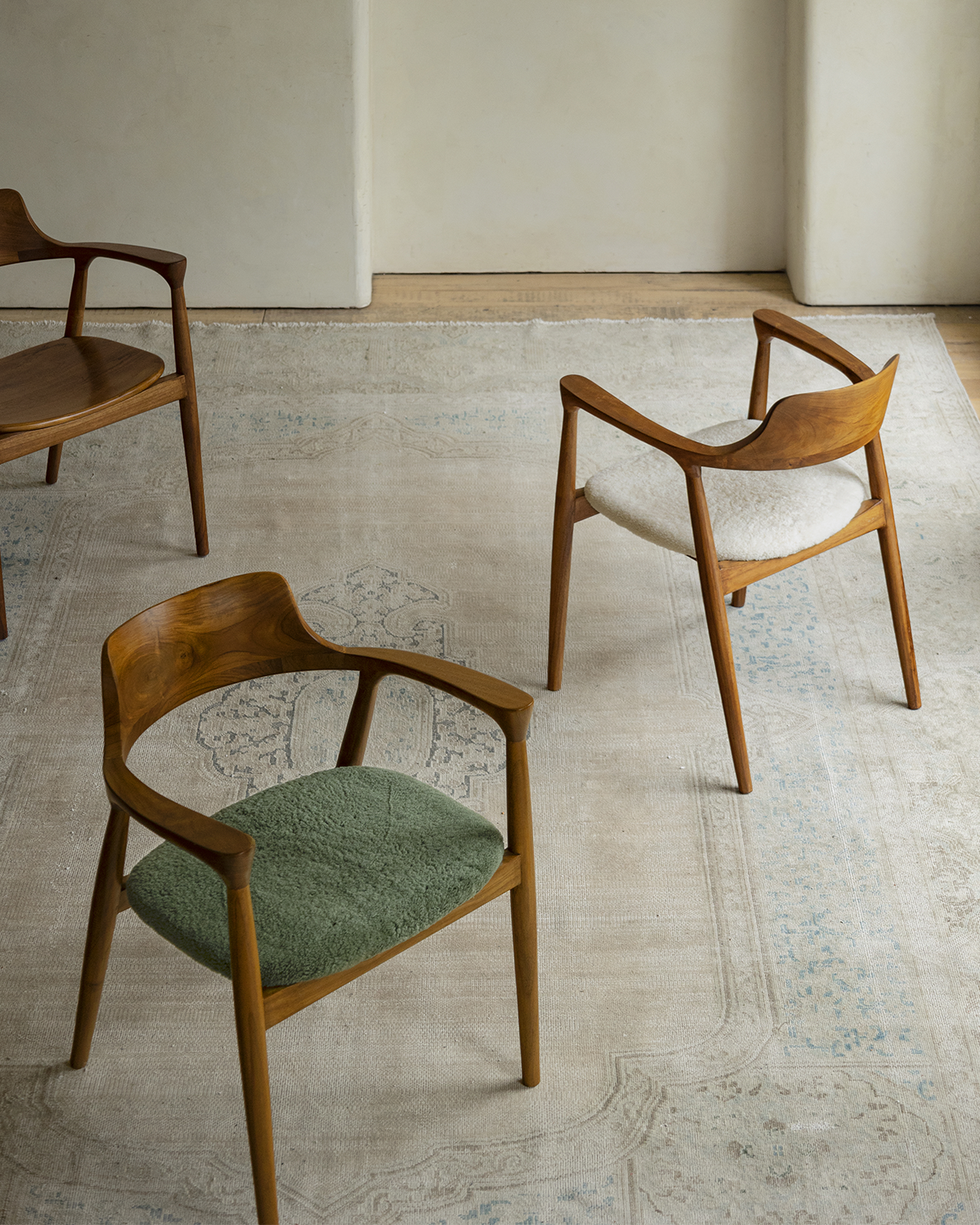
Before you buy, check the width of the dining table chairs. If the chairs are too wide, you might not be able to fit the desired number between the table legs. Also, consider armchairs. While they are comfortable, they require more width and may not slide all the way under the table. If space is tight, armless chairs are a more practical choice.
Step 6: Plan Clearances and Traffic Flow
A room only works if you can move through it easily. You must account for the space needed to serve food and the space needed for people to get up.
Walking Space and Service Paths
If the dining room is a thoroughfare to the kitchen or backyard, you need extra clearance. Instead of the standard 36 inches, aim for 48 inches of space on the side where people walk frequently. This ensures that someone getting a glass of water doesn't disrupt the person eating dinner.
Nearby Furniture and Doorways
Check the "swing" of your storage furniture.
- If you have a buffet or sideboard, pull out the drawers to see how far they extend.
- You should still be able to walk past the buffet even when the drawers are open and people are sitting at the table.
- If you have sliding glass doors, leave enough room so the curtain or the door handle doesn't hit the back of a chair.
Step 7: Consider Extension and Multifunction Options
If you only host large groups a few times a year, you do not need a giant table sitting empty every day. Flexible furniture allows your home to adapt to different situations.
Extension Tables and Leaves
An extension dining table is a smart investment for most homeowners. These come with "leaves" that you can add to the middle or ends. A "butterfly leaf" is especially handy because it folds up and hides inside the table, so you don't have to find a closet to store it. Always check the stability of the table when it is fully extended to make sure it doesn't wobble.

Drop-Leaf and Convertible Designs
For very small homes, a drop-leaf dining table can sit against a wall as a console and then open up when guests arrive. Some modern designs even allow a console table to transform into a full-sized dining surface. This keeps your living area open and airy for daily life while staying ready for a party.
Step 8: Balance Size with Style (Lighting, Rug, Storage)
The physical size is the foundation, but how the table looks in the light and on the floor completes the room. These final details help the furniture feel like it belongs.
Lighting Proportions and Placement
Your hanging light fixture should relate to the size of your furniture. A good rule is to pick a chandelier or pendant that is about 1/2 to 2/3 the width of the table. Center the light exactly over the table, not necessarily in the center of the room. This creates a focal point that draws people in.
Material Choice and Visual Weight
The material you choose changes how big the furniture feels. A glass-top table feels light and makes a small room look larger because you can see the floor through it. On the other hand, a dark solid wood dining table feels heavy and grounded, which is great for anchoring a large, open space.
Choosing the Right Table Size for Your Dining Space
Finding the right fit is a simple process of measuring your room, subtracting space for walking, and choosing a shape that matches your lifestyle. Start with the "masking tape test" to be sure about the footprint. When you prioritize both the physical dimensions and the flow of the room, you create a space where people want to linger long after the meal is over. Note your room measurements and your "must-have" seating count before you start shopping to stay on track.
FAQs About Dining Table Size
Q1: How much space should I leave around a dining table?
Leave at least 36 inches between the table and the walls. This allows guests to push back their chairs and walk around the room comfortably.
Q2: What is the best shape for a small apartment?
Round tables are usually best for small spaces. They have a smaller footprint and no sharp corners, which makes it easier to navigate a tight room.
Q3: How big should a table be to seat 6 people?
For a rectangular table, look for something at least 60 to 72 inches long. For a round table, a 60-inch diameter is usually required to fit six people without crowding.
Q4: Should I get a fixed table or an extension table?
If you host guests more than twice a year, an extension table is worth the extra cost. It gives you the best of both worlds: more floor space daily and enough seating for holidays.
%0AMinimum%20Room%20Size%20(L%20%C3%97%20W)%0ANotes%0A%0A%0A2%0ARound%0A30%E2%80%9336%20in%20diameter%0A6%20ft%20%C3%97%206%20ft%0ABest%20for%20very%20small%20kitchens%20or%20breakfast%20nooks.%0A%0A%0A2%E2%80%93...)