

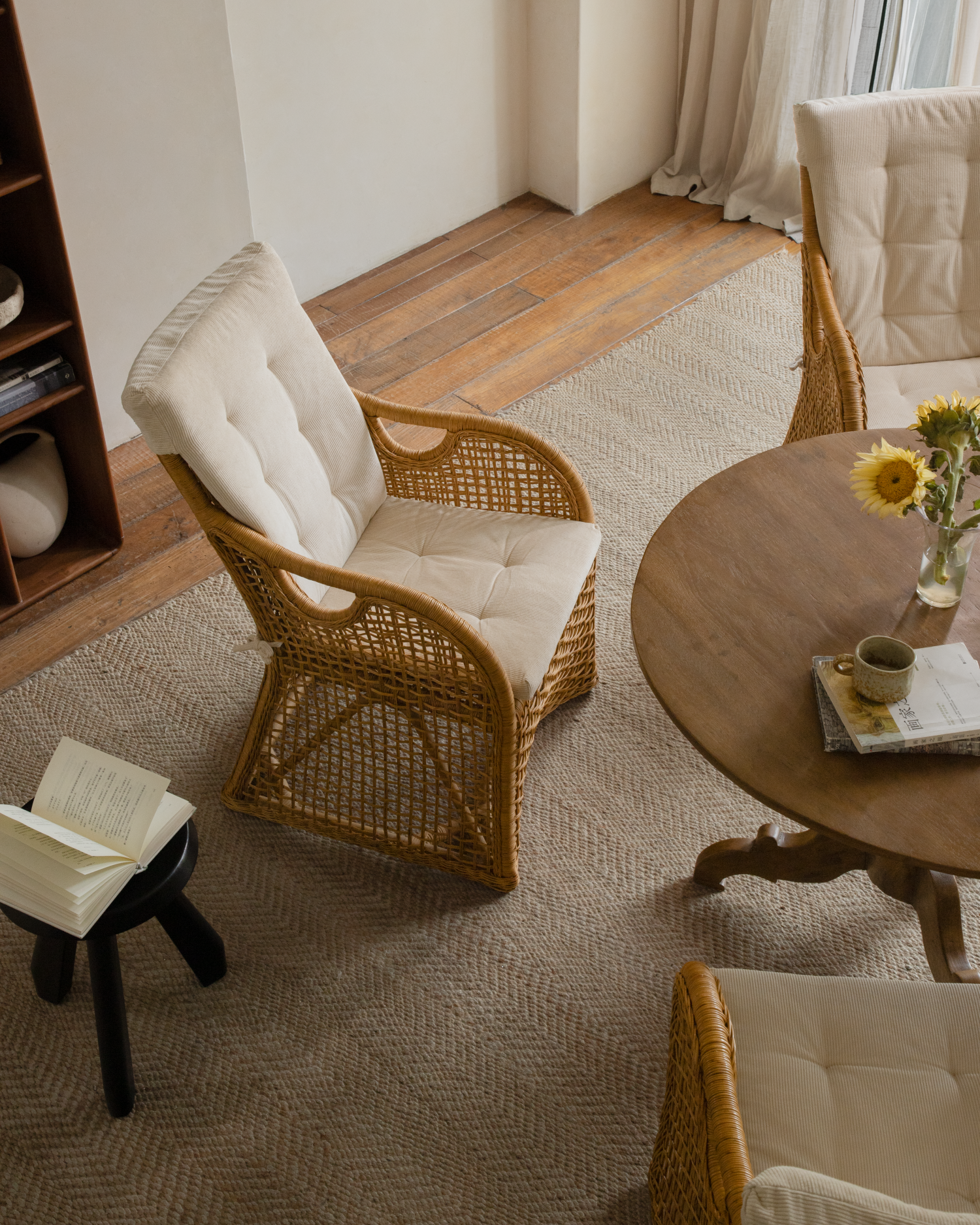









The appeal of rattan furniture, like the rattan dining chair, lies in its organic texture and golden tones. It brings a relaxed, coastal, or bohemian vibe to any room. Unlike heavy wooden furniture, these chairs are easy to move around. However, because rattan is a plant-based material, it reacts to its environment. It is tough enough for daily use, but moisture, high heat, and constant sunlight can cause damage over time. This guide provides practical steps to maintain your furniture so it remains a centerpiece of your home.
What's the Nature of Rattan Furniture?
Knowing how your indoor rattan chairs are made helps you care for them better. Rattan is a unique material that acts differently than solid wood or metal.
What Is Rattan and How It Behaves
Rattan comes from a climbing vine found in tropical jungles. It is not bamboo; while bamboo is hollow, rattan has a solid, fibrous core. This makes it incredibly strong yet flexible enough to be bent into the beautiful curves seen in a vintage rattan chair.
Its porous nature allows it to "breathe," but it also means the material absorbs humidity and dries out if the air is too parched.
Advantages and Vulnerabilities of Rattan Dining Chairs
- These chairs are popular because they provide comfortable seating with a timeless look. They fit perfectly as wicker dining armchairs in a formal setting or casual kitchen.
- The downside is that the fibers can become brittle. If the environment is too dry, the strands might crack. If it is too damp, you might deal with sagging seats or mold.
Signs Your Rattan Dining Chairs Need Maintenance
If you have a rattan dining chair, catching problems early prevents small cracks from turning into a broken chair. Regularly checking your furniture ensures that minor wear and tear does not ruin the structural integrity.
Visual and Surface Signs
The first thing you might notice is the color fading. A vibrant rattan chair indoor can start to look dull or gray if it sits in the sun.
If the surface feels rough or "fuzzy" to the touch, the protective finish is likely wearing off. Look closely for small splinters or lifted strands in the weave, as these can snag clothing or grow into larger breaks.
Structural and Comfort Signs
- Sit in your chairs and pay attention to how they feel. A sagging seat is a clear sign that the fibers are stretching or losing their tension.
- You should also listen for sounds. Creaking or wobbling suggests that the joints are dry or the screws have loosened.
- If the chair feels "mushy" rather than firm, it needs immediate maintenance.
Environmental and Hygiene Signs
In humid climates, smell the furniture. A musty odor often points to mildew growing inside the tight weaves. Look for tiny black or green dots in the crevices.
Additionally, because dining chairs are used for eating, check for sticky spots from spilled drinks or food crumbs trapped in the braided sections.

Preparing for Rattan Furniture Maintenance
Get the right tools together before you start cleaning. If you use the wrong things, you could damage the surface by scratching it or introducing too much water, which would cause more problems later on.
Tools and Products You'll Need
You do not need expensive gear.
- A vacuum with a soft brush attachment is the best tool for dust.
- For washing, use a soft cloth and a soft-bristle toothbrush for the tight spots.
- A mild dish soap mixed with water works well.
- To keep the fibers hydrated, consider a high-quality furniture oil or a specific rattan conditioner.
Setting Up a Safe Cleaning Area
Work in a shaded area with plenty of airflow. Never clean rattan in direct sunlight, as it can dry too fast and crack. If you are working inside, lay down a drop cloth to protect your floors from drips. Ensure you have enough space to flip the chair over to reach the underside.
Basic Do's and Don'ts Before You Start
Always test a new cleaning solution on the underside of the seat first. This ensures it won't discolor the finish.
Never soak the rattan. It is a common mistake to hose down these chairs, but too much water weakens the fibers and causes them to rot or stretch out of shape.
How to Maintain Your Rattan Dining Chairs (Different Situations)
Maintaining your furniture involves different levels of effort depending on the condition of the piece. Regular light care makes the deep cleaning process much easier and less frequent.
Routine Light Cleaning (Weekly or As Needed)
Start by vacuuming the chair thoroughly. Use the brush attachment to get deep into the weave where dust and crumbs hide. Next, dampen a cloth with a mix of warm water and a drop of dish soap. Wring it out until it is barely damp. Wipe the surfaces and then use a dry cloth to remove any leftover moisture.
Deep Cleaning for Built-Up Dirt and Stains
If the chair looks grimy, it is time for a deeper wash. Use a toothbrush dipped in soapy suds to scrub the crevices. For food stains, act quickly. Blot the area with a damp cloth. If the stain is stubborn, a mixture of water and a tiny bit of white vinegar can help, but use it sparingly and dry the area immediately with a hair dryer on a cool setting.

Dealing with Moisture, Mold, and Humidity Issues
If you find mold, start by wiping the area with mild soap and water. If needed, you can spot-treat it with a diluted bleach-and-water solution (about 1 part bleach to 10 parts water). Always test an inconspicuous area first and make sure the space is well ventilated. Be careful not to saturate the rattan fibers. Once the mold is gone, move the chair to a room with a dehumidifier or better airflow. This prevents the spores from coming back.
Caring for Dry, Faded, or Dull Rattan
When the rattan looks parched, it needs oil. Apply a thin layer of linseed oil or a specialized furniture conditioner using a soft rag. Let it sit for several hours so the fibers can soak it up. Afterward, buff the chair with a clean, dry cloth to remove any excess oil so it doesn't rub off on your clothes.
Addressing Structural Problems and Minor Repairs
Check the legs and armrests. If the chair wobbles, tighten any visible screws. If a small strand of the weave has popped out, you can often tuck it back in using a bit of wood glue and a toothpick. Hold it in place with masking tape until the glue dries. For major sagging, the chair may need professional "re-caning."
How to Extend the Lifespan of Your Rattan Dining Chairs
Prevention is the most effective way to keep your rattan dining chair looking new. A few changes to your daily habits can stop damage before it starts.
Smart Placement and Environmental Control
- Keep your chairs away from heat sources like radiators or fireplaces, which bake the moisture out of the material.
- Also, avoid placing them in front of windows that get intense afternoon sun.
- If you live in a very dry area, using a humidifier in the winter helps keep the fibers flexible.
Protective Habits in Daily Use
One of the best ways to protect the seat is to use a dining chair cushion. A cushion distributes your weight more evenly, which prevents the rattan from sagging or snapping under pressure. Encourage guests to lift the chairs when moving them; dragging them can loosen the joints and scrape the feet.
Seasonal and Long-Term Care
- At least once a year, do a full inspection. Check for loose weaves and apply a fresh coat of conditioner.
- If you have wicker dining armchairs that you only use occasionally, store them in a cool, dry place covered with a breathable fabric sheet to keep dust away.
- Avoid plastic covers, as they can trap moisture and lead to mold.
Preserve Your Rattan Furniture Beauty
Keeping rattan in top shape is simple with a regular routine. Weekly dusting and a yearly deep clean keep the fibers strong and flexible. Shielding your pieces from direct sunlight and heavy rain prevents cracking or fading over time. These small steps ensure your furniture stays sturdy and looks great for years. Proper care keeps your home feeling warm and stylish without much effort.

FAQs About Rattan Dining Chair Care
Q1: How often should I clean and condition my rattan dining chairs?
You should dust them weekly. A damp wipe-down is good once a month. Conditioning with oil should happen once or twice a year, depending on how dry your home stays.
Q2: What cleaning products are safe to use on rattan, and which should I avoid?
Mild dish soap and water are the safest options. Avoid bleach unless you are fighting mold. Stay away from abrasive cleaners, ammonia, or any harsh chemicals that can strip the natural oils from the plant fibers.
Q3: What can I do if the seat of my rattan chair starts to sag or feel weak?
The best immediate fix is to add a firm dining chair cushion to provide extra support. If the sag is severe, you can try dampening the underside of the seat with warm water and letting it dry naturally in a cool spot; sometimes the fibers will shrink back as they dry.
Q4: Are rattan dining chairs suitable for semi-outdoor spaces like balconies?
Yes, but they require much more care. Ensure the balcony is covered and protected from rain. If the chairs get wet, dry them immediately. You may need to condition them more often since outdoor air changes temperature and humidity frequently.


