

Ottoman vs Coffee Table: Which Is Better for Your Living Room?
| Feature | Ottoman | Coffee Table |
| Primary Material | Padded fabric, leather, or velvet | Wood, metal, glass, or stone |
| Surface Stability | Soft (requires a tray for drinks) | Firm and steady |
| Comfort Level | High (ideal as a footrest or extra seat) | Low (not meant for resting legs) |
| Safety | Child-friendly (soft, padded edges) | Hard edges (potential hazard for kids) |
| Storage | Often includes hidden interior space | Sometimes includes drawers or shelves |
| Durability | Fabric can stain; needs more care | Easy to wipe clean; very durable |
| Visual Vibe | Cozy, casual, and warm | Structured, formal, and polished |
| Best For | Lounging, safety, and small spaces | Entertaining and displaying decor |
Choosing the right center furniture for your living room changes how you use the space every day. It is the spot where you rest your feet, set down your morning coffee, or display your favorite books. While both ottomans and coffee tables have a place in modern homes, they offer very different benefits.
This choice impacts your comfort, how much storage you have, and even the safety of your kids or pets. Some people prefer a hard surface for entertaining, while others want a soft place to relax. This comparison helps you look at your lifestyle and room layout to find the perfect fit for your home.
What Is an Ottoman Footstool?
An ottoman is a piece of furniture that is fully padded and covered in fabric, leather, or velvet. It does not have a hard top, making it soft to the touch and very comfortable for tired legs.
Many people use an ottoman instead of a traditional table to create a relaxed environment. These pieces are versatile because they can act as a footrest, a spare seat for guests, or even a place to hide blankets and pillows if they have a built-in storage compartment. If you need a flat surface for a drink, you can simply place a large tray on top. This makes the ottoman a flexible choice for rooms that need to serve many purposes at once.
What Is a Standard Coffee Table?
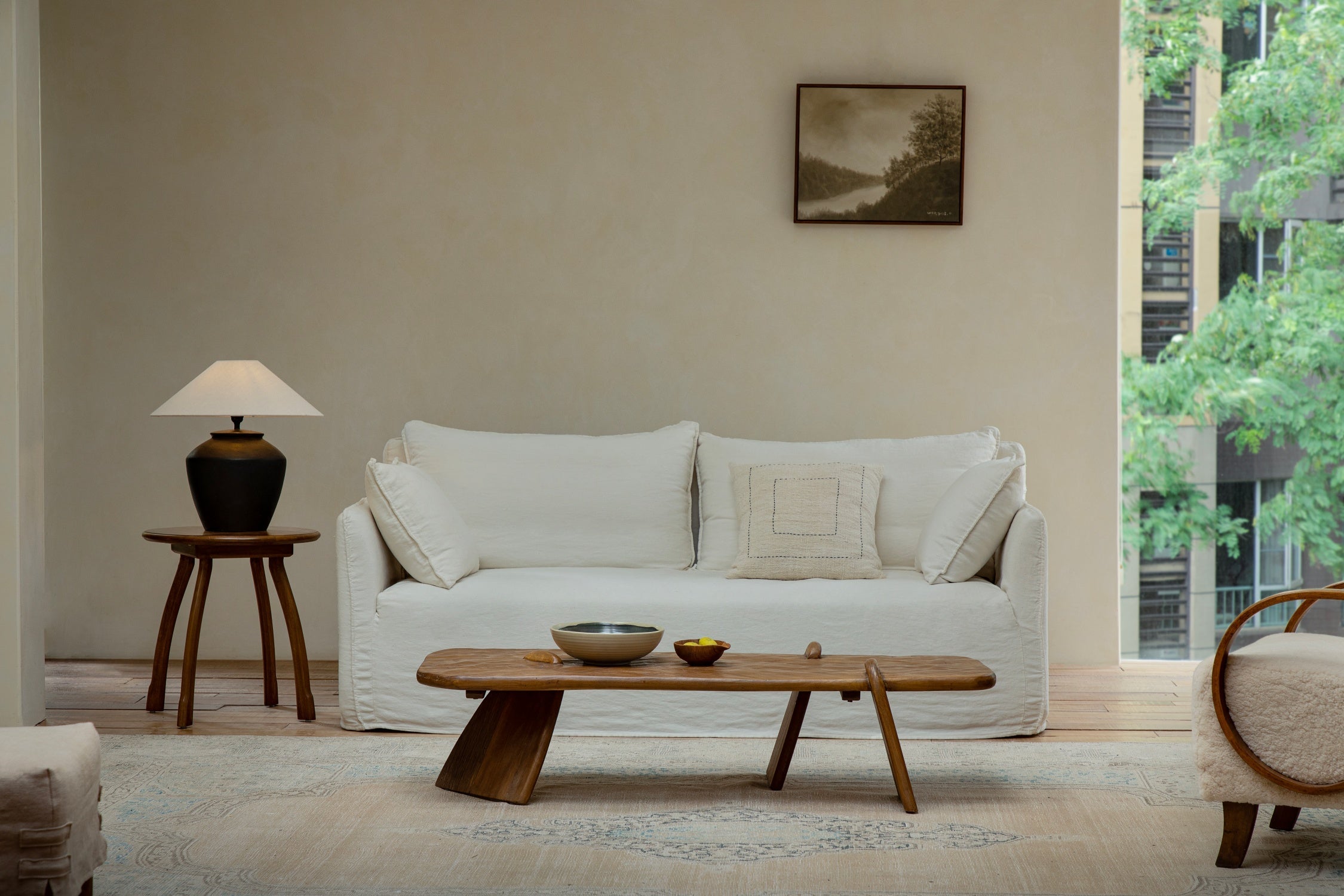
A coffee table is a low-standing piece of furniture with a solid top made of wood, metal, glass, or stone. It sits right in front of your couch to hold everyday items.
The main job of this table is to provide a steady, flat area for drinks, snacks, remotes, and decorations. Because the surface is firm, you don't have to worry about a glass of water tipping over. Many designs also include lower shelves or small drawers to keep your living area organized. Whether you choose a rustic wood coffee table for a farmhouse look or a glass one for a modern feel, it acts as a strong visual anchor for the room.

Ottoman vs Coffee Table: Key Differences
Knowing how these two choices are physically different can help you cut down your search. Because of how they are built and how they are used, each one gives your home a different feel.
Levels of Physical Comfort
Ottomans are the clear winners for lounging. They allow you to stretch out and rest your feet on a soft surface without needing a pillow. Coffee tables are hard and usually have sharp edges, so they aren't meant for leaning or resting your legs. If your goal is to create a cozy "sink-in" feeling in your den, the ottoman is the better tool for the job.
Daily Functionality and Use
A coffee table is built for stability. It is the best place for a heavy vase or a tray of appetizers. An ottoman is a multi-tool; it can be a seat, a footstool, or a surface. However, without a tray, an ottoman can be frustrating if you want to set down a wine glass or a hot mug of tea.
Safety for Children and Pets
Safety is a huge factor for many families. Ottomans are upholstered and have rounded, padded corners. This means if a toddler trips, they hit a soft cushion instead of a hard edge. Coffee tables, especially those made of glass or metal with sharp corners, can be a hazard in a house with active kids or pets running around.
Visual Style and Aesthetics
Ottomans soften the look of a room. They add texture through fabric and make a large space feel more intimate. Coffee tables provide structure and "visual weight." They often look more formal and polished. A sleek table can make a room look more organized, while a large ottoman makes it look lived-in and friendly.
Cleaning and Maintenance
Cleaning a coffee table is usually as simple as using a damp cloth or some glass cleaner. Spills don't soak into wood or metal. Ottomans are different because they are covered in fabric. A spilled soda can leave a permanent stain on a light-colored ottoman unless the fabric is treated with a protector. Leather ottomans are easier to wipe, but they still require more care than a solid tabletop.

Pros and Cons of an Ottoman for Your Home
Choosing an upholstered center piece changes the vibe of your seating area. It focuses on warmth and relaxation but comes with a few trade-offs in terms of stability and cleaning.
Pros
- Very soft and comfortable for daily relaxation.
- Safer for toddlers and young children due to lack of sharp corners.
- Offers extra seating when you have a full house of guests.
- Often includes hidden storage space for clutter.
- Fits well in small rooms where you need furniture to do two things at once.
Cons
- Not a stable surface for drinks or food without a tray.
- Fabric can get dirty or stained easily.
- May not offer the sharp, clean lines of a wooden table.
Pros and Cons of a Coffee Table in the Living Room
The classic table has remained popular for a reason. It is a reliable piece of furniture that handles heavy use and serves as a beautiful focal point for your interior design.
Pros
- Provides a very sturdy and flat surface for any item.
- Easy to clean and resistant to most liquid spills.
- Available in endless styles like a rustic wood coffee table or minimalist glass.
- Great for displaying art, books, and flowers.
Cons
- Hard edges and corners can be dangerous for small children; choose round edges instead.
- Not comfortable to use as a footrest or a seat.
- Can feel heavy or bulky if you don't pick the right coffee table dimensions for your floor plan.
Which One Fits Your Lifestyle Best?
Sometimes looking at your daily routine is easier than comparing lists of pros and cons. Think about how you spend your time on the sofa to find the winner.
Scenario 1: You Have Young Kids or Energetic Pets (Winner: Ottoman)
When kids are learning to walk, every sharp corner is a risk. An ottoman removes that worry. Since it is basically a giant pillow, it is a safe piece for a playroom or family room. Plus, a storage ottoman is a great place to toss toys when guests come over unexpectedly.
Scenario 2: You Love to Entertain and Host (Winner: Coffee Table)
If you often have friends over for drinks or snacks, you need a table. Trying to balance a plate of crackers on a soft cushion is a recipe for a mess. A coffee table allows guests to set down their drinks with confidence. Also, cleaning up after a party is much faster when you can just wipe down a hard surface.
Scenario 3: You Want Ultimate Lounging Comfort (Winner: Ottoman)
For those who see the living room as a place to nap and relax, the ottoman is unmatched. It makes the sofa feel bigger and more inviting. It is much more comfortable to rest your legs on a padded surface than on a cold, hard table.
Scenario 4: You Are Passionate About Interior Styling (Winner: Coffee Table)
If you love decorating, the coffee table is your best friend. It provides a flat stage for a round coffee table decor idea, such as a stack of books, a candle, and a tray of stones. The solid surface lets you arrange heavy or fragile items that might tip over on a soft ottoman.

Scenario 5: You Live in a Small Apartment (Winner: It Depends)
This is a tie. An ottoman is great because it works as a chair and a table, saving you from buying two pieces of furniture. However, a glass coffee table can be better for a small room because you can see through it. This makes the floor look more open and keeps the room from feeling crowded.
The Best of Both Worlds: How to Use an Ottoman as a Coffee Table
You don't always need to pick one. A lot of smart people figure out ways to use both or mix their best features to make their home look great.
One popular trick is to use an extra large ottoman coffee table and place a sturdy wooden tray on top. This gives you a flat spot for your coffee mug while leaving the rest of the surface soft for your feet. Another great idea is to buy a coffee table with sectional sofa setups that allow you to tuck small poufs or mini-ottomans underneath the table. This way, you have a hard table for daily use, but you can pull out the soft footrests whenever you want to relax.
Choose the Best Coffee Table or Ottoman for Your Space
Your living room should fit your actual habits. If you value a steady spot for drinks and a sharp, polished look, a coffee table is your best bet. If you prefer a soft place to kick back or need a safe, kid-friendly zone, go with an ottoman. Think about how you use your sofa every day. Pick the piece that makes your home feel most like you.
FAQs about Living Room Centerpiece Choices
Q1: Can I replace my coffee table with an ottoman?
Yes. It is a very common trend. Just make sure you have a tray nearby for those times when you need to set down a drink or a plate.
Q2: How do I protect my ottoman if I use it as a coffee table?
The best way is to use a large, flat tray to prevent spills. You can also use fabric protector sprays to make the material water-resistant. If you are worried about wear, choose a leather or faux-leather ottoman that is easier to clean.
Q3: Are coffee tables going out of style?
No, they are a classic choice. While ottomans are popular for casual rooms, coffee tables remain the top choice for formal living areas. Modern designs like a rustic wood coffee table are still very high in demand.
Q4: What is the best shape for a living room centerpiece?
If you have a tight space, a round shape is usually best because it is easier to walk around. For a coffee table with sectional sofa layouts, a rectangular or square shape often fills the "L" shape of the couch more effectively. Always check your coffee table dimensions to ensure there is at least 14 to 18 inches of space between the coffee table and the sofa.

%0AFirm%20and%20steady%0A%0A%0AComfort%20Lev...)