Round vs. Rectangular Dining Table: Which One Works Best for You
Choosing between a round dining table and rectangular dining table affects more than just aesthetics. The shape you pick changes how people move around your space, how many guests you can seat comfortably, and even how conversations flow during meals. Getting this decision right means understanding your room layout, lifestyle needs, and daily routines.
Round Dining Tables: Benefits, Drawbacks, and Best Uses
Round dining tables create a different dining experience compared to their angular counterparts. They eliminate corner seats and place everyone at an equal distance from the center, which naturally encourages interaction across the table.
The Benefits of Round Dining Tables
A round dining table offers several practical benefits that make it appealing for many homes:
- Safer navigation: The absence of sharp corners means easier movement in tight spaces, especially helpful in homes with young children or narrow dining areas.
- Better conversations: This dining table shape promotes natural interaction since no one sits at an awkward angle or far from others.
- Versatile placement: Smaller round tables fit beautifully in breakfast nooks, kitchen corners, or square rooms where a rectangular option might look out of place.
- Extra legroom: Many round designs feature a pedestal base instead of four legs, giving diners more legroom and flexibility in seating arrangements.
The Drawbacks of Round Dining Tables
Despite their charm, round tables come with limitations:
- Limited seating: They typically seat fewer people than rectangular tables of similar square footage, making them less practical for large families or frequent entertainers.
- Expansion challenges: Finding extendable round tables proves more challenging, and the expansion leaves often create an awkward oval shape with visible seams.
- Wall space issues: Round tables don't push neatly against walls, which can waste valuable floor space in smaller homes.
- Proportion problems: In long, narrow dining rooms, a round table may look disproportionate and leave empty space at either end of the room.

Ideal Spaces for Round Tables
- Square dining rooms or open-concept areas work best for round tables.
- If your dining space measures roughly the same in length and width, a round table will feel balanced and proportional.
- Cozy breakfast nooks, kitchen dining areas, and smaller apartments benefit from the space-saving qualities and intimate atmosphere a round table provides.
The cons of round dining table designs become less noticeable in these well-matched environments.
Rectangular Dining Tables Explained: Pros, Cons, and Ideal Spaces
Rectangular dining tables remain the most traditional and common choice for dining rooms. Their straight edges and elongated shape align naturally with how most dining spaces are built and how we traditionally organize formal meals.
The Pros of Choosing Rectangular Dining Tables
The pros of rectangular dining table designs start with space efficiency and versatility:
- Maximum seating capacity: These tables maximize seating along their length, making them ideal for larger families and dinner parties.
- Easy expansion: Most rectangular tables come with extension leaves that slide in seamlessly, allowing you to adjust size based on your needs.
- Smart space use: They fit perfectly against walls or in narrow rooms, making smart use of awkward floor plans.
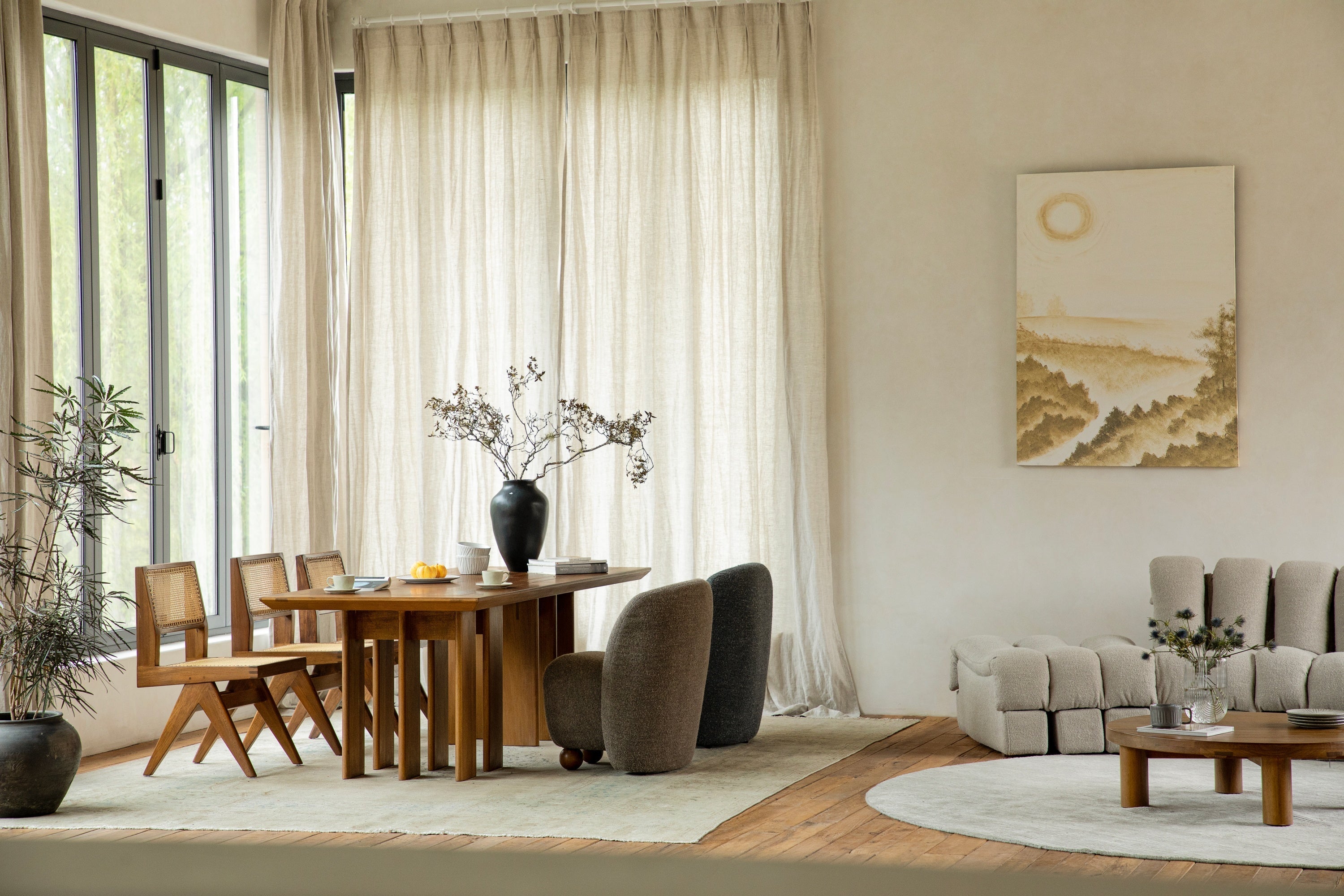
- Style flexibility: A minimalist wood dining table in rectangular form works beautifully in both modern and traditional settings, offering versatility in style.
- Formal structure: The defined head and foot positions create a natural focal point for formal gatherings or holiday meals.
The Cons to Consider
Rectangular tables come with their own set of challenges:
- Space demands: They require more clearance space on all sides to feel comfortable, which can be problematic in smaller rooms.
- Safety concerns: The sharp corners pose risks in high-traffic areas and tight spaces.
- Conversation gaps: Discussions can feel fragmented at larger rectangular tables, with guests at opposite ends struggling to hear each other.
- Poor fit in square rooms: The cons of rectangular dining table setups become apparent in square rooms, where they may look mismatched or create unbalanced negative space.
These limitations matter most in compact or square-shaped dining areas.

Ideal Spaces for Rectangular Tables
- Traditional dining rooms with rectangular or oblong floor plans suit this dining table shape perfectly.
- Narrow dining areas, galley-style kitchens, and open-plan spaces with defined dining zones all accommodate rectangular tables well.
- If you regularly host large gatherings or have a family of five or more, the extra seating capacity makes rectangular tables the practical choice.
Round vs. Rectangular Dining Table: How to Pick
When choosing between round vs. rectangular dining table, you need to be honest about your area and how you use the table. The best choice strikes a balance between realistic needs and personal tastes.
Start by Measuring Your Room Carefully
Use painter's tape on the floor to outline your table size plus at least 36 inches of clearance on all sides. This clearance allows chairs to pull out comfortably and people to walk behind seated diners. Tight spaces might require 30 inches minimum, but 42-48 inches feels more spacious. Walk around your taped outline to test the flow, and you'll quickly sense if a shape feels cramped or comfortable.
Think About Your Typical Dining Scenarios
Families with young children might appreciate the pros of round dining table designs for their safety and conversational benefits. If you host dinner parties monthly, a rectangular table with extension leaves offers more flexibility. Consider both your everyday use and occasional needs. For example, a table sized for daily use that can't accommodate holiday guests may leave you frustrated.
Analyze How People Move Through Your Space
High-traffic areas benefit from round tables with no corners to navigate around. If your dining area sits in a pathway between kitchen and living room, the smooth edges prevent bruised hips and snagged clothing. In dedicated dining rooms with single-entry access, rectangular tables pose fewer traffic concerns.

Match Your Design Vision and Existing Furniture
A minimalist wood dining table in rectangular form complements modern, Scandinavian, or industrial interiors. Round tables soften traditional spaces or add curves to contemporary rooms dominated by straight lines. Look at your existing furniture shapes—mixing circular and angular pieces creates visual interest, while matching shapes can feel repetitive.
Align With How You Actually Live
Families using the dining table for homework, crafts, or work-from-home tasks may prefer the surface area a rectangular option provides. Those prioritizing family connection during meals might choose round. Be honest about formal vs. casual entertaining: A rectangular table suits traditional dinner parties, while round tables excel at relaxed gatherings.
Finally, you have to weigh the pros and cons of rectangular dining tables against those of round tables in your unique situation. There is no one right answer, but if you think about these things carefully, they will help you make the best choice for your house.
Choose Your Dining Table Shape With Confidence
Whether you choose a round or rectangular dining table depends on the shape of your room, the size of your family, and how you use the table every day. Really check out the size of the room, think about how you gather for meals, and choose the shape that works best for you. If you have the right eating table, you'll enjoy every meal more.
3 FAQs About Dining Table Shapes
Q1: Which shape takes up less room?
Round dining tables usually save space in small or square rooms and make it easier to move around because they don't have any corners. A 48-inch round table can easily seat four people and takes up less space than a rectangular table that can seat the same number of people. In long, narrow rooms, rectangular tables are better because round tables waste floor space at the ends.
Q2: How much clearance do I need around the table?
Allow at least 36 inches of space on all sides of your dinner table so that people can sit down and move around easily. People can also walk behind seated guests with this measurement and chairs can be pulled out all the way. If the room is tight, 30 inches might work, but it might feel squished. Larger dining rooms benefit from 42-48 inches of clearance.
Q3: What if I want an extendable table?
With leaves that slide in smoothly to keep the lines clean, extendable rectangular tables give you more choices and better functionality. Round extendable tables exist, but they change shape to ovals when they do, which some people find less appealing because the seam lines are more noticeable. For practical reasons, rectangular tables are better for hosting more people if the option to expand matters for your situation.