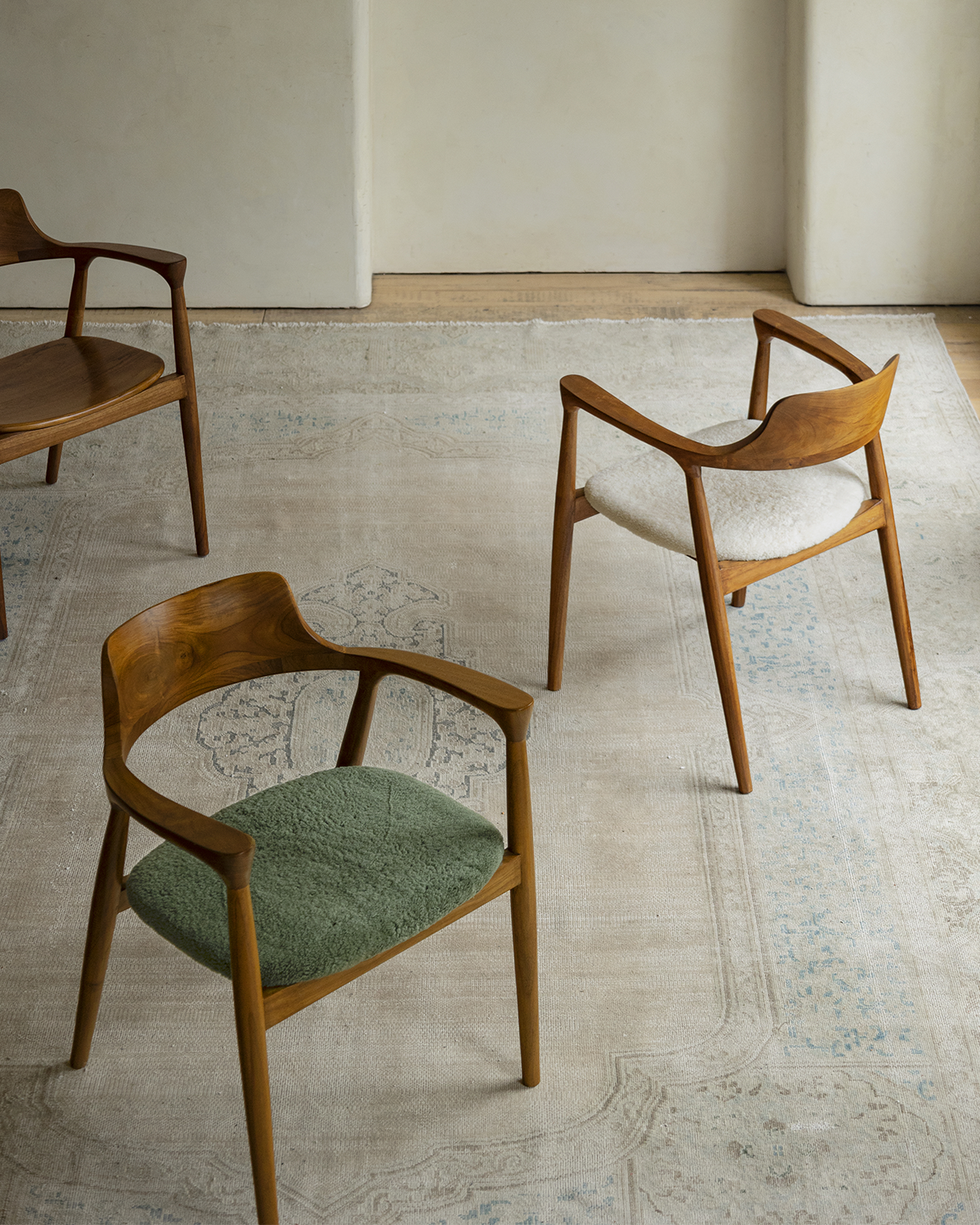

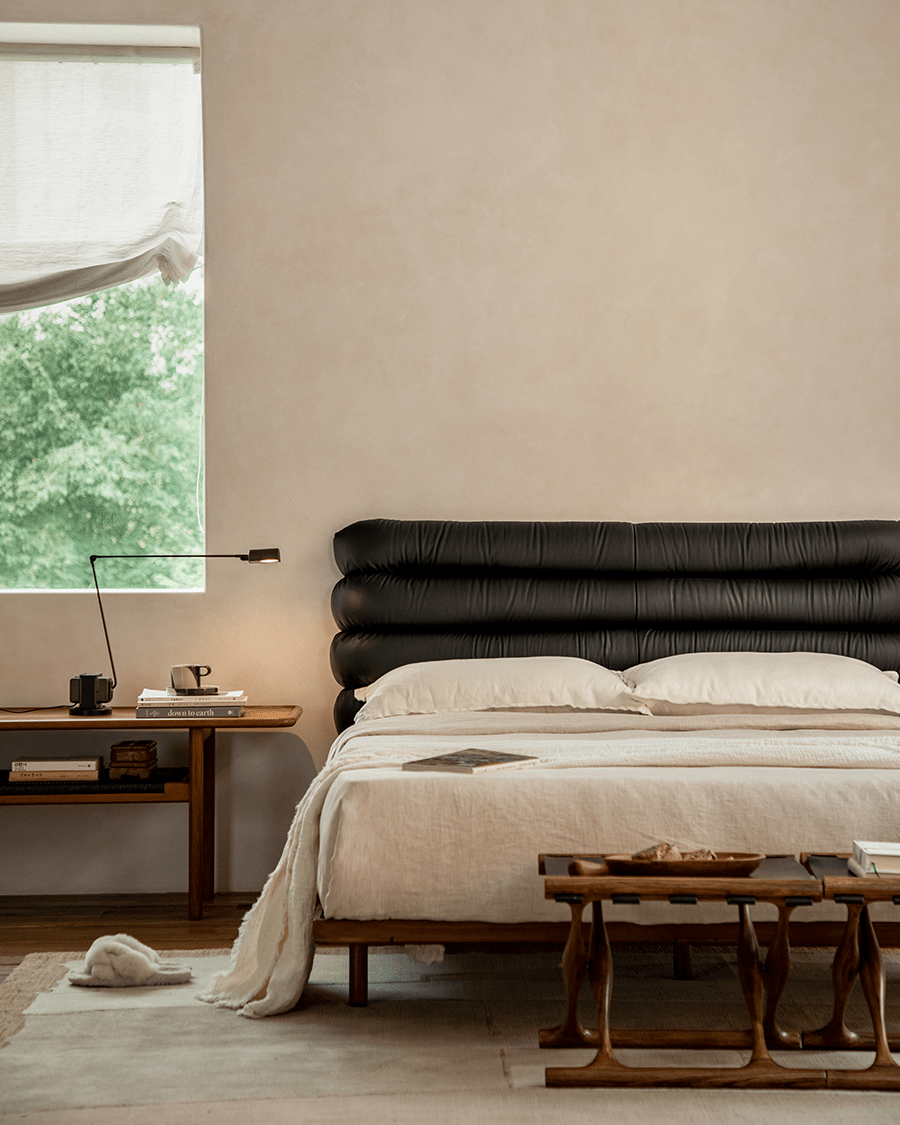
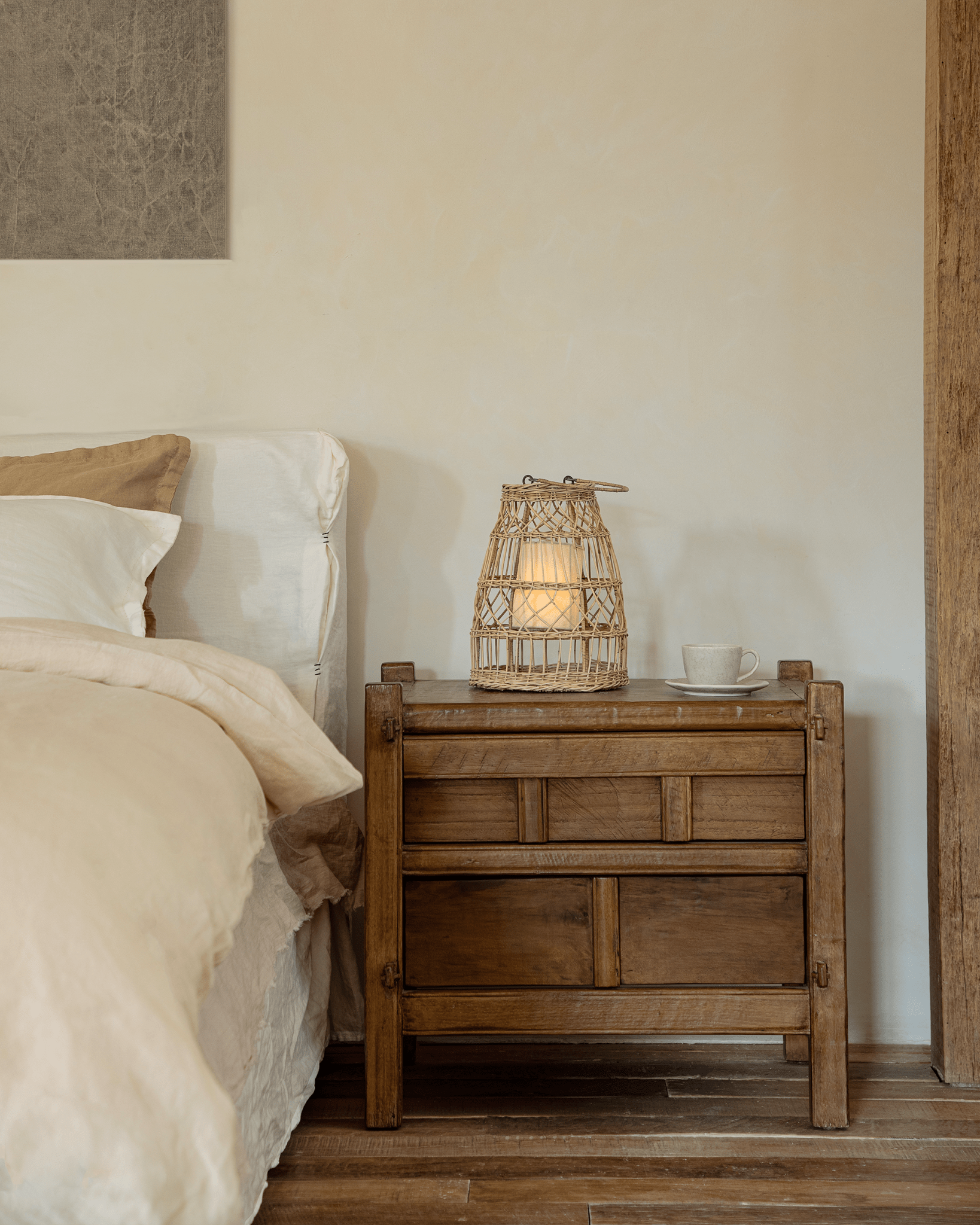
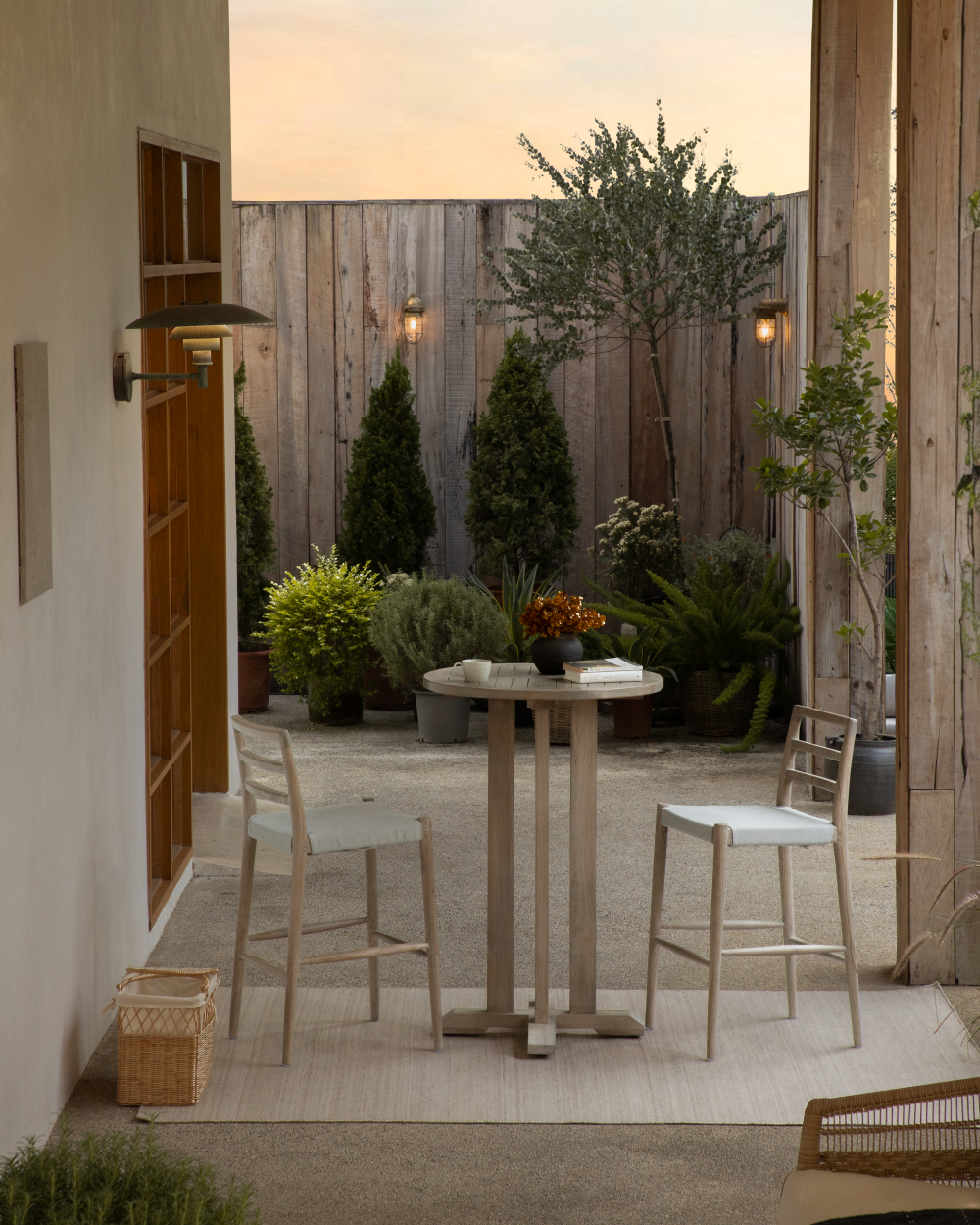
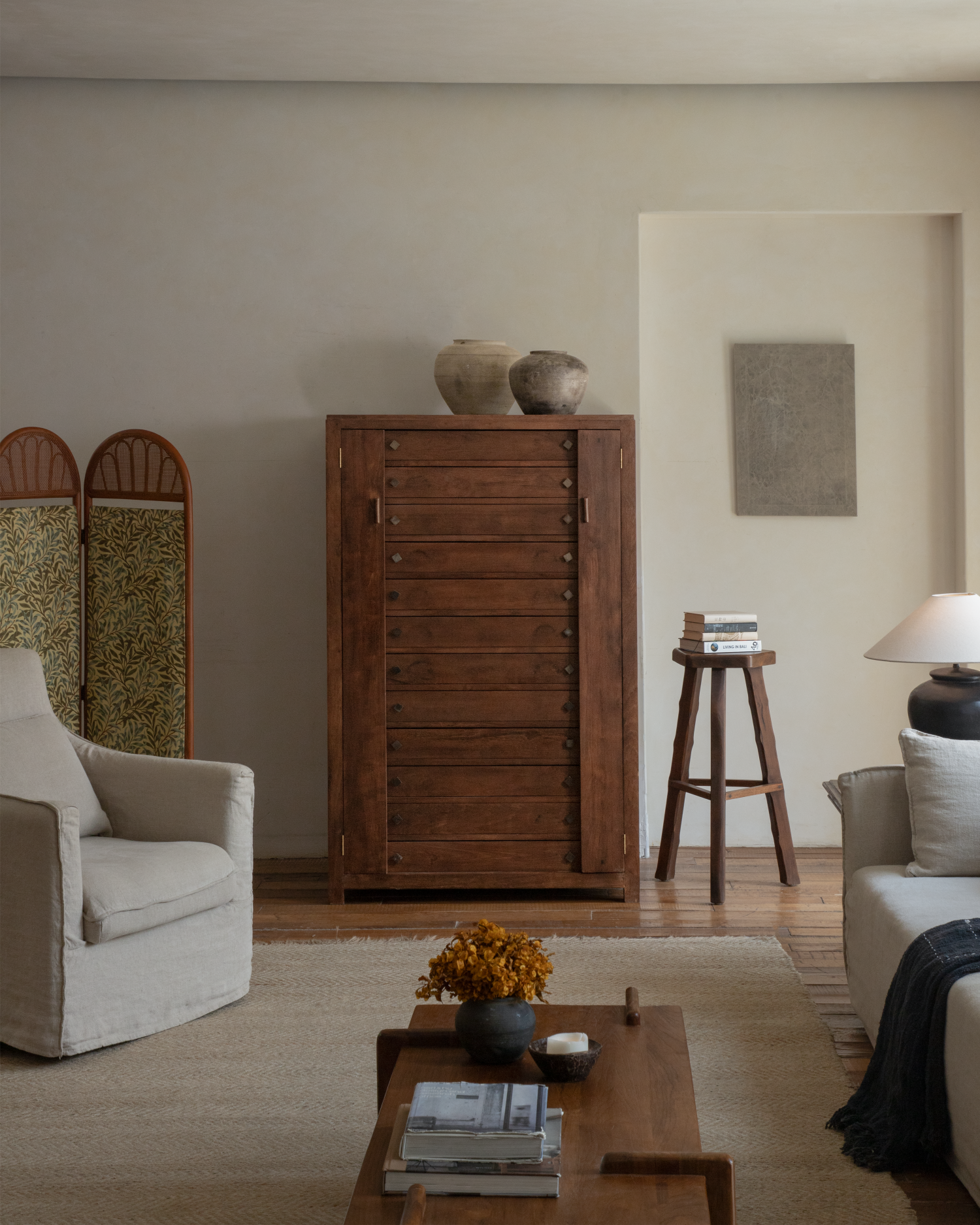
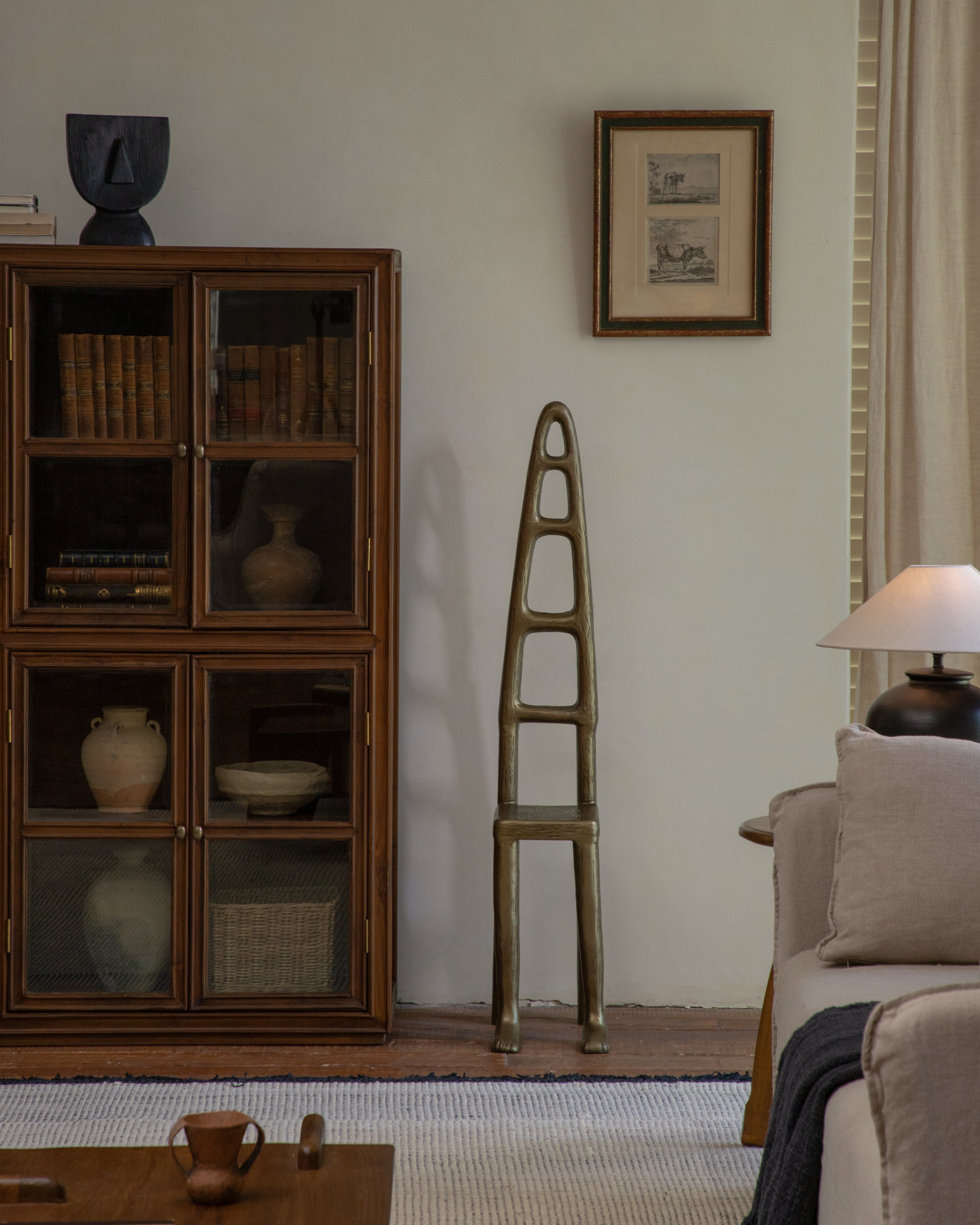

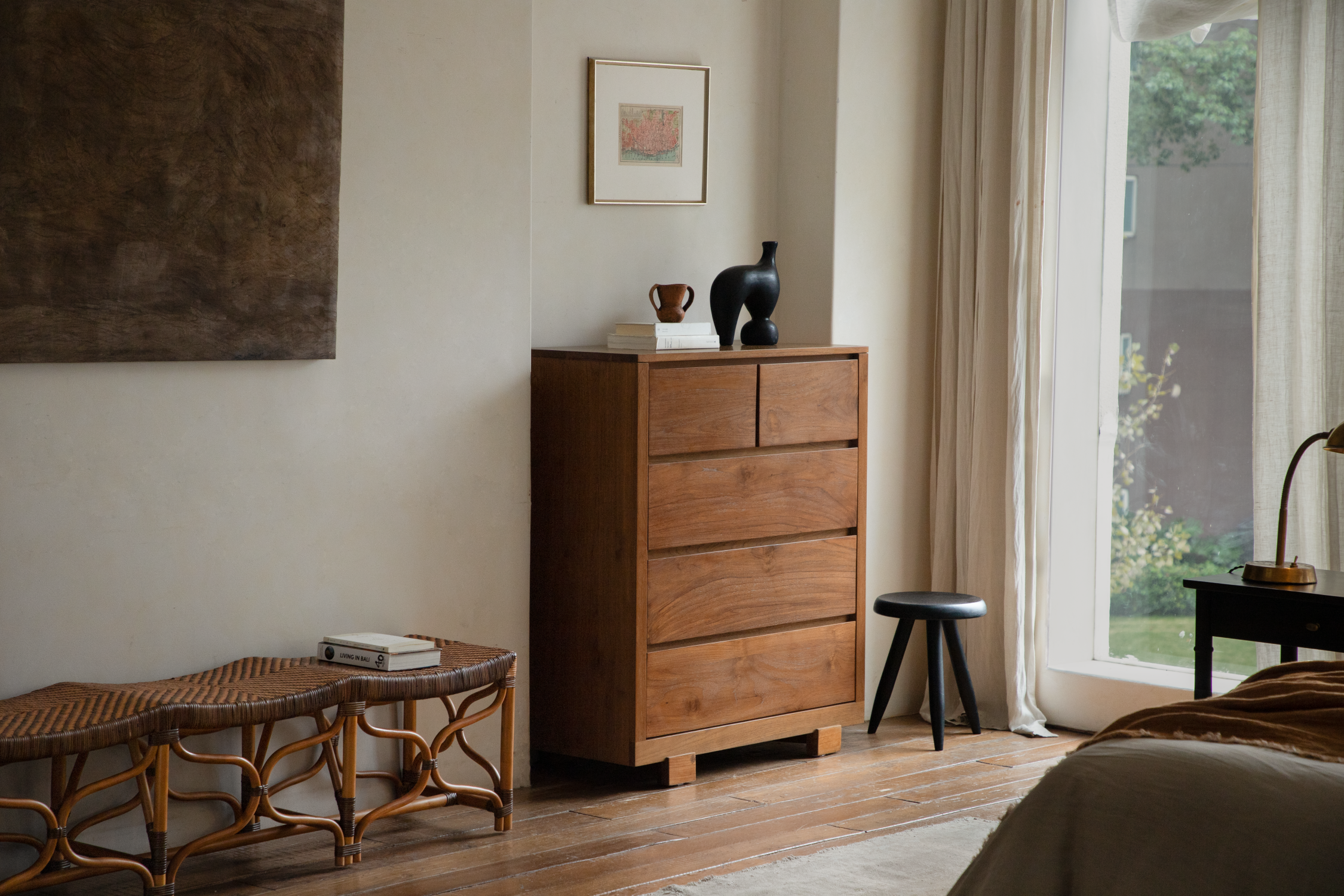

Solid wood furniture responds to the moisture in the air around it. In humid climates, that natural reaction can lead to swelling, warping, sticky drawers, cloudy finishes, or even mold if the indoor environment stays too damp for too long. While no environment is perfect, keeping relative humidity between 40% and 55% helps reduce the risk of warping and mold, significantly improving the likelihood of long-term stability.
What Problems Does Humidity Cause for Wooden Furniture?
Moisture in the air can show up in several ways on solid wood pieces.
You might notice drawers that stick, doors that no longer close smoothly, or tabletops that "cup" (curve upward) or twist slightly at the edges. These changes happen because the wood fibers take on extra water and expand unevenly.
Finishes can develop a hazy look called "blushing" when moisture gets trapped underneath the topcoat.
In corners with poor airflow, mold or mildew may start on hidden surfaces and create musty smells.
Over months or years, repeated swelling and shrinking can loosen joints and put stress on the whole structure.

Teak vs. Reclaimed Wood: Different Responses to Moisture
When it comes to humidity, not all wood behaves the same way. Knowing what your furniture is made of helps you care for it in the best way:
- Teak Wood: Known for its high natural oil content, teak is exceptionally resistant to rot and moisture. However, in high humidity, the finish on teak is more likely to show "blushing" (white haze) than the wood is to warp.
Care Focus: Prioritize airflow and surface drying rather than heavy oiling.
- Reclaimed Wood: Because reclaimed timber has often "seasoned" for decades in old structures, it is generally more stable than fresh-cut lumber. It has already done most of its moving.
Care Focus: Watch for "movement" in the joints where old wood meets new hardware or adhesives, as these points can be stressed by humidity spikes.
- Newer Solid Woods (e.g., Rainwood): These may need the most attention during their first year in a new home as they reach an equilibrium with your specific local climate.
How to Control Indoor Humidity and Protect Your Investment
The safest target for most solid wood furniture is 40% to 55% relative humidity.
- A simple hygrometer lets you check the level in the room where your pieces sit. Many people in humid regions keep one near the living room or dining area.
- During rainy seasons, run a dehumidifier when readings climb above 55%.
- Air conditioning also pulls moisture from the air and helps hold levels steady.
- Fans improve circulation without drying the wood too fast. The goal is to avoid big swings rather than chase one perfect number every hour.
What to Do When You Spot Moisture Damage (Action Priority)
If you notice early warning signs like sticking drawers or a musty odor, follow this priority list to prevent permanent damage:
- Immediate Environment Check: Check your hygrometer. If it's above 60%, move a dehumidifier into the room immediately.
- Increase Airflow: Pull the furniture 2–3 inches away from the wall and ensure no vents are blowing directly on it.
- Surface Inspection: Wipe down the piece with a dry cloth to remove any surface condensation. Check the underside and back for small spots of mold.
- Monitor for 48 Hours: If drawers remain stuck after the humidity has been lowered for two days, do not force them. Let the wood "breathe" and shrink naturally.
When to Call a Pro: If you see persistent mold growth that returns after cleaning, large structural cracks, or significant "lifting" of the wood grain, stop DIY efforts and consult a professional furniture restorer.
Where to Place Your Solid Wood Furniture in a Humid Home
Location matters as much as the air itself.
- Leave a small gap, at least a half inch, between the back of a piece and any exterior wall. This gap lets air move and stops trapped moisture from building up behind the furniture.
- Keep solid wood coffee tables away from direct sunlight, windows that get rain splash, or air vents that blow cold dry air.
- Bathrooms and kitchens create extra vapor, so they are not ideal spots for dining tables or side pieces.
- Elevate furniture slightly off the floor if your home tends to stay damp.
These small placement choices reduce the chance of mold and surface damage before it starts.

Cleaning Your Wooden Furniture Without Adding Excess Moisture
In humid areas, less water is better when you clean. A dry microfiber cloth or one that is only slightly damp works for everyday dusting. Wipe up any spills right away so the liquid does not soak into the grain.
Skip harsh chemical cleaners that can remove natural oils or damage the finish. Experts advise keeping added moisture to a minimum because the air already supplies plenty. After any damp wipe, dry the surface completely with a clean cloth. This habit prevents the extra water from adding to the humidity stress your furniture already feels.
What Protective Treatments Help Wood Resist Humidity?
A breathable finish slows how fast wood picks up or loses moisture.
- Furniture wax or natural oils such as tung or linseed create a protective layer that still lets the wood breathe.
- Reapply these treatments every six to twelve months, or more often in very humid zones.
- Sealed finishes like polyurethane offer stronger water resistance on surfaces that see heavy use. Open-pore oil finishes let the wood show its natural texture but need more regular care. Either choice helps, yet none makes the wood completely immune to extreme humidity. Choose a finish that matches how you use the piece and renew it on schedule.
Common Mistakes to Avoid When Caring for Wood in Humid Climates
- Many people reach for a wet rag out of habit, but extra water during cleaning adds to the problem in already damp rooms.
- Placing furniture flush against exterior walls traps moisture and invites mold.
- Ignoring the hygrometer reading for weeks can let levels climb without notice.
- Forgetting to renew wax or oil leaves the surface unprotected when humidity spikes.
- Leaving pieces in corners with almost no airflow also creates hidden damp spots. Each of these habits is easy to change once you see how they affect the wood over time.
How Can You Maintain Solid Wood Furniture Long-Term?
A short weekly routine protects your investment without much effort. Dust with a dry cloth and glance at the hygrometer. Once a month, open drawers and check that they slide smoothly. Look for haze on finishes or soft spots that might signal moisture trouble.
Every year, clean the surfaces and apply a fresh layer of wax or oil. Move pieces a few inches if you notice dampness near walls during the wet season. These steps turn care into prevention instead of repair. Over time, the wood develops a richer patina while the structure stays sound.
Preserving the Beauty of Your Solid Wood Furniture
Solid wood furniture can last a lifetime in humid climates when humidity stays mostly in the safe range, airflow is good, and surfaces stay protected. The wood often gains character and depth as the years pass. Small daily habits, such as wiping spills quickly and checking the hygrometer, stop most damage before it begins.
A stable environment, regular light cleaning, and refreshed finishes give your tables, beds, and other pieces the conditions they need to remain strong and attractive for years to come.

FAQs about wood furniture care
Q1: What Humidity Level Is Best for Solid Wood Furniture?
A range of 40% to 55% relative humidity is generally considered the "safe zone" to minimize swelling or cracking. Use a hygrometer to track the air in the rooms where your furniture sits.
Q2: Is a Dehumidifier Necessary for Wood Furniture?
In coastal or tropical areas where humidity often stays above 60%, a dehumidifier is highly recommended to prevent warping, mold, and finish damage.
Q3: Can Air Conditioning Damage Wooden Furniture?
Air conditioning usually helps by lowering humidity. However, avoid placing furniture directly in the path of AC vents, as the concentrated stream of cold, dry air can cause localized shrinking or cracking.
Q4: How Often Should I Maintain or Treat Wooden Furniture?
Dust weekly with a dry cloth. Check for movement or haze monthly. Reapply wax or oil every six to twelve months depending on your climate and how the piece is used.
Q5: Does Reclaimed Wood Need Less Care Than New Wood?
While reclaimed wood is often more structurally stable because it has already seasoned, it is still hygroscopic. It requires the same monitoring and protection from extreme humidity as any other solid wood piece.