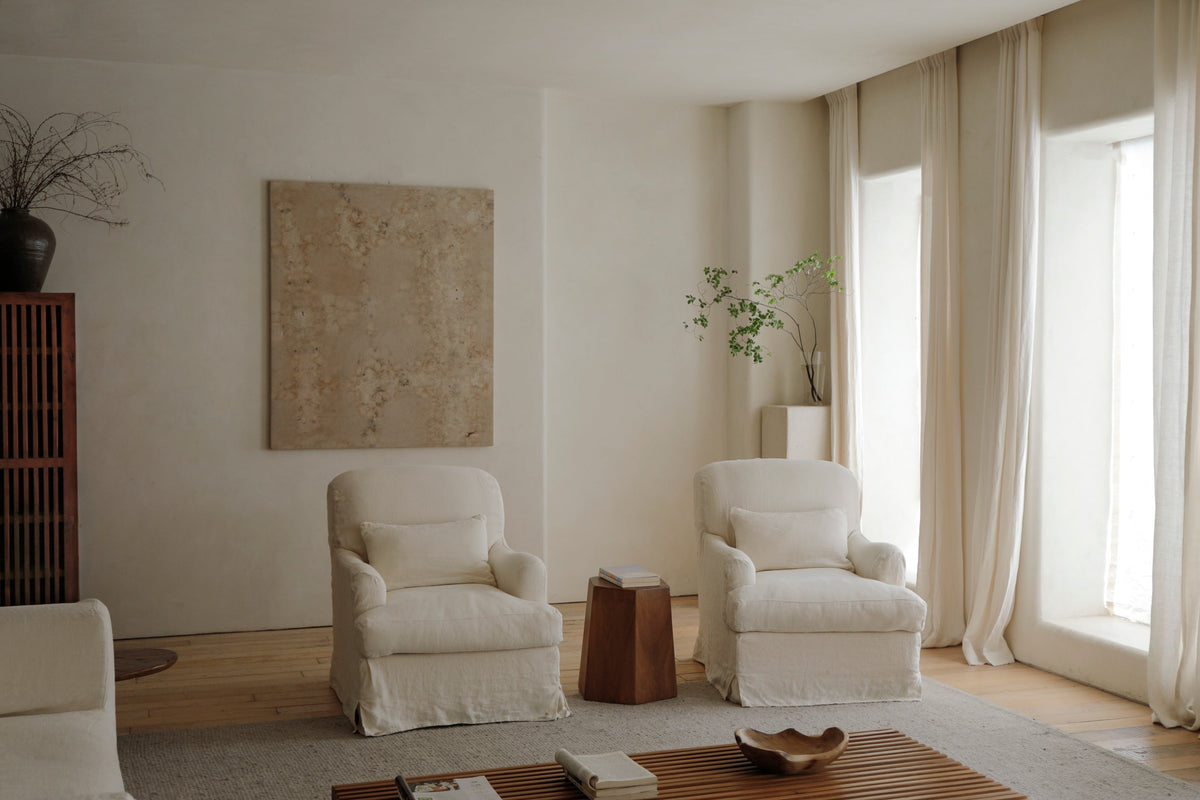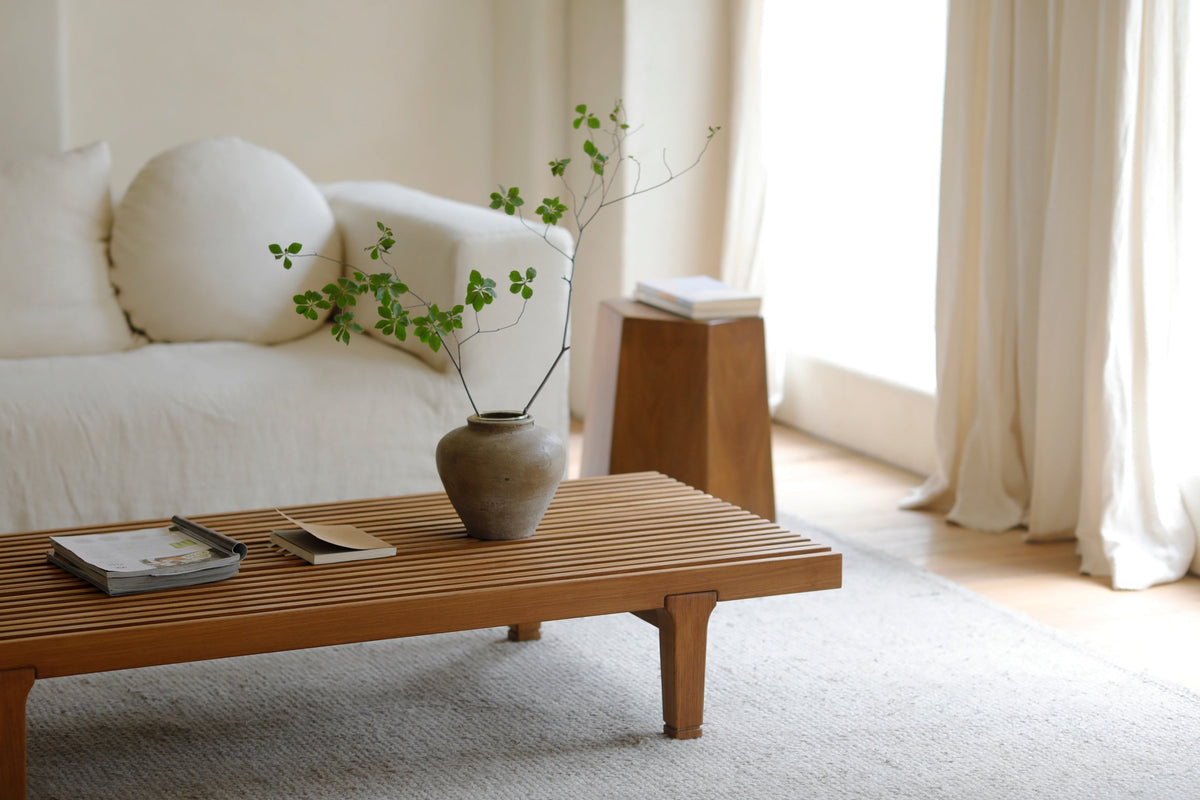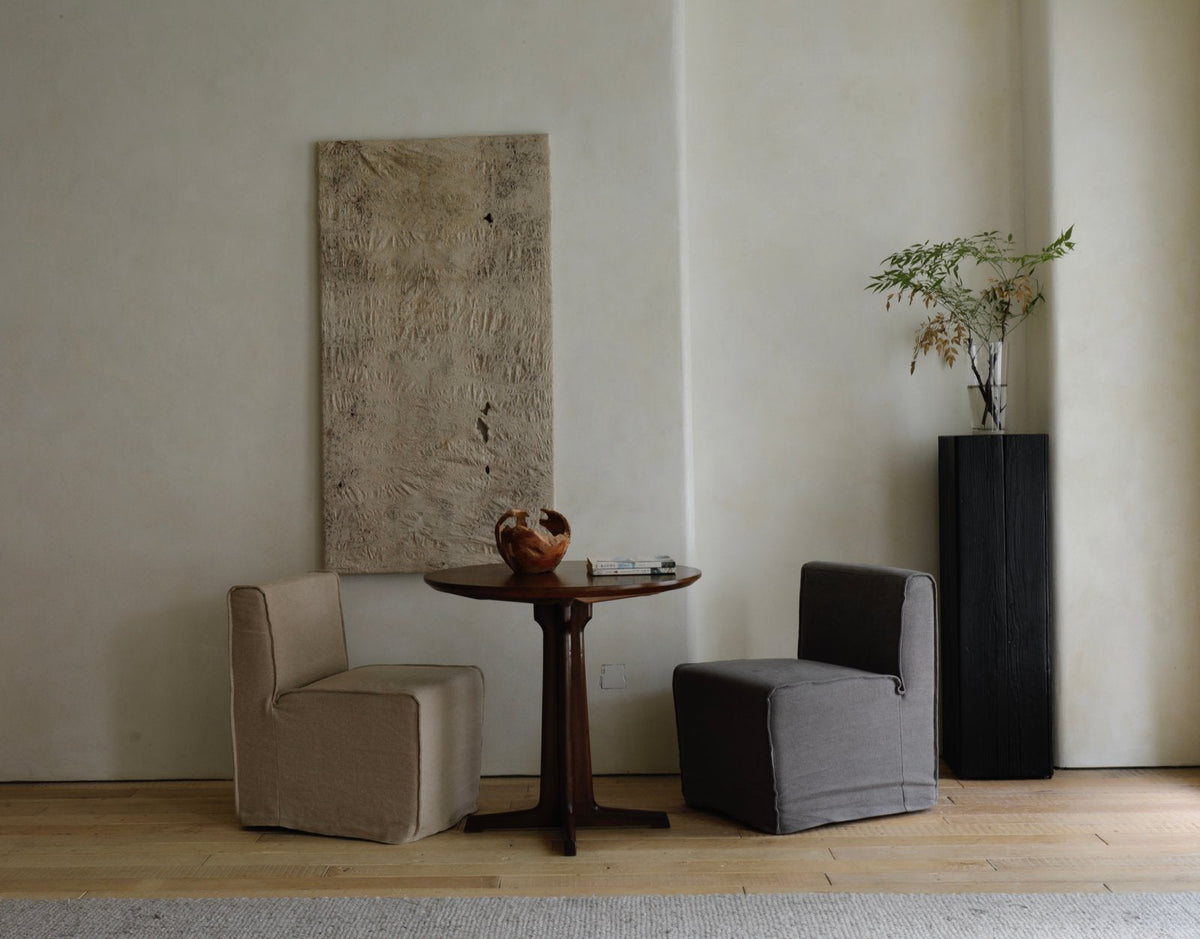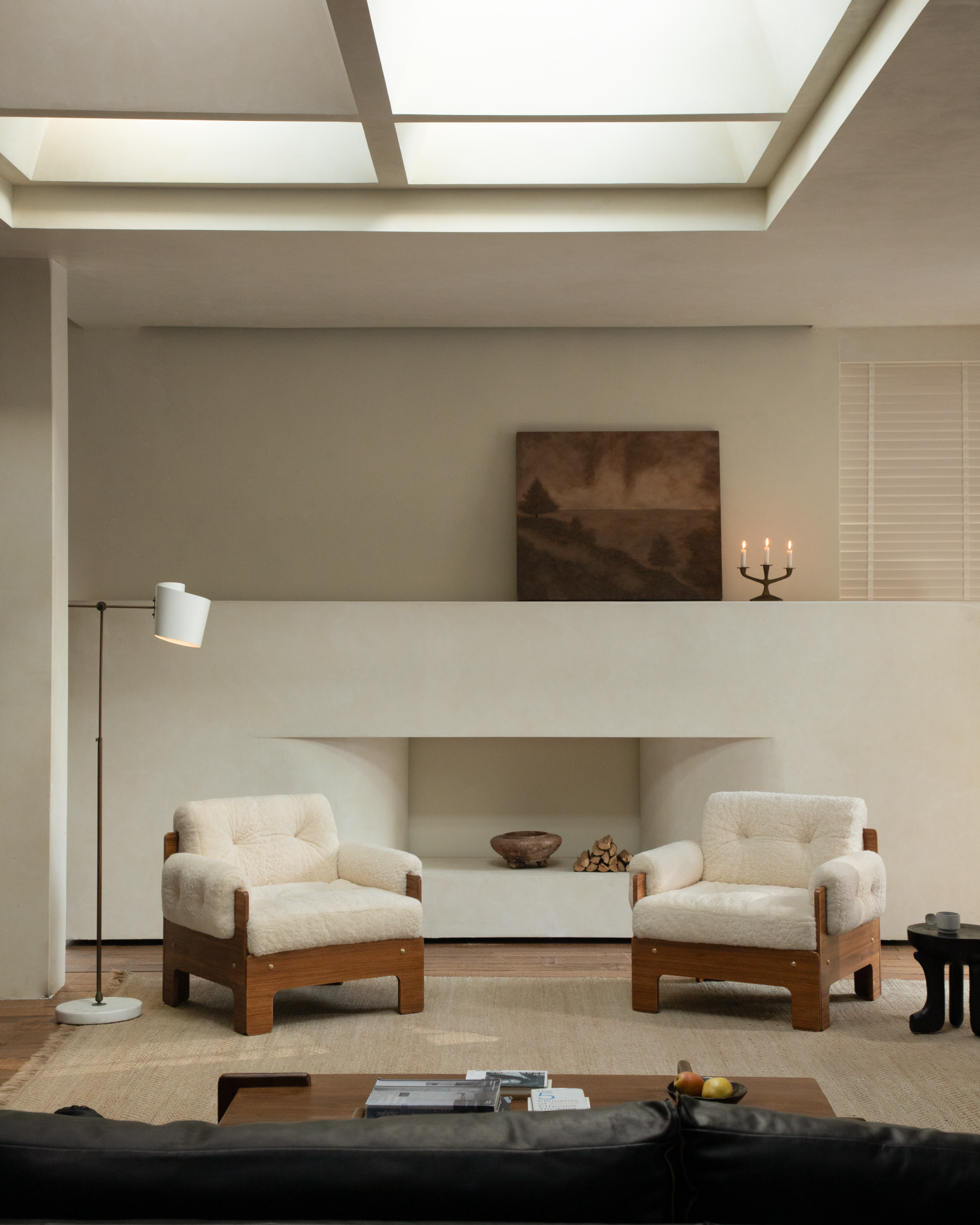

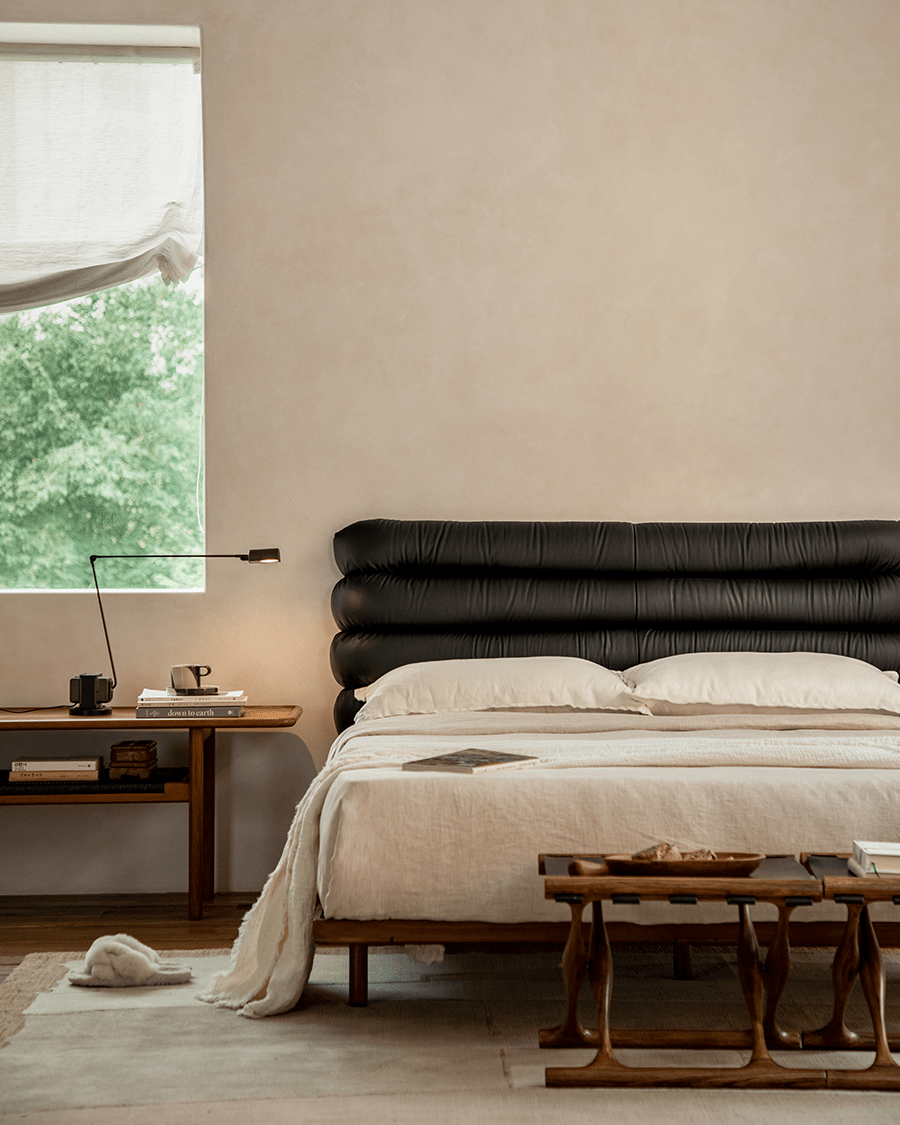
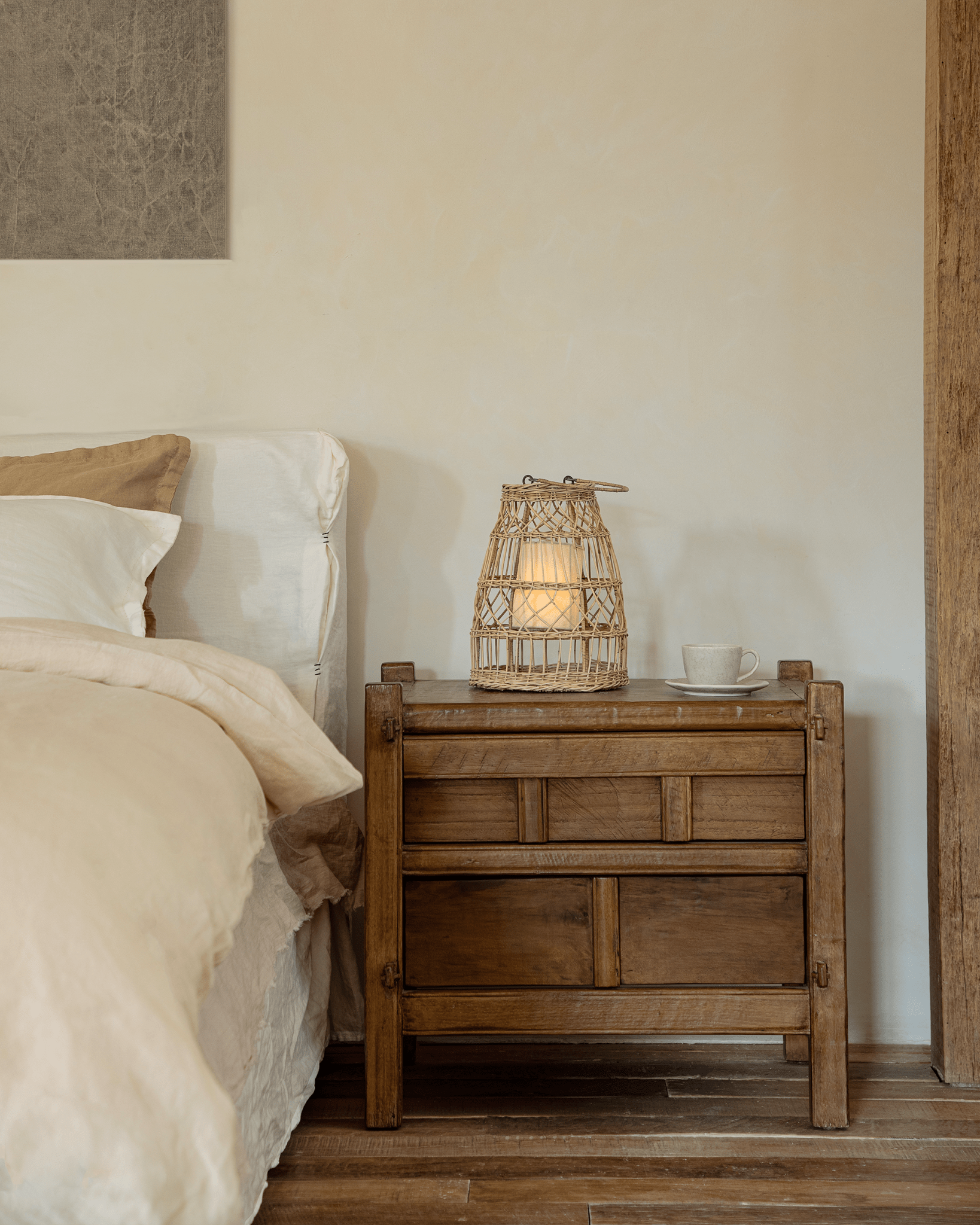
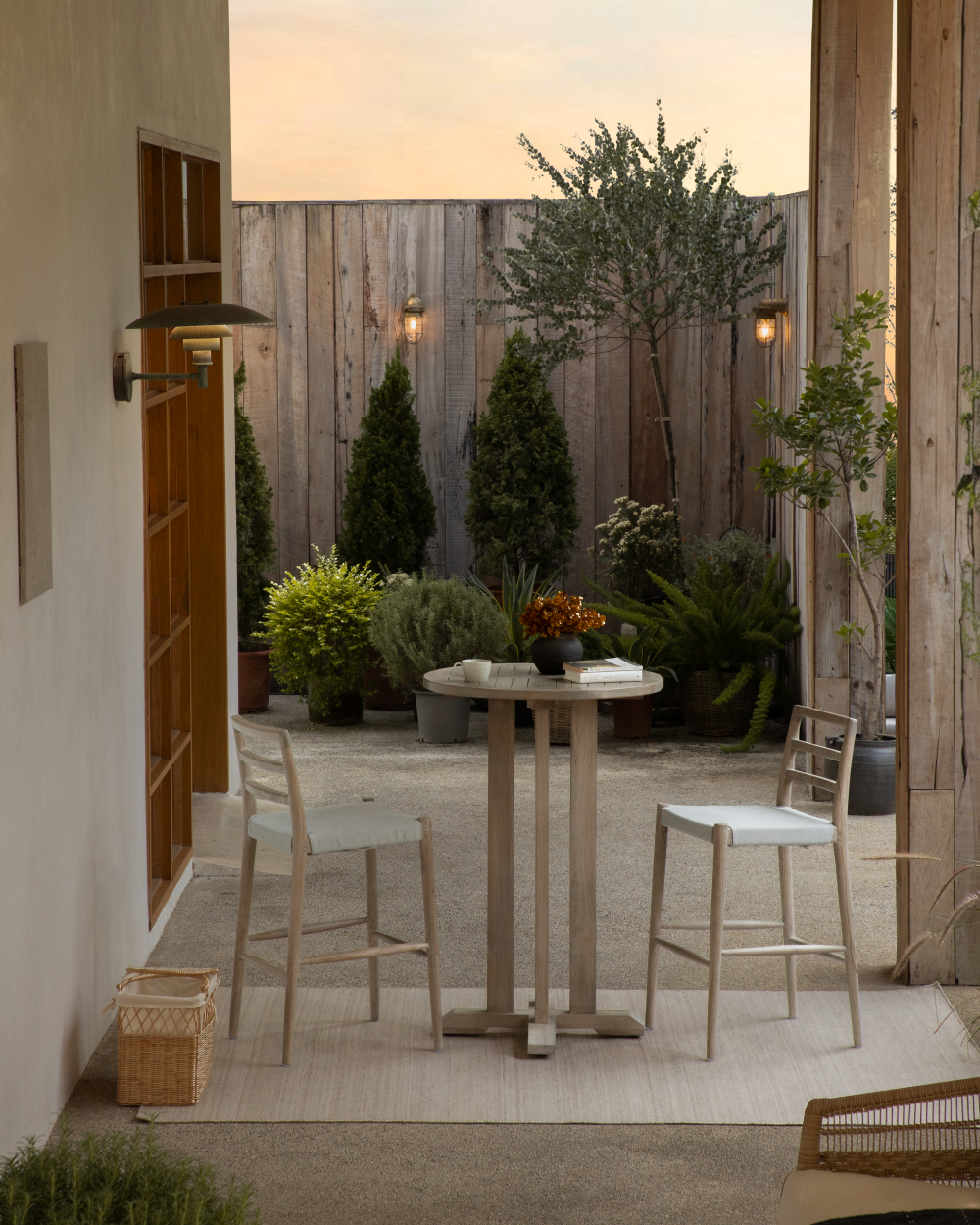
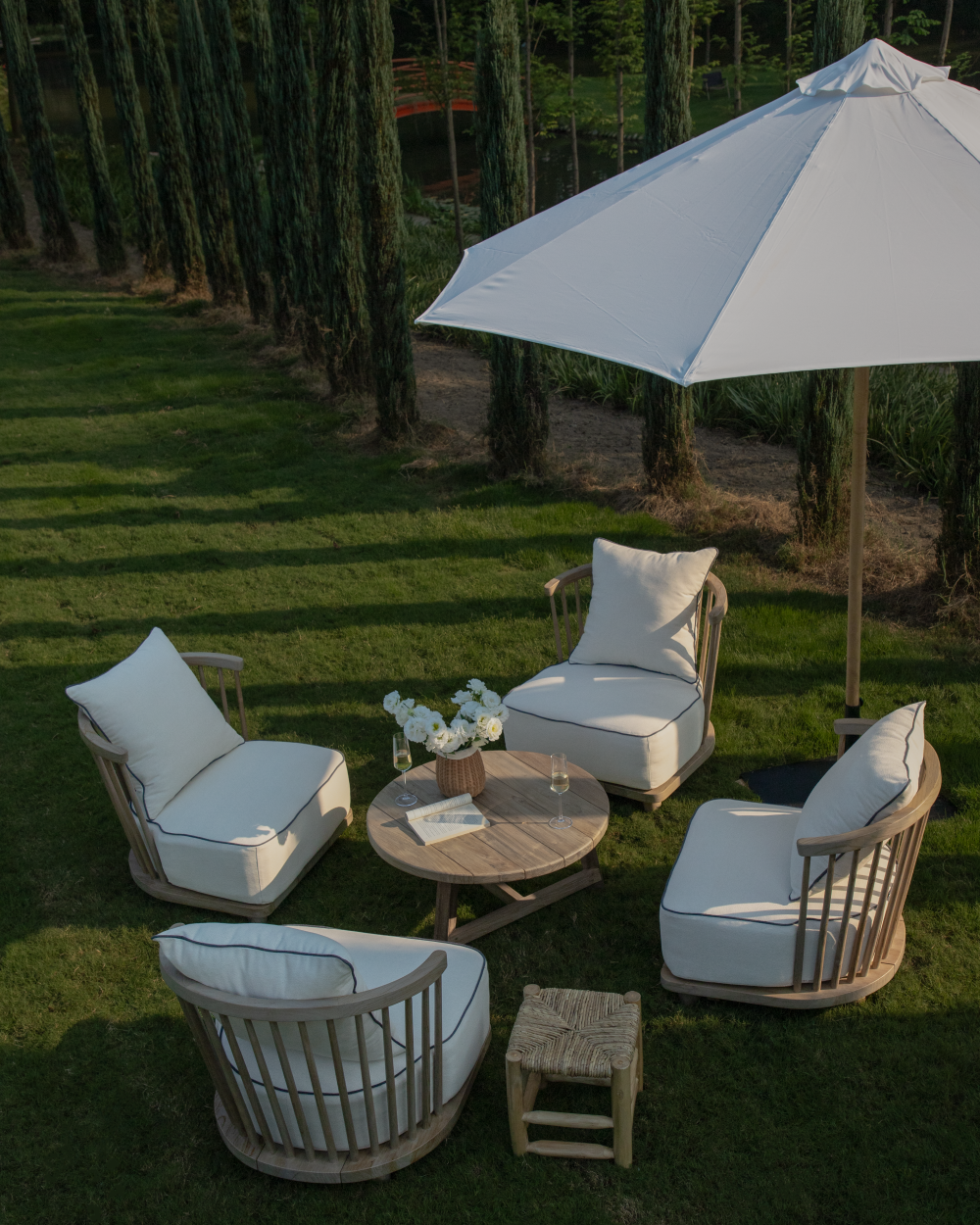
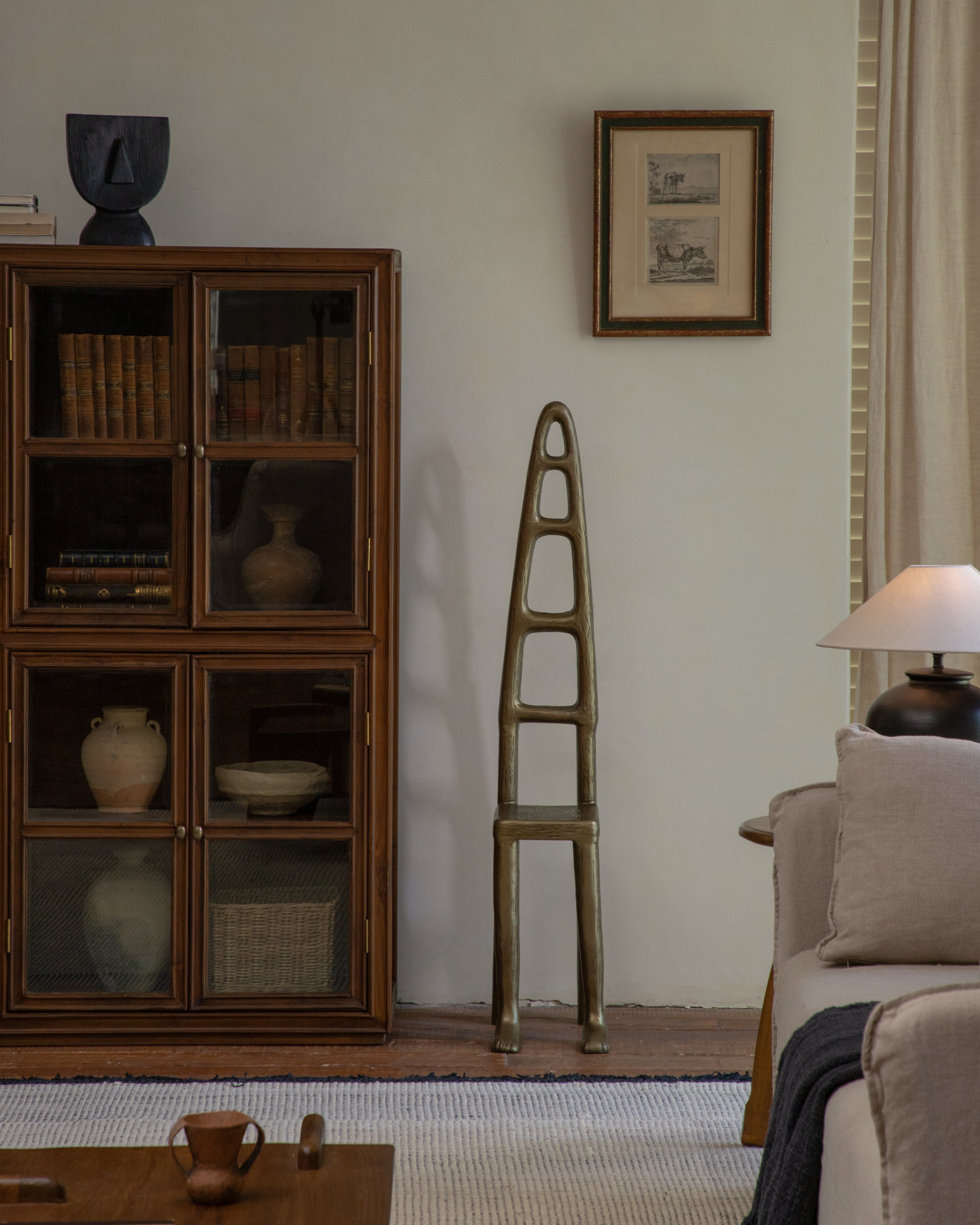
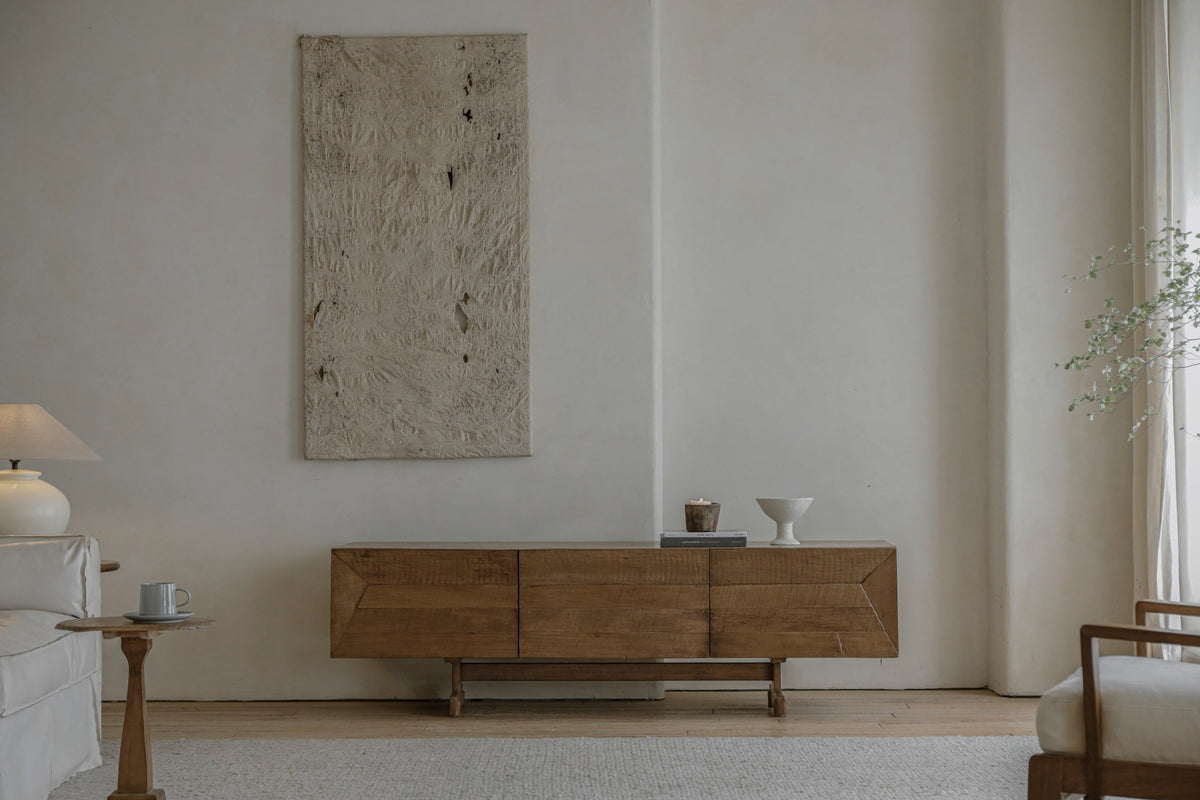

Key Takeaways
- Start with warm neutrals such as cream, beige, taupe, and soft gray.
- Choose natural wood furniture with clean, simple shapes.
- Use linen, wool, cotton, jute, and other tactile fabrics to add comfort.
- Keep the layout open and avoid filling every corner.
- Add warm lighting, greenery, ceramics, and a few personal pieces.
- Let natural materials create visual interest instead of relying on bold colors or busy patterns.
A Japandi living room combines the simple lines of Japanese design with the warmth and comfort found in Scandinavian interiors. The result feels calm, practical, and welcoming without looking bare. Natural materials play a major role in this style. Wood furniture gives the room warmth, while linen, wool, cotton, and woven materials add softness. A few carefully chosen accents can complete the space without making it feel crowded.
You do not need to replace everything in your living room to create this look. Start with the largest pieces, build a warm color palette, add layers of texture, and remove visual clutter as you go.
Start With a Warm and Natural Japandi Color Palette
Color sets the mood for the entire room, so a warm and muted palette makes a strong starting point. These shades also give natural wood and textured fabrics room to stand out.
Choose Warm Neutrals as the Base
Japandi interiors usually favor soft, natural colors rather than bright or highly saturated shades. Warm white, cream, beige, oatmeal, taupe, and greige can create a relaxed backdrop for the furniture.
For walls, warm white or light beige can keep the room bright without making it feel cold. If you prefer more depth, a soft taupe or warm gray can work well in a larger living room.
Your base color does not need to appear everywhere. For example, you might use warm white walls with a cream sofa, then bring in beige through the rug and curtains. Small differences between these shades keep the room from looking flat.
Add Subtle Earth-Toned Accents
Muted colors inspired by nature can add depth without taking attention away from the main furniture.
Good choices include:
- Sage green
- Olive green
- Clay
- Terracotta
- Warm brown
- Charcoal
- Soft black
Use these colors in small amounts. A sage green plant, clay vase, or charcoal floor lamp can create enough contrast without changing the peaceful feel of the room.

Let Wood Count as Part of the Color Palette
Natural wood adds both color and texture, so treat it as part of your overall palette. Light oak can make a room feel airy and relaxed, while walnut can add a deeper, richer accent.
Try to keep the wood tones connected. A light oak coffee table and matching wood console can create a clear visual link. If you want to add darker wood, use it for a smaller piece such as an accent table or chair.
Choose Natural Furniture With Simple, Functional Forms
After setting the color foundation, turn to the furniture. Japandi furniture should feel useful and comfortable while keeping its shape simple, allowing the materials and proportions to create interest.
Make Natural Wood a Visual Anchor
Wood is a strong fit for Japandi because it adds warmth without requiring elaborate decoration. Oak, ash, walnut, bamboo, and other natural finishes can all work well.
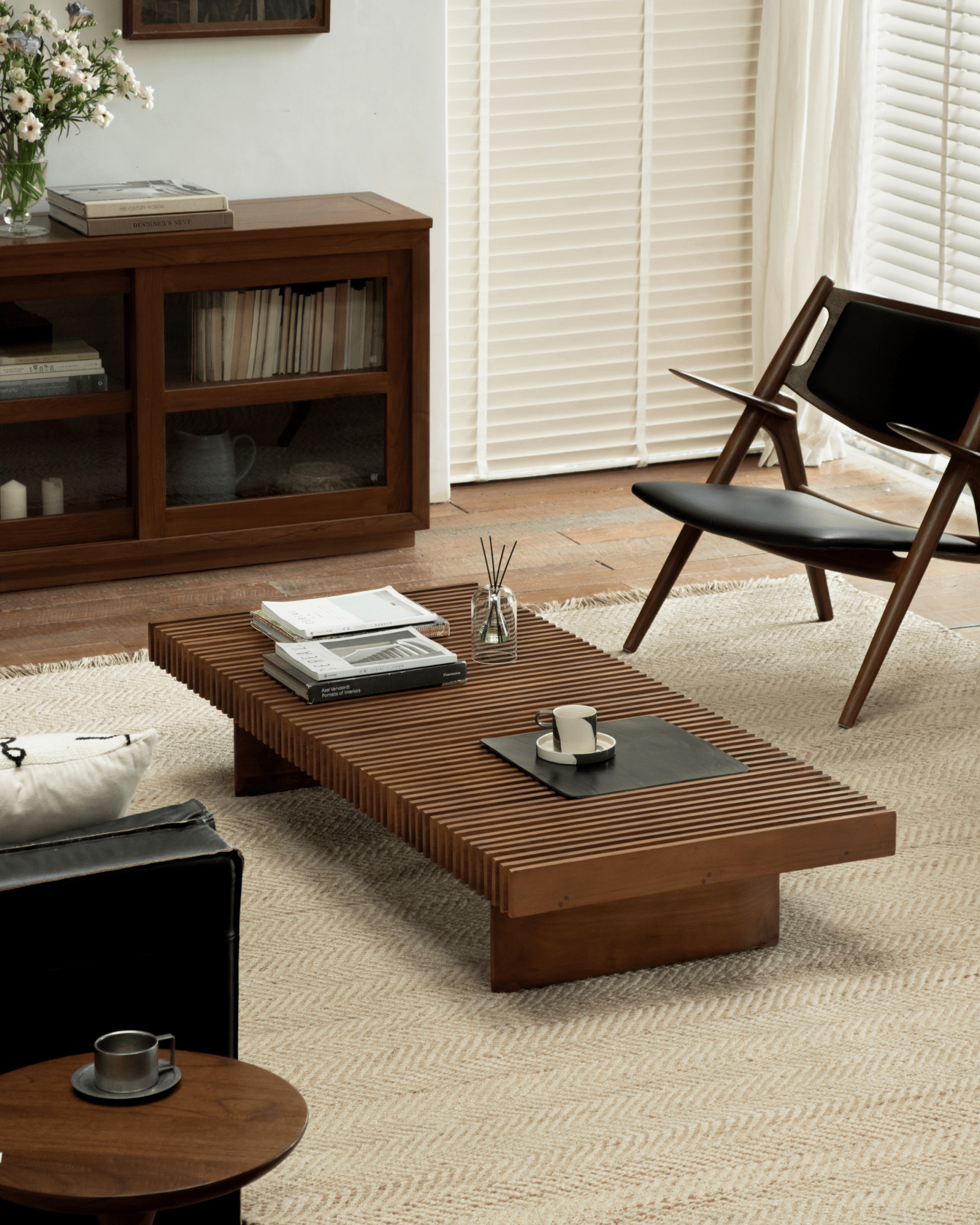
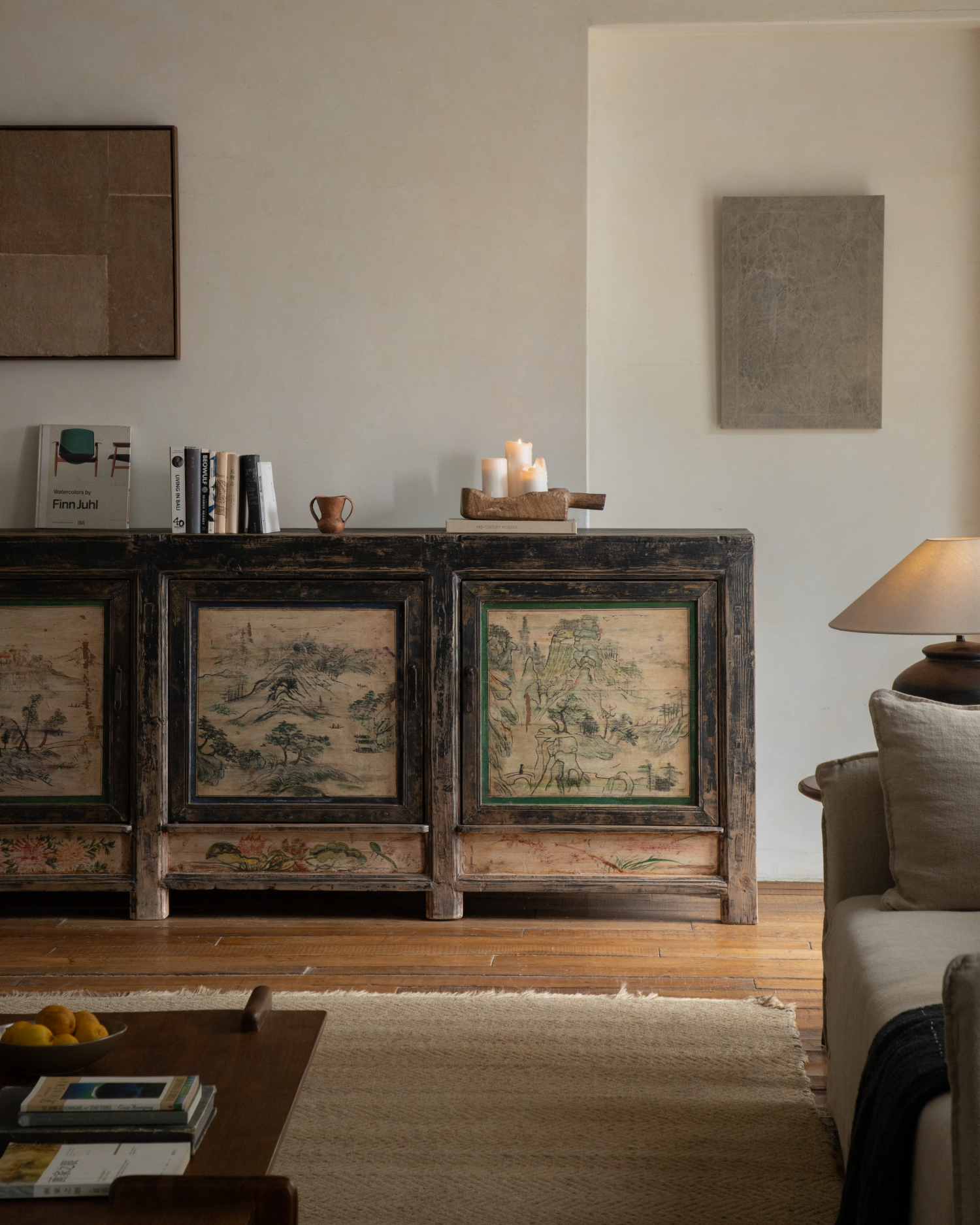
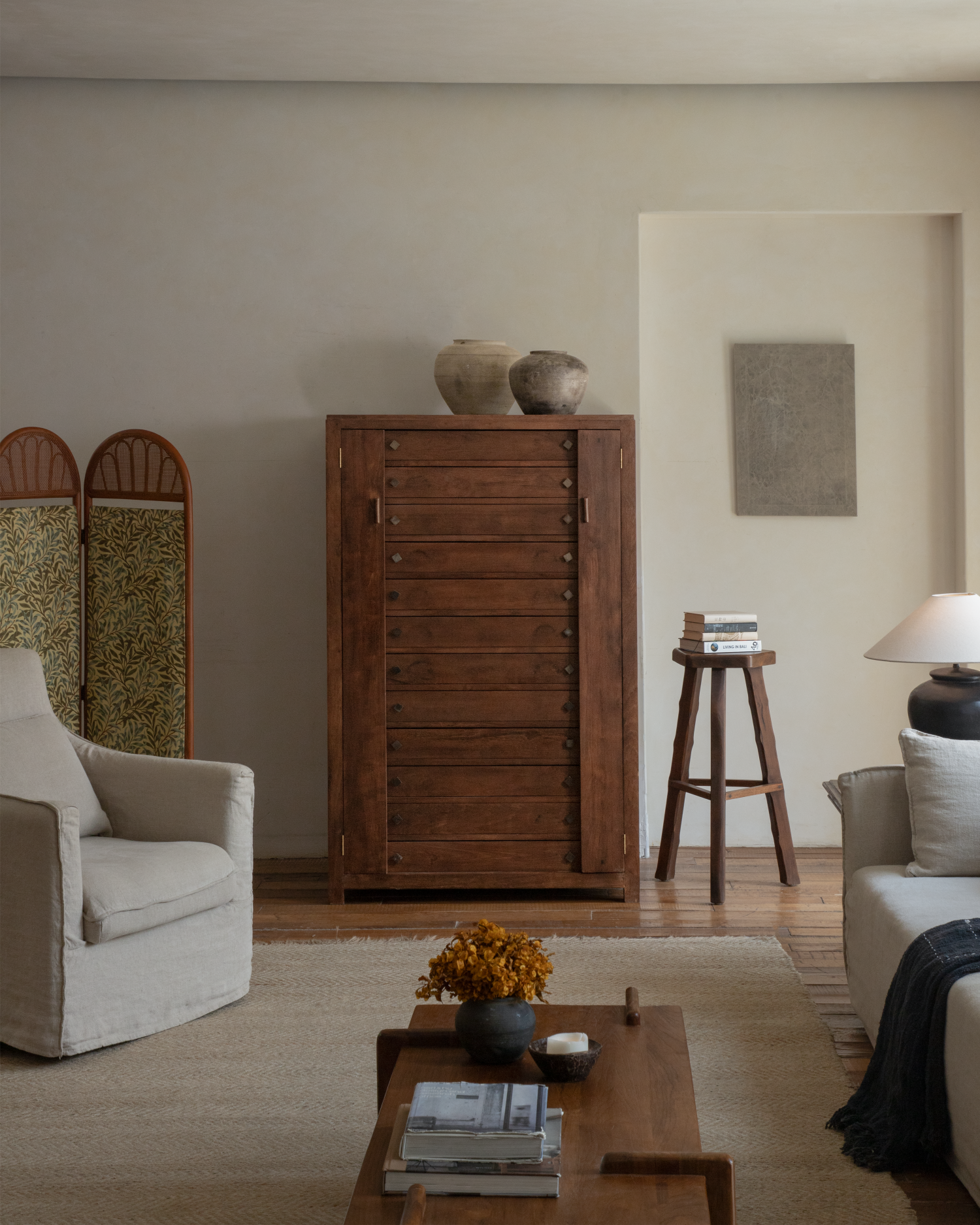
Look for furniture with visible grain and a finish that still lets the material feel natural. A simple wooden coffee table, sideboard, or media console can become a visual anchor without taking over the room.
Natural wood also works well with soft upholstery. For example, a natural sofa paired with an oak coffee table creates a balanced mix of soft and hard surfaces.
Light oak deserves special attention for this style. Its warm, pale tone pairs easily with cream, beige, white, sage, and other muted colors. With clean lines and simple styling, oak can look fresh and modern rather than heavy or traditional.
Look for Low-Profile and Clean-Lined Furniture
Furniture proportions can have a big effect on the overall feeling of a Japandi room. Low-profile pieces tend to create a more relaxed and grounded look.
Consider:
- A low-profile sofa
- A simple wooden coffee table
- A streamlined media console
- A low sideboard
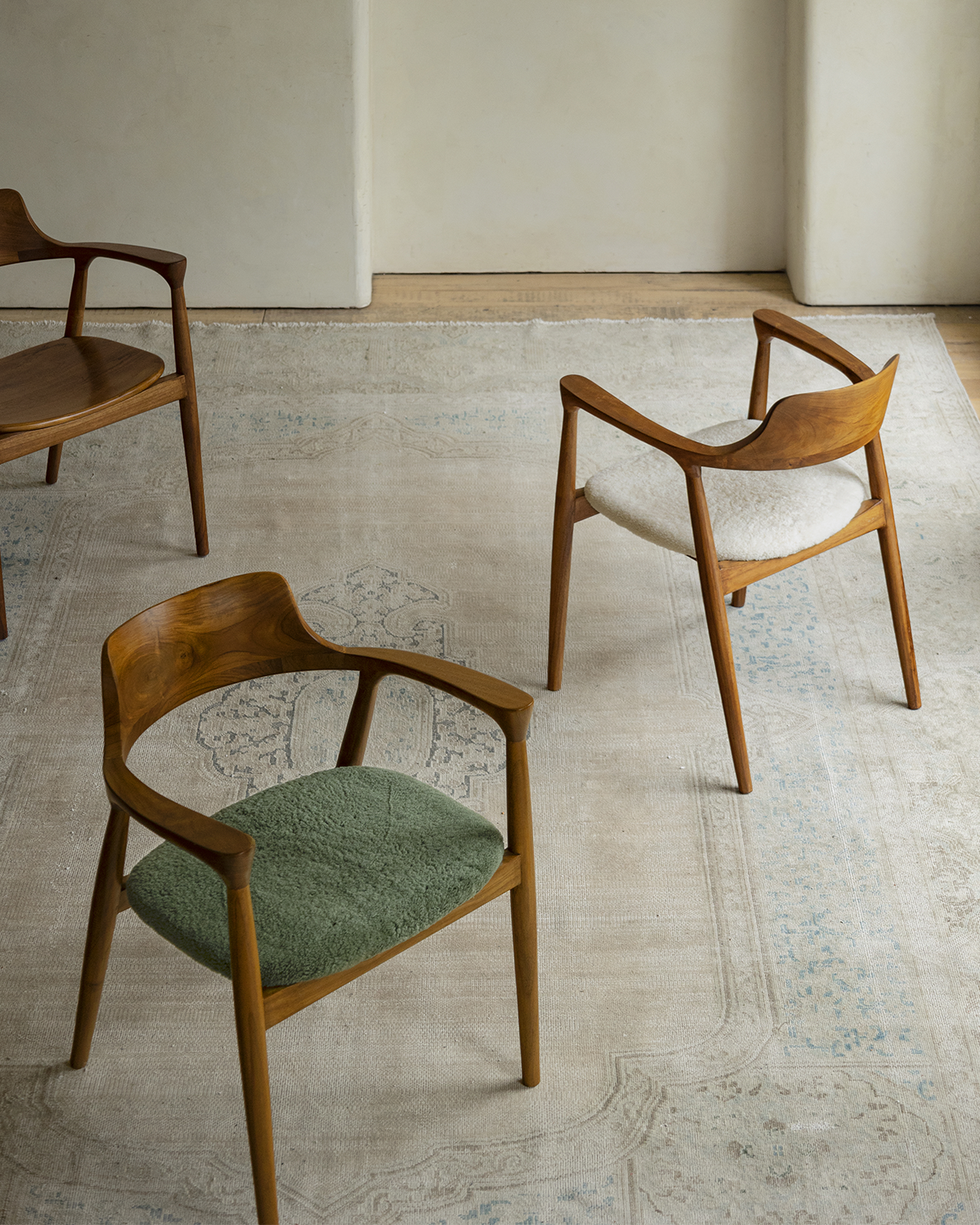
- A simple accent chair
- A small, functional side table
Clean lines are helpful, but the room does not need to contain only sharp corners. Rounded arms, curved chair backs, and softly shaped tables can add comfort while keeping the overall design simple.
A modern organic sofa, for example, can bring a softer shape into a room filled with straight-lined wooden furniture. The contrast keeps the space from feeling too rigid.
Prioritize Function Over Furniture Quantity
If you regularly read in the living room, include a comfortable chair and a useful reading lamp. If the space also serves as a family room, look for a media console with enough hidden storage for electronics and everyday items.
Storage matters because visible clutter can quickly change the feel of a minimalist space. A wooden sideboard or closed storage cabinet can keep books, remotes, chargers, blankets, and other small items organized.
Layer Soft Textures to Make Minimalism Feel Warm
Natural wood gives a Japandi room structure, but too many hard surfaces can make the space feel cold. Soft textiles add comfort and create visual depth without introducing busy patterns.
Bring in Linen and Cotton
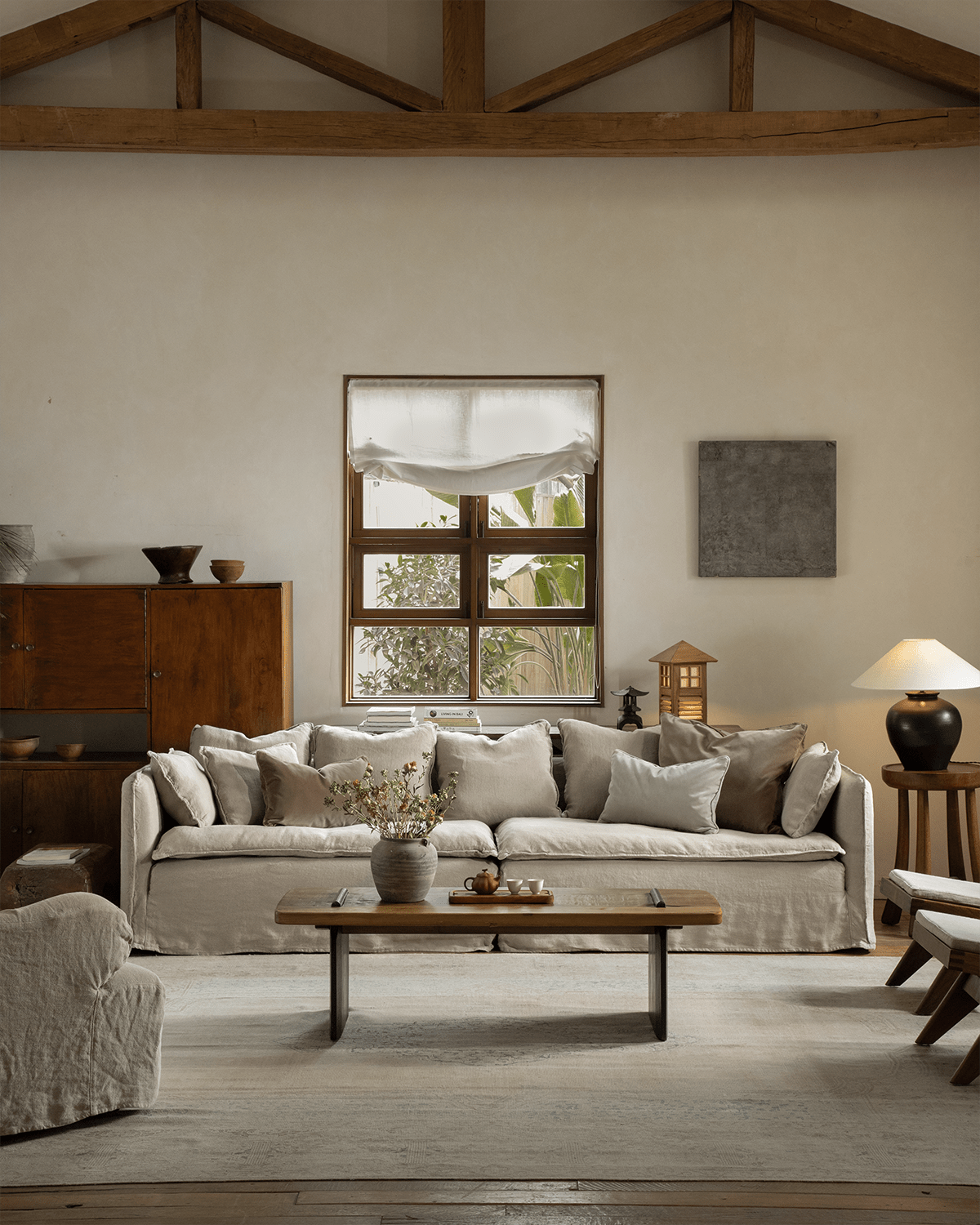
Linen works especially well with natural wood because its slightly irregular texture feels relaxed and natural. A linen sofa can soften the look of a room with several wooden surfaces.
If you already have a sofa, you do not need to replace it. Linen cushion covers, cotton throws, or loose woven blankets can introduce a similar effect at a lower cost.
Linen curtains are another useful addition. Their light texture can soften the windows while allowing plenty of daylight into the room.
Add Wool, Bouclé, or Woven Textures
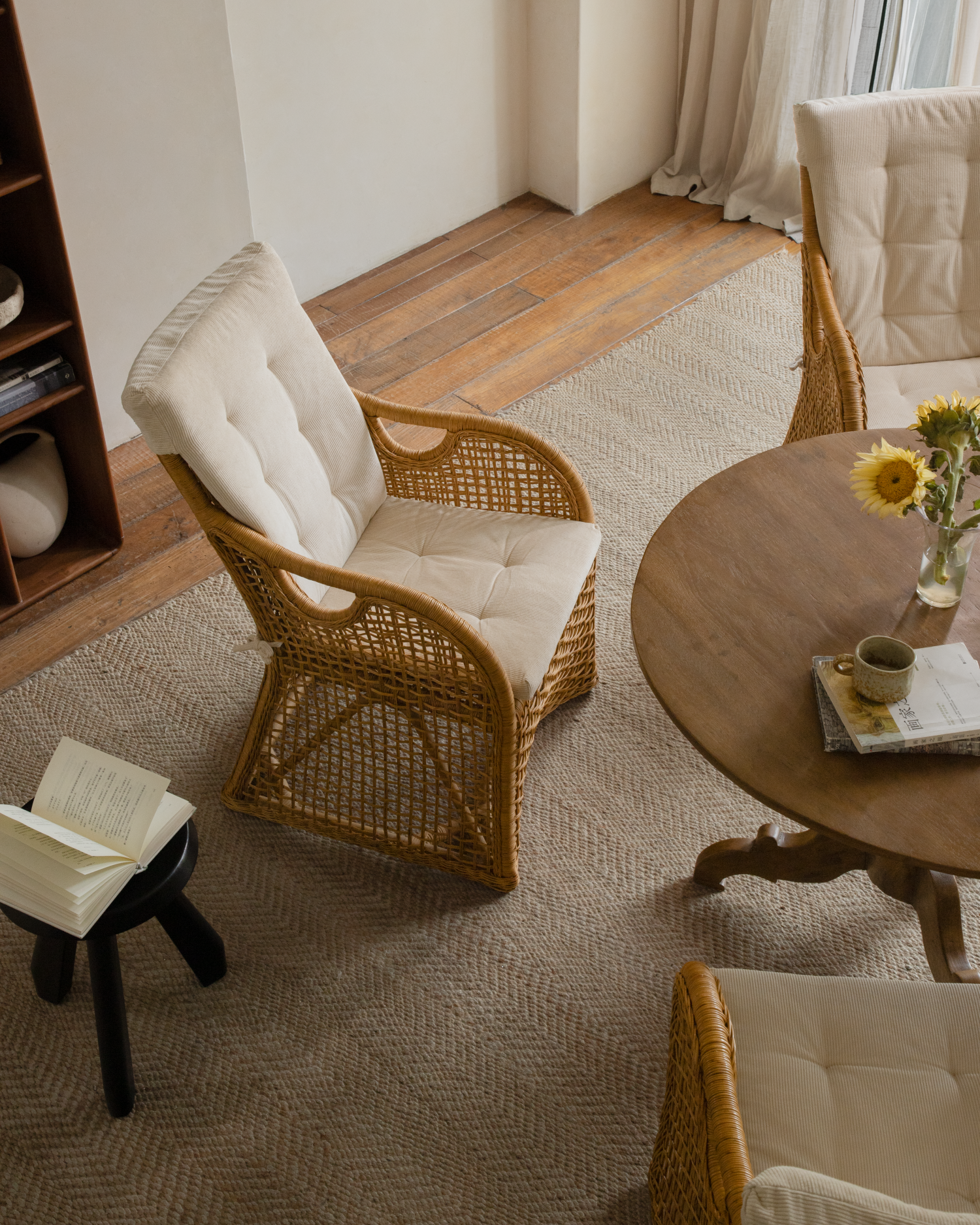
A textured rug can help connect the seating area and make the room feel more comfortable. Wool, jute, and other woven rugs work well with natural furniture.
Bouclé can add a softer, more plush surface through an accent chair, cushion, or small upholstered piece. Use it in moderation so the room keeps its natural, understated character.
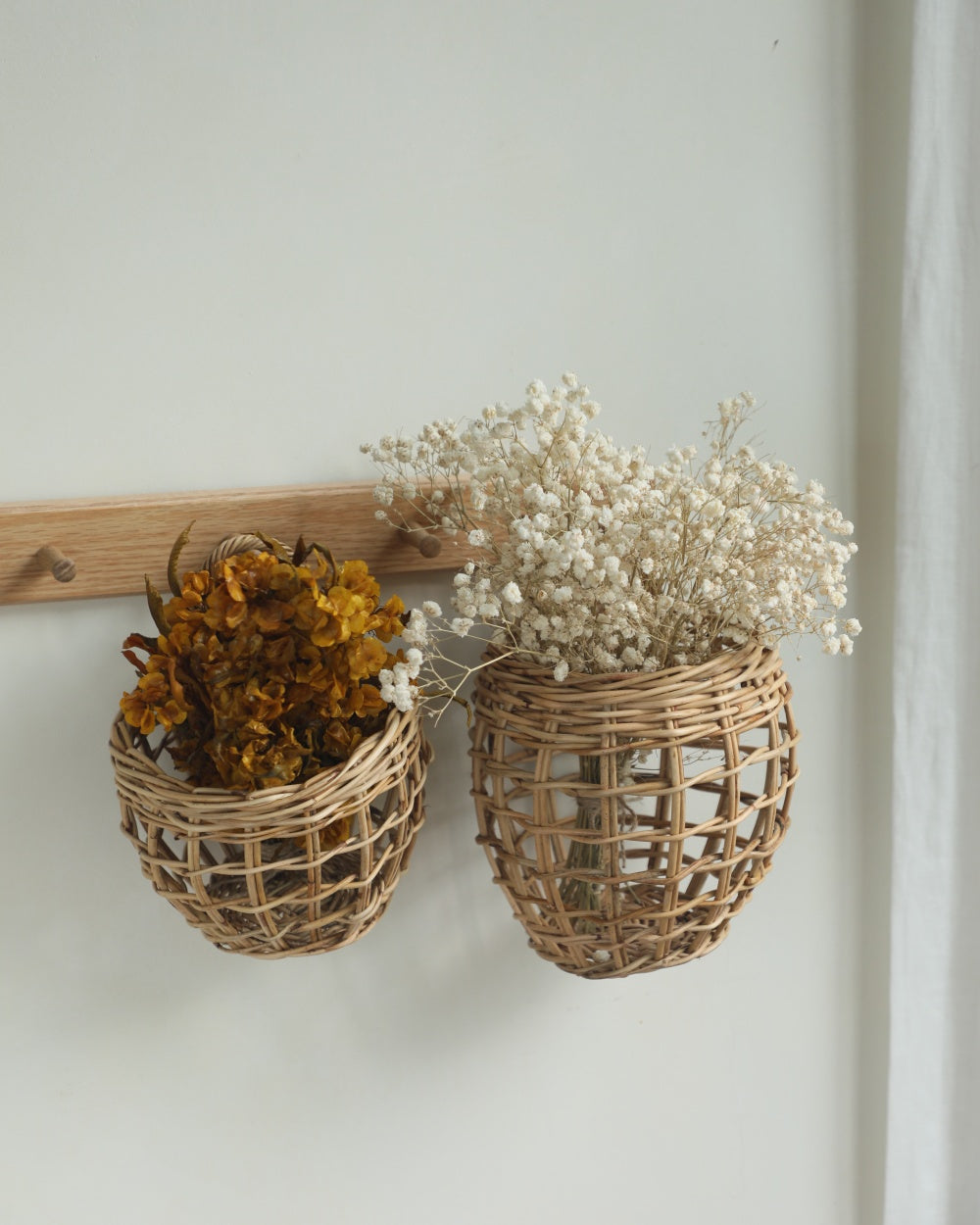
Woven baskets are also practical. They can hold blankets, magazines, or children’s items while adding another natural texture.
Mix Smooth and Rough Materials
A room with several different textures usually feels richer than a room that relies on many colors. Try combinations such as:
- Smooth oak with a woven jute rug
- Linen upholstery with handmade ceramic
- Wool with natural wood
- Cotton with rattan
- Stone with soft textiles
This approach creates interest without making the room visually busy. You can keep the color palette simple while still giving the eye plenty to notice.
Create an Open and Functional Japandi Living Room Layout
With the main materials and furniture selected, the next step is arranging them carefully. An open layout gives each piece room to breathe and keeps the living area easy to use.
Give Major Furniture Pieces Enough Breathing Room
Avoid pushing too many pieces into the same area. Leave enough space around the sofa, coffee table, chairs, and walkways for people to move comfortably.
The coffee table should be close enough to reach from the sofa but not so close that it blocks movement. Chairs should face the main seating area rather than sitting in unused corners.
You do not need to push every piece against a wall. In larger rooms, floating the sofa can create a more defined seating area while leaving clear paths around it.

Build the Room Around a Clear Focal Point
A focal point gives the room a sense of order. It could be a large window, fireplace, artwork, or even a view outside.
Arrange the main seating so it supports conversation and directs attention toward that feature. A coffee table can help center the seating arrangement.
If there is no strong architectural focal point, create a simple one with a large piece of artwork, a natural wood console, or a tall plant.
Use Scale to Balance the Space
Furniture should fit the size of the room. A small sofa can disappear in a large open living room, while an oversized sectional can make a compact room feel crowded.
Large rooms often benefit from fewer, larger pieces. Smaller rooms may need slimmer furniture with raised legs and a lighter visual profile.
Think about visual weight as well as physical size. A dark wooden cabinet may look heavier than a light oak piece of the same dimensions.
Use Layered Lighting for a Calm Atmosphere
Lighting changes the feel of natural materials after sunset. A combination of light sources can make the room softer and more comfortable than relying on a single bright ceiling fixture.
Maximize Natural Light During the Day
Keep windows as open as practical to bring daylight into the room. Linen or sheer curtains can filter bright sunlight while maintaining a light, airy feeling.
Natural daylight also helps reveal the grain of wooden furniture and the texture of fabrics. This makes the material choices feel more noticeable without adding extra decoration.
Combine Multiple Light Sources
Instead of relying only on overhead lighting, use several smaller sources around the room. A useful combination can include:
- Ceiling lighting for general illumination
- A floor lamp beside a sofa or chair
- A table lamp on a sideboard
- Wall lighting near artwork
- Small accent lights for plants or decorative objects
The lights do not need to match perfectly. Similar shapes, materials, or finishes can make them feel connected.
Choose Warm and Diffused Light
Warm light works well with wood, beige fabrics, and natural textures. Fabric, paper, and frosted shades can also soften the light and reduce harsh shadows. A floor lamp beside a linen sofa, for example, can create a comfortable reading area while adding another warm layer to the room.
Add Organic Decor Without Losing the Minimalist Feel
Once the larger pieces are in place, small natural elements can finish the room. Keep these additions limited so they support the design instead of competing with the furniture.
Bring in Plants and Natural Greenery
Greenery adds life and color to a neutral room. You can use a large floor plant near a window or add a smaller plant to a sideboard. Plants with simple forms tend to work well. Olive trees, snake plants, bamboo, and leafy indoor plants can all fit the natural direction of Japandi styling. Branches in a simple vase can also create a clean seasonal accent.
Use Ceramics, Stone, and Handcrafted Objects
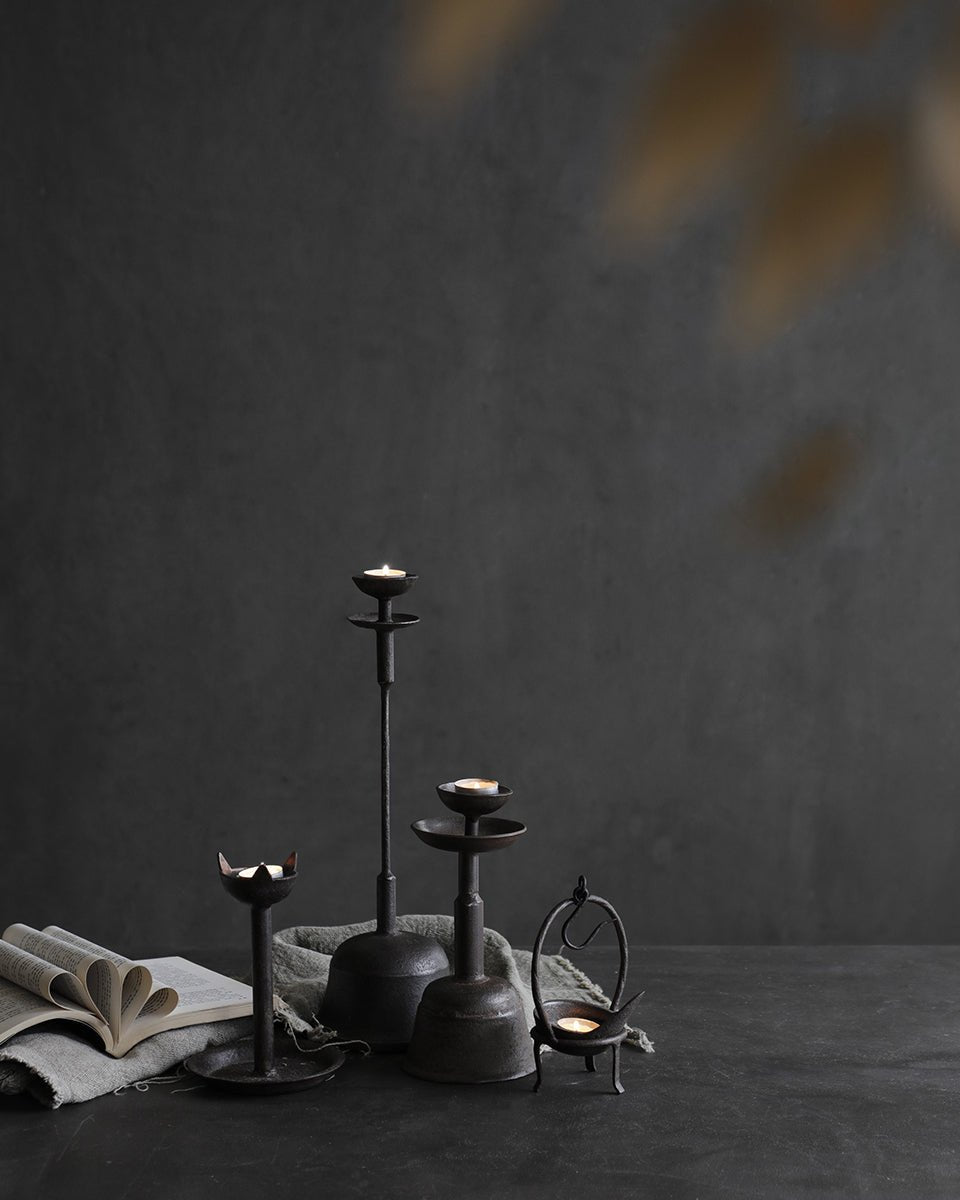
Ceramics can add an organic shape and handmade feel without requiring bright colors. Look for simple vases, bowls, trays, and small sculptures in neutral or earthy finishes.
Stone can add another natural surface through a tray, small table, or decorative object.
A few pieces with visible texture are usually more effective than a shelf packed with decorations.
Choose Meaningful Art Over Excessive Wall Decor
Artwork can make a minimalist living room feel personal. Choose pieces that work with your color palette rather than trying to fill every empty wall.
Simple line drawings, abstract art, nature-inspired images, and muted photography can all work well.
Give each piece enough surrounding space. Empty wall area can help the artwork stand out and maintain the calm feeling of the room.

Balance Japanese Simplicity With Scandinavian Comfort
The appeal of Japandi comes from the balance between two design traditions. Japanese influence brings restraint and natural simplicity, while Scandinavian influence adds comfort and practical warmth.
What Japanese Design Brings
Japanese-inspired interiors often place value on simplicity, natural materials, clean forms, and open space.
This can appear through:
- Minimal decoration
- Natural wood
- Simple furniture
- Organic materials
- Low-profile forms
- Intentional empty space
The result should feel peaceful rather than stark.
What Scandinavian Design Brings
Scandinavian interiors tend to place more focus on everyday comfort, practical furniture, soft textiles, and welcoming spaces.
That influence can come through:
- Comfortable seating
- Layered textiles
- Functional storage
- Soft lighting
- Light wood
- Cozy rugs
These details keep the room from feeling too formal.
Find the Middle Ground
The best Japandi spaces do not lean too heavily toward either side. A clean wooden coffee table can sit beside a deeply comfortable sofa. A simple cabinet can hold books and blankets. A plain room can still include a soft rug and several cushions. This balance makes the space feel edited without making it feel untouchable.

Avoid These Common Japandi Living Room Mistakes
A few styling mistakes can make a Japandi room feel flat, crowded, or overly themed. Knowing what to avoid makes it easier to keep the design balanced.
Making Everything Beige
Beige can create a beautiful base, but too much of it can make the room look dull.
Instead, introduce different surfaces and wood tones. A cream sofa, oak table, wool rug, ceramic vase, and green plant can all share a muted palette while still looking distinct.
Confusing Minimalism With an Empty Room
A minimalist room should still be comfortable.
There is no need to remove every cushion, blanket, book, or decorative object. Keep the items that make the room useful and pleasant, then remove the pieces that create unnecessary clutter.
Using Too Many Japanese-Inspired Decorations
A few Japanese-inspired details can work well, but too many can make the room feel like a themed space.
You do not need bamboo screens, lanterns, bonsai, Japanese artwork, and ceramic pieces throughout the entire room. A restrained mix of natural materials is enough to suggest the style.
Mixing Too Many Materials and Wood Tones
Natural materials work well together, but too many finishes can make the room look disconnected.
Pick a small group of materials and repeat them. For example, use oak across the coffee table and media console, then bring in linen, wool, ceramic, and rattan for texture.
Create a Japandi Living Room That Feels Calm and Comfortable
A Japandi living room does not need much to feel inviting. Pair natural wood furniture with warm neutrals, soft textures, warm lighting, and a few personal touches. Keep the layout open and the decor simple, so every piece has room to stand out. The result is a calm, comfortable space that feels natural and easy to live in.
FAQs About Japandi Living Rooms
Q1: What Furniture Works Best in a Japandi Living Room?
Look for furniture with clean lines, simple proportions, natural materials, and practical features. Low-profile sofas, natural wood coffee tables, streamlined sideboards, simple accent chairs, and closed storage pieces all work well.
Q2: Can Oak Furniture Work With Japandi Style?
Yes. Natural or light oak can be a strong choice for Japandi interiors. Pair it with warm neutral upholstery, soft textiles, simple shapes, and uncluttered styling. The combination can make oak feel light and modern rather than traditional.
Q3: How Do I Make a Japandi Living Room Feel Cozy Without Adding Clutter?
Focus on texture instead of adding lots of decorations. A wool or jute rug, linen cushions, a soft throw, comfortable upholstery, warm lighting, and a few plants can make the room feel cozy while keeping the overall look clean.
Q4: What Colors Should I Avoid in a Japandi Living Room?
Highly saturated colors and strong, busy patterns can overpower the calm quality of the style. You do not need to avoid color completely, but muted greens, earthy browns, clay tones, and soft black usually blend more easily with a warm neutral base.