
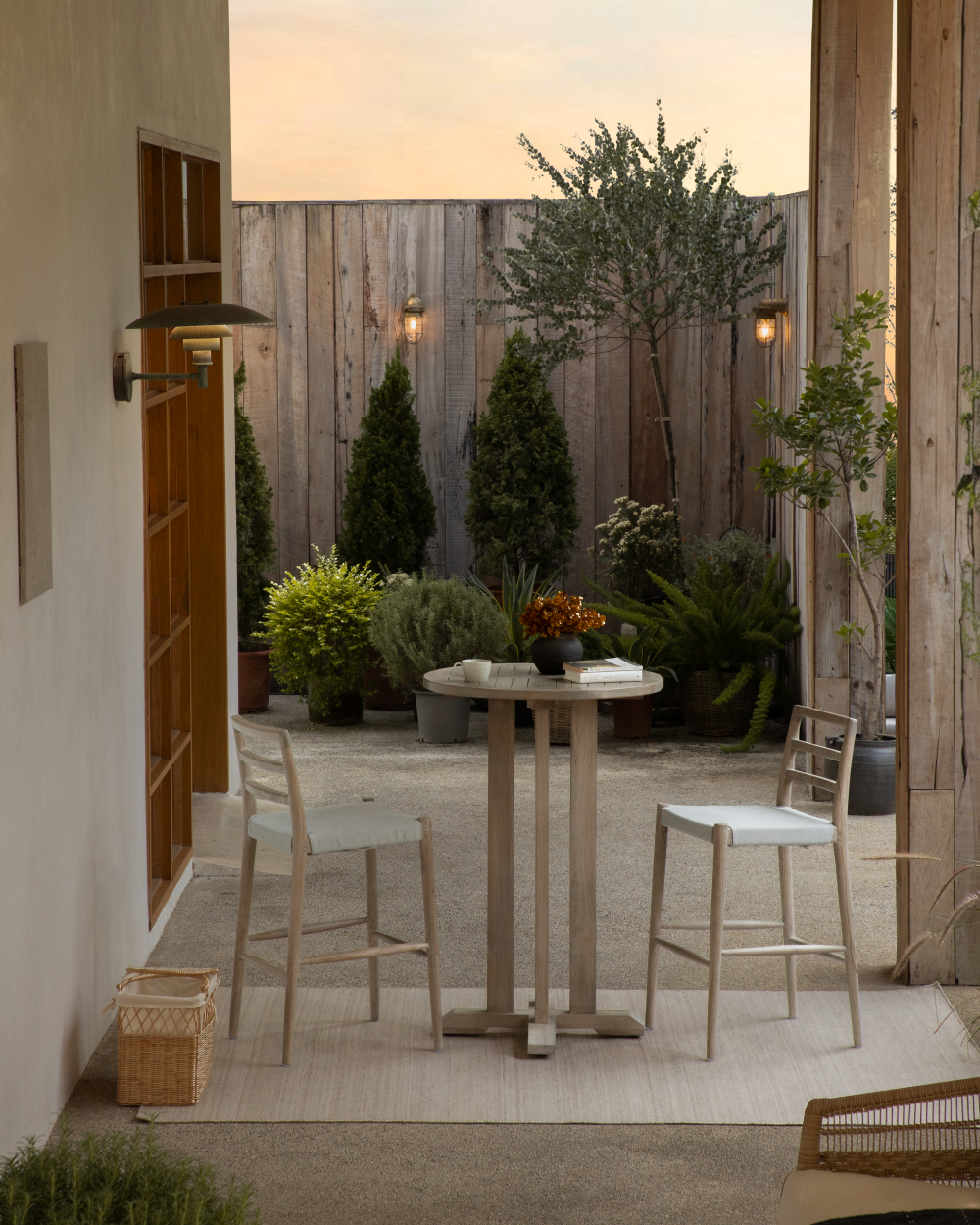





For most casual dining spaces, a low stool works best when you want an open look, need seating for a lower table or side area, or want a seat that tucks away neatly. Dining chairs are usually more practical when people sit for longer meals, homework, or conversation and need a defined, back-supported seat. Neither option wins automatically: measure the finished surface, underside clearance, seat dimensions, and occupied footprint first.
This guide to kitchen stools vs. dining chairs compares fit, space use, sitting duration, materials, and ordering checks so you can choose seating for the room you actually have—not just the style you prefer.
Start With Seat Height and Table Fit
The right seating category depends on the furniture's actual dimensions, not the label alone. Measure from the finished floor to the underside of the table, counter, or island, then compare that space with the listed seat height, depth, width, and foot-support arrangement.
| Seating category | Usual surface pairing | What to measure | Clearance risks | Best-fit routine |
|---|---|---|---|---|
| Low stool | A lower table, side seating area, or surface designed for a shorter seat | Seat height, seat depth, usable width, underside clearance, and foot placement | The seat may fit under the surface but leave limited legroom or collide with an apron | Brief meals, flexible extra seating, or a lower-profile layout when the dimensions work |
| Standard dining chair | A dining table with a conventional chair-height arrangement | Seat height, table underside, apron depth, chair-arm height if applicable, and leg placement | Table legs, aprons, or neighboring chairs can reduce usable space | Regular dining, conversation, homework, or a defined dining zone |
| Counter stool | A counter-height surface or kitchen island designed for that seating category | Published seat height, finished counter height, underside clearance, foot support, and seat depth | A counter label does not guarantee enough knee or legroom at your island | Meals and everyday activity at a properly matched island or counter |
| Bar-height stool | A taller bar-height surface | Seat height, finished surface height, footrest position, and the clear space below | It may be too tall for an island or dining table even if the silhouette looks similar | A true bar-height setup, not a substitute for counter or dining seating |
The counter stools vs. dining chairs comparison should start with a tape measure. Record the finished floor-to-underside height, the distance between table legs, the apron's position, and the number of seats you want. Then compare those measurements with the product page rather than assuming that "dining," "counter," or "bar" guarantees a fit. General furniture-design guidance also treats seat height, depth, knee clearance, and foot support as connected checks, not isolated numbers.
For a more focused walkthrough, use seating height measurements, then verify the dimensions of the exact seat you are considering.

Where Low Stools Save Space—and Where They Do Not
A low stool can help in a compact room when it tucks away, has a manageable pull-out path, and leaves circulation clear. A dining chair may take up more visual space but work better when the room needs a consistent, easy-to-find seat position.
Backless Seating for Tight Clearances
Backless seating is worth considering when it can slide fully under the surface and the room benefits from a low visual profile. Check the actual seat width and depth, how far it must be pulled out for use, and whether the surface leaves enough room for knees and feet.
Use backless seating when all of these conditions are met:
- It can tuck fully under the table, island, or counter without forcing the seat into a cabinet or appliance path.
- The pull-out distance is short enough to preserve the walkway when someone is seated.
- The room benefits from less visual bulk, especially when the seating is visible from another living area.
- The published dimensions answer the fit questions; if a key measurement is missing, pause before ordering.
Movable seating can support flexible layouts, but the occupied footprint still determines whether it works in a home. If back support is part of the decision, compare backless and backed stools with the routine in your room.

Henrik Dining Chair
Dining Chairs for Defined Everyday Seating
A dining chair makes more sense when the area functions as a regular dining zone or when users benefit from a consistent seat position and a back. Its broader profile is a space-planning consideration, not proof that it will feel comfortable for everyone.
Measure the chair with the table in place. Account for the back when the chair is pushed in, the full pulled-out depth when someone sits down, and any arms that could interfere with an apron or neighboring seat. In a small dining nook, one chair that cannot move freely can be more disruptive than a stool with a larger-looking but fully manageable footprint.
Open-Concept Layout Checks
In an open-concept kitchen, test the layout while the seats are occupied—not only when everything is tucked away.
- Mark the surface edge and the full depth of each seat when pulled out.
- Walk through the main path and open nearby cabinet, refrigerator, dishwasher, and appliance doors.
- Check whether a seated person blocks access to the island or creates a pinch point between the kitchen and dining area.
- View the arrangement from adjacent rooms and note whether the backs, legs, or mixed silhouettes create distracting visual bulk.
This occupied-footprint test is especially useful when comparing kitchen island stools with dining chairs in a room that serves more than one purpose.

Compare Comfort for Quick Meals and Longer Sits
Comfort depends on the sitting routine and the seat's dimensions, not simply on whether it is called a stool or chair. For quick meals, a properly fitted backless option may be reasonable; for longer meals, homework, or conversation, inspect back support, usable depth, width, and foot placement more carefully.
Back Support and Sitting Duration
Back support becomes a stronger selection factor when people regularly remain seated beyond a quick meal. Backless seating can suit brief, flexible use, but it should not be treated as a guaranteed comfort solution.
| Seating type | Likely routine to consider | Features to inspect | Visual effect | Open question before ordering |
|---|---|---|---|---|
| Backless stool | Quick meals, occasional seating, or a flexible surface | Seat height, usable depth, edge shape, foot placement, and pull-out path | Lowest visual profile | Will the household actually use it for only brief periods? |
| Low-backed stool | Casual meals with some back support while keeping a lighter profile | Back height and shape, seat depth, width, and surface clearance | More defined than backless seating but still relatively open | Does the back clear the underside and avoid competing with nearby sightlines? |
| Dining chair | Regular meals, homework, or longer conversation | Back support, seat depth, usable width, arms, and foot placement | Strongest visual definition | Does the full chair footprint work when pulled out and pushed in? |
Seat Shape, Depth, and Foot Placement
Seat height is only the first screen. Compare the usable seat depth, width, front-edge shape, and foot support with the primary users—not just with the overall product dimensions.
Before ordering, check whether:
- The usable depth leaves a natural sitting position without pressing uncomfortably behind the knees.
- The listed width works for the people who will use the seat most often.
- The edge shape and padding or surface construction match the intended sitting duration.
- Feet can rest on the floor or an appropriate built-in foot support instead of dangling without a clear place to land.
Households vary, so one fixed dimension will not suit everyone equally. Academic fit tools such as Penn State's Virtual Fit Tool reinforce the value of comparing furniture dimensions with the users who need to fit it.
Upholstery, Maintenance, and Daily Use
Upholstery can change the feel, color, and care routine of a seat, but it does not prove superior comfort or durability. Wood may support a cleaner, more natural look, while woven surfaces add texture; each still requires product-specific care information.
Compare the surface with the room's actual exposure to crumbs, spills, pets, and frequent cleaning. If the care instructions, finish details, or construction information are missing, treat that gap as a reason to contact the seller—not as permission to infer performance.

CH No.36 Dining Chair
Match Materials and Style to the Room
Choose one or two visible cues—such as finish, material, color, silhouette, or scale—and let the care routine narrow the options. This approach works for a single set or for mixed seating in an open kitchen and dining area.
- Wood and natural finishes: Wooden kitchen stools can reinforce a warm, natural direction. Compare the stated finish and care instructions with the room's exposure to moisture and spills; the word "wood" alone does not establish construction, durability, or stability.
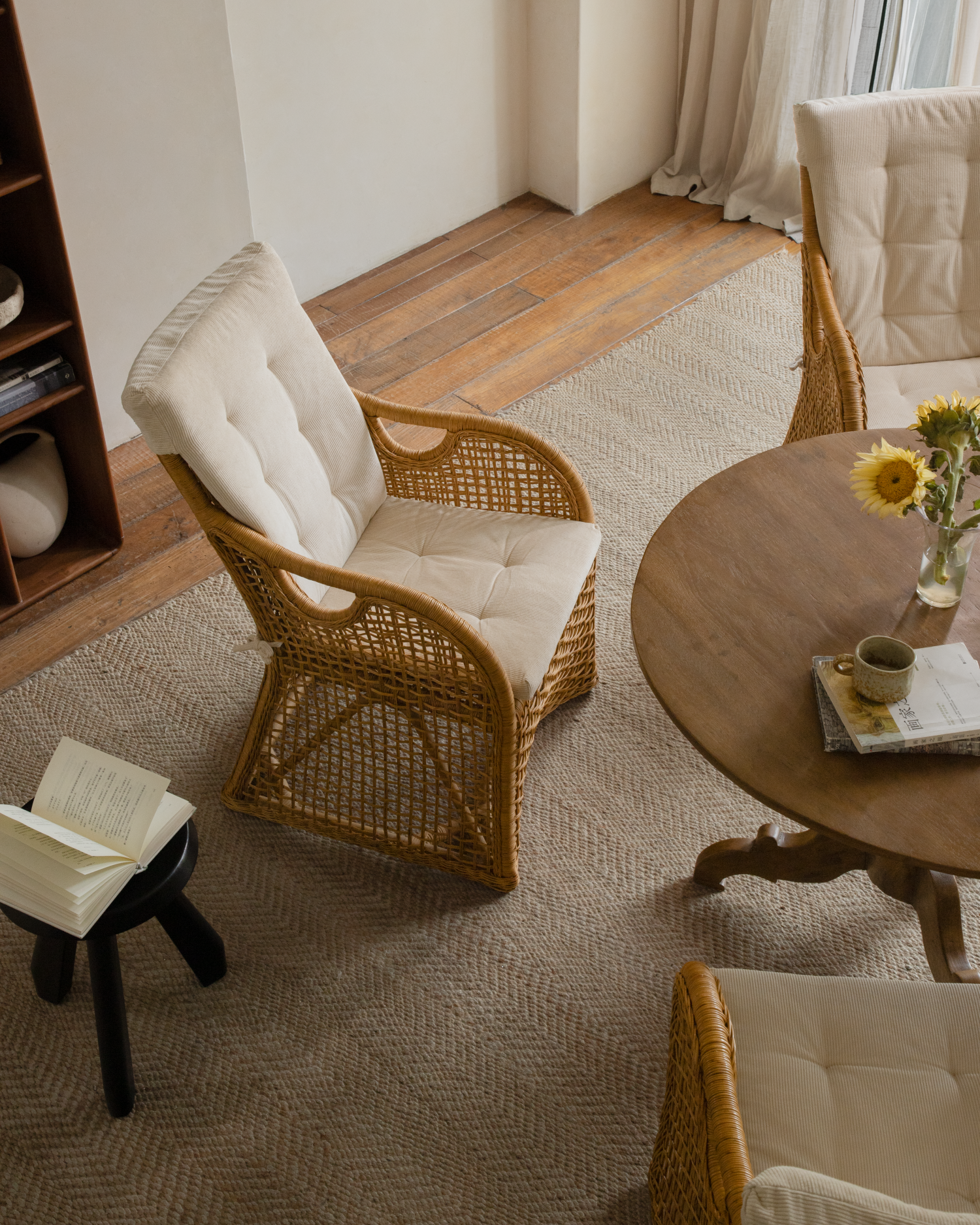
- Woven texture: Woven seating can add visual and tactile texture to a casual room. Check the exact material wording, cleaning guidance, and whether the weave has any care limitations before placing it near a busy food-preparation area.
- Upholstery: Upholstered seating can introduce color and visual softness. Confirm the fabric or covering, spot-cleaning instructions, and spill-related care requirements instead of assuming that upholstery is automatically easier or more comfortable.
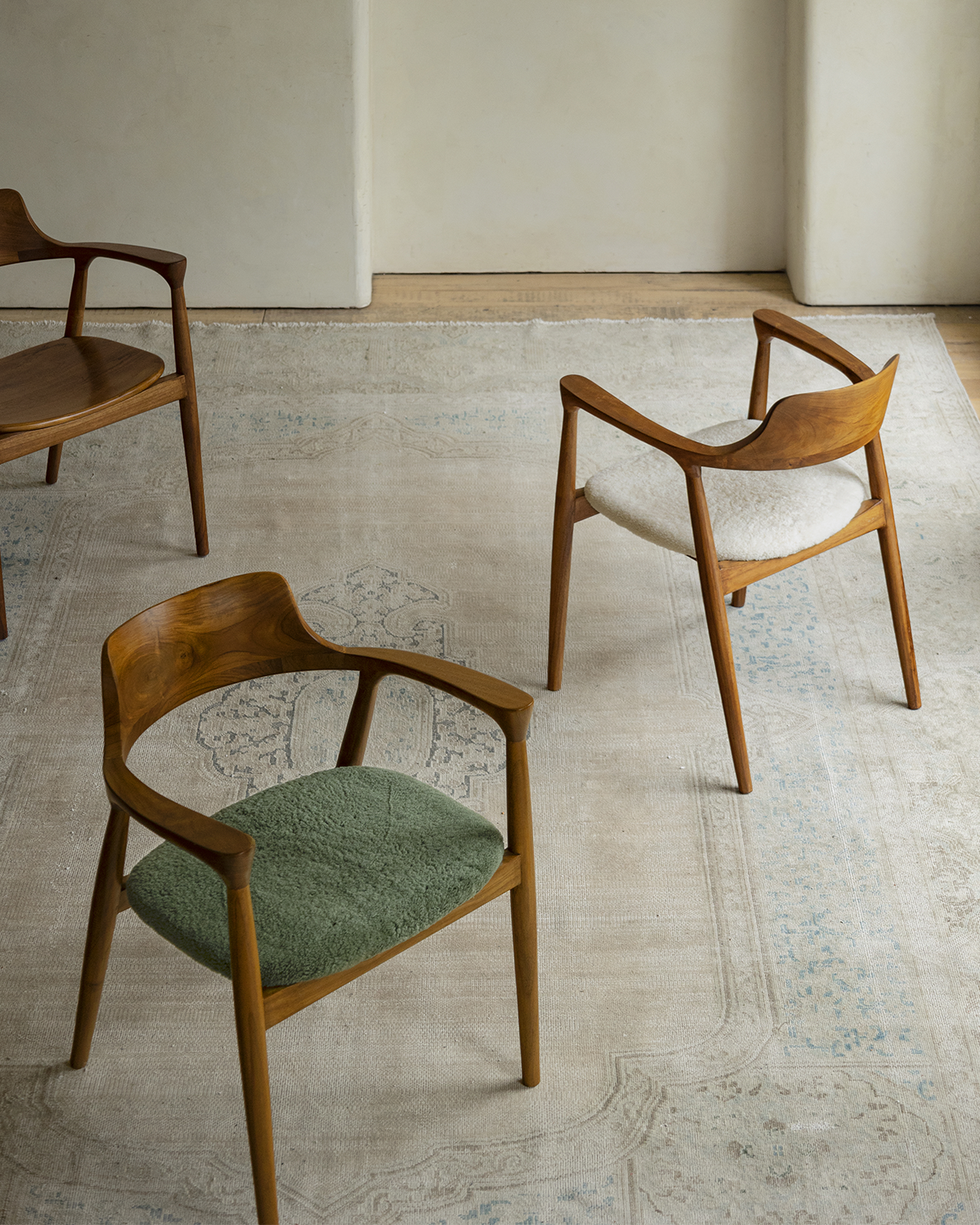
- Mixed materials: Pairing wood, woven texture, or upholstery can look intentional when pieces share a finish, color family, silhouette, or scale. They do not need to match exactly; they do need compatible dimensions and a room-wide care plan.
If you are comparing material directions, use upholstery and wood seating comparisons to organize the visual and maintenance questions. Browse by stated material terms, and verify the individual listing before treating any seating as a fit for your room.

Make the Final Choice With a Room-by-Room Checklist
Choose the seating that passes the surface-fit, occupied-footprint, routine, support, material-care, and purchase-policy checks. Use this sequence before adding items to your cart or browsing seating options.
- Identify the surface. Decide whether the seat will serve a dining table, kitchen island, counter, bar-height surface, or occasional side area. Do not substitute a category label for the finished surface measurement.
- Measure underside and seat clearance. Record floor-to-underside height, apron depth, leg placement, seat height, seat depth, and usable width. If the seat cannot provide the needed legroom, it is not a fit even if its advertised category sounds right.
- Estimate the routine. For quick meals or occasional use, a low stool may align with the routine when the fit is correct. For longer meals, homework, or conversation, give more weight to back support, seat dimensions, and foot placement.
- Map the pulled-out footprint. Mark the seat's occupied depth on the floor. Check walkways, cabinet and appliance doors, adjacent-room sightlines, and whether each seat can be moved without creating a blockage.
- Choose the support level. Compare backless, low-backed, and full dining-chair profiles with the primary users. If a back, foot support, or usable width is essential and the listing does not document it clearly, stop and verify.
- Check material and care. Match wood, woven, upholstery, or mixed materials to spills, cleaning habits, pets, and the room's visual direction. Do not infer durability, comfort, or stability from the material name alone.
- Verify purchase policies. Before ordering, confirm the exact dimensions, current care instructions, shipping terms, return window, and warranty coverage. If a key specification or policy is unavailable, contact the seller first rather than assuming the category is suitable.
A low stool is a sensible direction when the surface, footprint, and short-to-moderate routine align. Dining chairs may be the better fit when the area supports longer sitting or needs a defined, back-supported position. In a mixed layout, use shared visual cues only after confirming that every seat works dimensionally.

FAQ about Kitchen Stools & Dining Chairs
Q1: Are Kitchen Stools or Dining Chairs Better for Small Spaces?
Neither is automatically better. Compare tucked depth, pulled-out depth, storage path, and back profile. A stool works only if it clears the route when occupied; a chair may work better when its defined position prevents repeated repositioning.
Q2: When Does a Low Stool Make More Sense Than a Counter Stool?
A low stool suits a lower table or side area, while a counter stool belongs with a counter-height surface. Check finished surface height, listed seat height, underside clearance, and foot support together. If the surface falls between categories, ask the seller for the exact clearance.
Q3: Can You Mix Kitchen Stools and Dining Chairs in an Open-Concept Room?
Yes, when the pieces share one or two visual cues and their occupied footprints leave circulation routes open. Tape both seating zones before buying so a visual match does not create competing pull-out paths.
Q4: How Many Seats Fit Around a Dining Table or Kitchen Island?
Start with the usable span, not a standard seat count. Divide it by the listed seat width, then account for legs, aprons, neighboring gaps, and pull-out space. Recheck the result against cabinet and appliance access.
Q5: What Should I Verify Before Buying a Wooden Stool Online?
Check the exact dimensions, stated wood and finish details, care instructions, and any published weight or stability information. Also verify shipping, returns, and warranty terms. If a key fact is missing, contact the seller before ordering.