

Key Takeaway:
The best dining table chairs need to work in both the closed and extended setups. Measure the table, chair height, chair width, leg placement, and room clearance first. Then choose a style that feels comfortable for everyday meals but still leaves enough space for extra guests. Around 24 inches of table edge per diner and about 36 inches of clearance around the table are useful starting points.
An extendable dining table gives you extra room when guests arrive, but it also creates a second furniture layout to consider. The right dining room chairs should feel comfortable when the table is compact and still fit naturally when it reaches its full length.
That makes chair shopping a little different from choosing chairs for a fixed table. The table changes size, seating capacity, and sometimes the balance of the entire dining room.
The main goal is simple: choose chairs that work well for your everyday setup, adapt to the extended setup, and look good in both.
Start With How You Actually Use the Extendable Dining Table
Your daily routine should shape your chair setup. Ask yourself a few simple questions:
- How many people usually sit at the table?
- How often do you host guests?
- Does the table stay closed most of the time?
- Do you regularly keep it extended?
Buying enough chairs for the maximum capacity may sound practical, but it can make your dining area feel crowded every day. A better approach is to separate everyday seating from occasional seating.
If You Usually Keep the Table Closed
Give the smaller setup priority. If your household normally uses four seats but the table can expand to six or eight, you do not necessarily need every chair around the table all the time.
Extra chairs can be stored in another room and brought out for holidays, dinner parties, or family visits. A spare dining chair can also work as a desk chair, bedroom chair, or occasional seat in another part of the house.
This keeps the everyday dining area open without giving up the flexibility of your extendable table.
If You Frequently Keep the Table Extended
If the table is usually open, treat the full configuration as your main setup. Check the width of each chair, the space between diners, and the room needed around the fully extended table.
This matters even more if you use wider upholstered chairs or armchairs. The table may have enough length for six people on paper, but larger chairs can quickly reduce the usable space.

Measure the Table in Both Sizes Before You Choose Dining Chairs
An extendable table should be measured in its closed and extended positions. These two measurements help you see how much room your dining table chairs will actually need in daily use and during larger meals.
Record these dimensions:
- Closed table length
- Extended table length
- Table width
- Table height
- Underside or apron height
- Distance between table legs
- Position of the legs or base
The tabletop dimensions are only part of the picture. A thick apron can reduce legroom, while table legs can interfere with chairs even if the tabletop appears wide enough.
Also measure the space around the fully extended table. About 36 inches between the table edge and nearby walls or furniture is a useful starting point for chair movement and circulation. In busy walkways, more space can make the room much easier to use.
Choose Dining Table Chairs Around the Space You Have
A common starting point is about 24 inches of table edge per diner. This gives most adults enough elbow room for normal meals. Some tables and chairs can work with less, while wide or heavily upholstered chairs may need more.
The actual capacity also depends on:
- Chair width
- Armrests
- Table legs
- Table shape
- Base design
- The position of the end seats
For example, a table advertised for six may feel much better with four wider dining room chairs. The goal is comfortable seating, not simply filling every available inch.
When Slim Dining Chairs Make More Sense
Slim chairs can be a smart choice for an extendable table, especially when you regularly add seats.
A narrower chair leaves more room between diners and makes it easier to fit extra chairs around the extended table. Slim profiles can also keep a small dining room from looking too heavy.
Check the actual width of a dining chair, not just the overall style. A chair may look narrow in a product photo but have wide arms or a broad base that takes up more space.
When Wider or Upholstered Dining Chairs Are Worth the Space
If comfort matters more than maximum seating, wider chairs may be a better fit. Upholstered seats and supportive backs can make long dinners, family gatherings, and holiday meals much more comfortable.
Just make sure the added width works in both table positions. If you need six chairs after extending the table, calculate the combined chair width rather than relying on the table's advertised seating capacity.
Get the Table-to-Chair Height Right
Chair height is the first comfort measurement to check. A chair can look perfect and still feel wrong if your knees hit the table or your arms sit too high while eating.
For a standard dining table around 28 to 30 inches high, a dining chair with a seat around 17 to 19 inches high is common. A gap of roughly 10 to 12 inches between the seat and tabletop provides a useful starting point for comfortable legroom.
Do not stop at the tabletop measurement. The underside or apron can sit lower and reduce the space available for your thighs.
The Measurements Worth Checking on Every Dining Chair
Check these measurements for every chair you are considering:
- Seat height: The distance from the floor to the top of the seat.
- Seat width: The usable space from side to side.
- Seat depth: The distance from the front of the seat to the backrest.
- Overall width: Important for calculating how many chairs can fit.
- Overall depth: Important for room circulation.
- Arm height: Critical if you want chairs that slide beneath the table.
- Back height: Important for both comfort and visual scale.
For upholstered chairs, remember that cushions can compress under body weight. The listed seat height may not be the exact height you experience while sitting.

Don't Forget the Table Legs When Planning Your Chairs
Table legs can change the usable seating area more than the tabletop dimensions suggest. A chair may fit within the stated table length but still collide with a leg when you pull it into position.
Four-leg tables usually create clear seating zones between the legs. Pedestal tables can provide more open legroom, though a large center base can still interfere with some seating positions.
Extendable tables can also have moving legs or different support positions after the table opens. Check the leg placement in both configurations rather than measuring only the closed table.
Look for the distance between the legs, the amount of tabletop overhang, and the space available for your knees. These details can make a major difference to daily comfort.
Decide Between Side Chairs, Armchairs, or a Mix
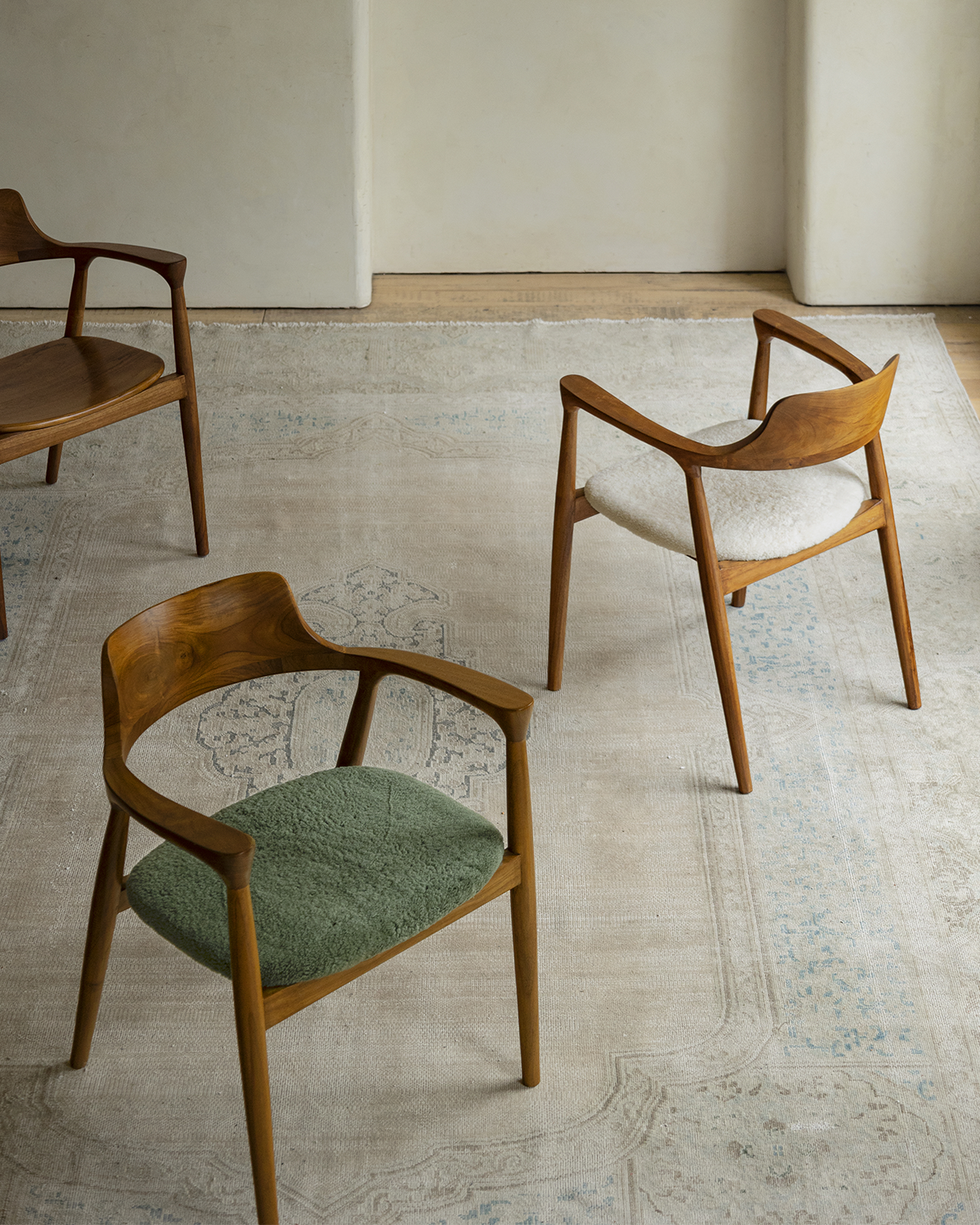
The type of chair you choose affects both seating capacity and the overall look of your dining area. Side chairs offer the most flexibility, while armchairs add comfort and visual weight.
Side Chairs
Side chairs are usually the easiest option for an extendable table. They take up less space, are simple to move, and can be added or removed as the table changes size.
They also work well if you need occasional chairs that can be stored in another room.
Armchairs
Armchairs provide extra support and can make the table feel more substantial. They also need more room.
Check the arm height against the underside of the table. An armchair may have the right seat height but still fail to slide under the table because its arms hit the apron.
A Combination of Both
A common arrangement uses armchairs at the two ends and side chairs along the long sides. This gives the table a finished look while keeping most of the seating relatively compact.
For an extendable table, this setup can work especially well if the end chairs stay in place while extra side chairs are added as the table gets longer.
Choose Dining Chair Styles That Work in Both Table Sizes
An extendable table changes its proportions when you add a leaf. Chairs that look balanced with the table closed may feel too heavy once the table is extended, while very light chairs can look lost around a large table.
For a Modern Extendable Table
Clean-lined chairs can complement a modern table without making the dining area feel busy. Upholstered, leather, sculptural, or simple wood designs can all work, depending on the table's shape and finish.
For a Natural or Reclaimed Wood Table
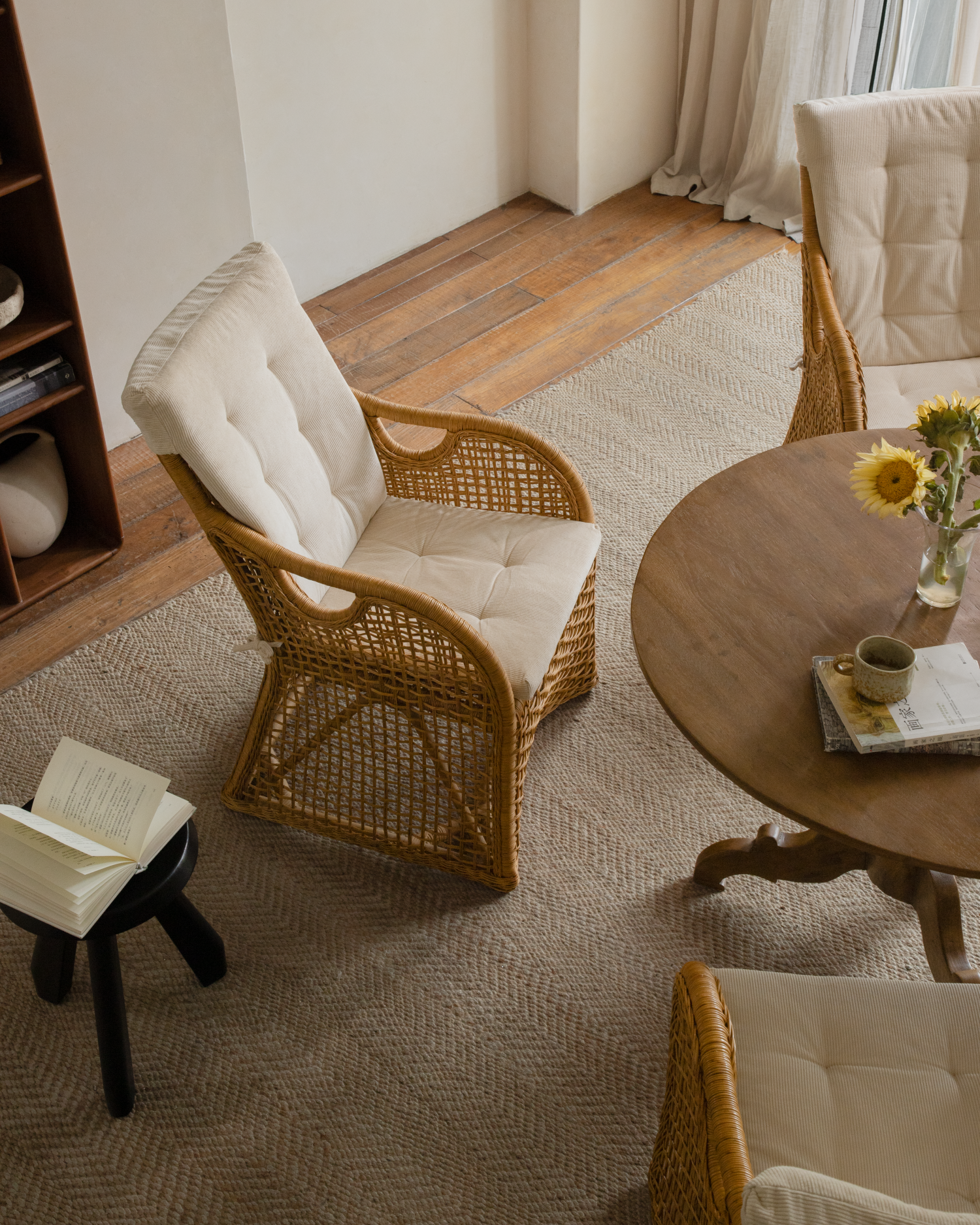
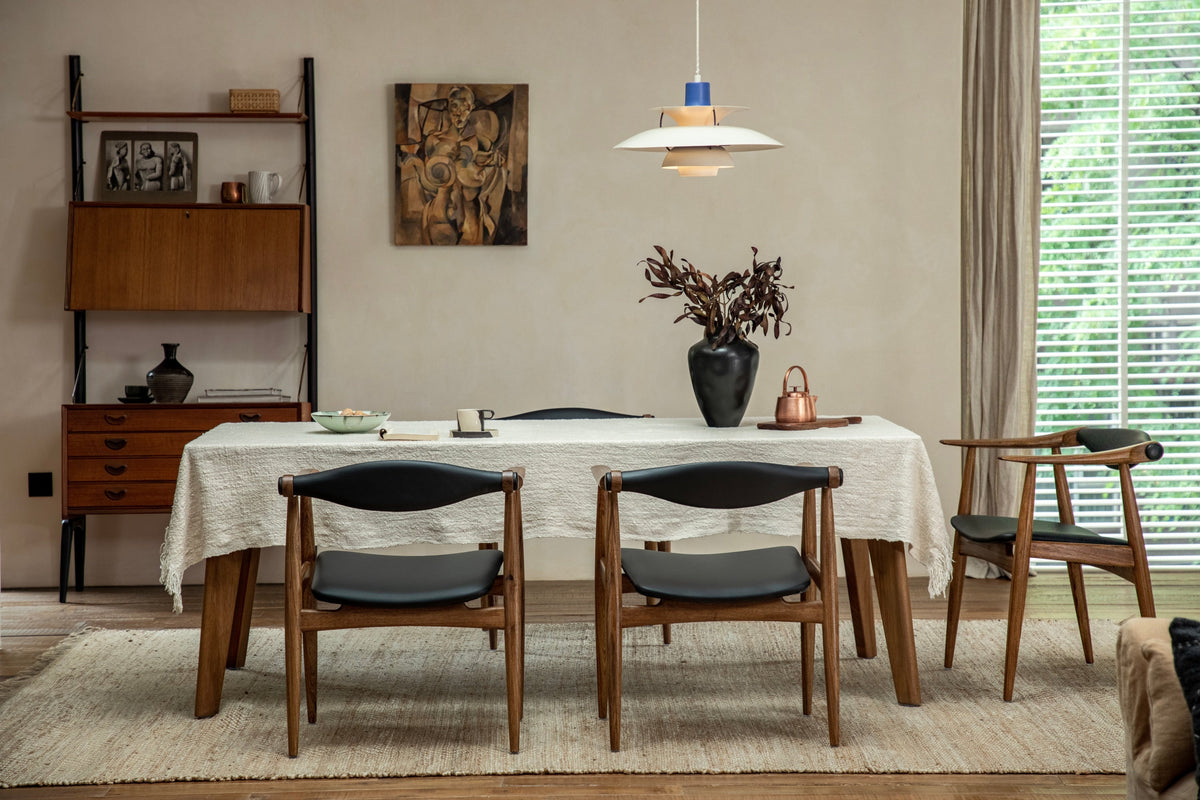
Natural materials can soften the strong presence of a wood table. Linen, rattan, woven textures, and natural wood chairs can create a relaxed look without requiring a matching set.
For a Round-to-Oval Extendable Table
Curved chairs can echo the softer shape of a round tabletop and still look natural once the table becomes oval. Visually lighter chairs can also help preserve the open feel of the smaller configuration.
Mix Materials Instead of Matching Every Piece
Your dining tables and chairs do not need to come from the same collection. A little contrast can make the dining area feel more relaxed and personal, especially when the table changes size.
A useful approach is to repeat one feature while changing another:
- Same color, different material
- Same material, different tone
- Similar curves, different texture
- Similar finish, different shapes
For example, natural wood with linen can create a soft, casual look. Reclaimed wood with rattan feels relaxed and warm. Dark wood with light upholstery creates contrast, while a sculptural table can pair well with simple wooden chairs.
The key is keeping at least one visual connection between the pieces. That could be color, material, shape, or finish.
Make Sure the Dining Chairs Work After You Pull Them Out
A chair needs to work in motion, not just while pushed neatly under the table. You need enough room to pull it out, sit down, stand up, and move around other people.
Chair depth deserves as much attention as chair width. A deep chair can extend far into the room when pulled out, reducing the available walkway.
Check the space around:
- Walls
- Sideboards
- Kitchen islands
- Cabinets
- Doorways
- Main walkways
About 36 inches of clearance is a practical starting point around a dining table, while high-traffic areas may benefit from more.
If your dining area is tight, use painter's tape to mark the table and chair footprints on the floor. This simple test can show you how much space the setup really uses.

Build Your Chair Setup Around Everyday Comfort
A comfortable dining area should support the way you actually spend time at the table. Think about how you use the space:
- Family meals: Easy-to-clean surfaces and supportive backs may matter most.
- Homework: A comfortable seat and useful back support become more important.
- Working from home: Seat height and posture deserve extra attention.
- Entertaining: Flexible seating and easy movement can be more useful.
- Long dinners: Cushioned seats and supportive backs can make a noticeable difference.
Seat depth also matters. A chair that is too deep can leave shorter users without good back support, while a shallow seat may feel uncomfortable during long meals.
A Simple Way to Test Your Dining Chair Choice Before Buying
Measurements on a product page are useful, but they cannot show how your complete dining setup will feel. A simple test can catch many problems early.
Step 1: Set Up the Closed Table
Place the intended number of chairs around the table. Check the spacing between chairs and make sure people can sit without bumping elbows.
Step 2: Check Legroom and Circulation
Sit in the chairs and move them in and out. Check your knees, feet, arms, and back. Then walk around the table and look for tight spots.
Step 3: Extend the Table Fully
Open the table to its maximum length. Add the extra chairs you plan to use.
Step 4: Check the Legs and Chair Spacing
Make sure no chair collides with a table leg or base. Check that the added chairs do not push the existing chairs too close together.
Step 5: Test Real Movement
Pull the chairs out as if someone were sitting down. Stand up, walk behind the chairs, and move around the room.
Step 6: Close the Table Again
Return the table to its everyday size. Make sure the chairs still look balanced and the room does not feel overcrowded.
This closed → extended → closed test is especially useful for extendable furniture because it checks the complete setup rather than a single measurement.
Create a Dining Setup That Adapts With You
A good extendable dining table gives you flexibility, and the chairs should support that same flexibility. The right combination needs to fit the table, the room, and the way you use both.
Keep three priorities in mind:
- Fit the chairs to the table's actual dimensions.
- Plan for both everyday and extended seating.
- Balance comfort, flexibility, and design.
Measure the table in both sizes, check chair height and width, inspect the leg placement, and leave enough room for people to move. Then choose dining chair styles that feel natural with the table in both configurations.
A flexible dining space does not need every piece to match perfectly. It needs to feel comfortable, look balanced, and work just as well for a quick weeknight meal as it does for a full table of guests.
FAQ about Extendable Dining Tables and Chairs
Q1: Should I Keep the Extension Leaf in the Table When I Am Not Using It?
If your table has a self-storing leaf, keeping it inside the table is usually convenient and avoids having to find separate storage space. Some extendable tables are specifically designed for this setup.
For tables with removable leaves, check the care instructions from the manufacturer. Wood extension leaves can react to changes in temperature and humidity, so they should be stored somewhere with relatively stable conditions. Keeping a wood leaf directly on a concrete floor can also expose it to moisture.
Q2: How Can I Protect My Dining Chairs and Floors From Everyday Wear?
Start with the floor. Felt pads or other furniture protectors under chair legs can reduce scratching, especially if chairs are moved in and out several times a day. Some dining sets specifically recommend floor protectors for this reason.
For upholstered dining room chairs, check the cleaning instructions for the fabric instead of using a random household cleaner. Removable covers can make regular cleaning easier, while some fabrics may require a specific cleaning method.
Q3: How Often Should I Check an Extendable Dining Table After Assembly?
Check the table's hardware from time to time, especially if the table is extended and closed often. Some manufacturers specifically recommend retightening screws after assembly and again as needed.
It is also worth checking the extension mechanism if the table becomes harder to open, does not close evenly, or starts making unusual noises. Do not force the table open or closed, since resistance can indicate an issue with the mechanism.